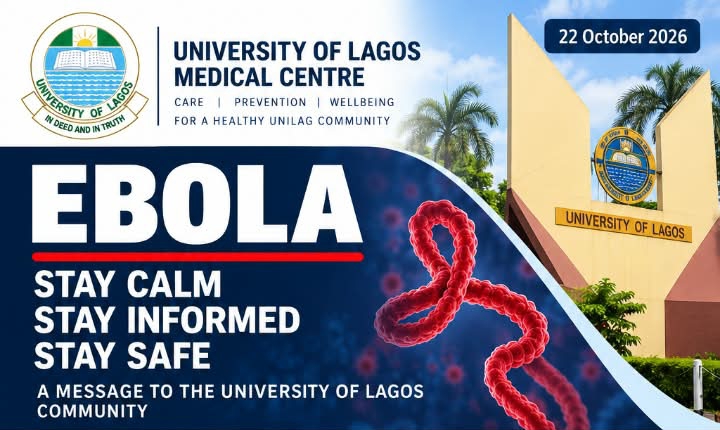
The University of Lagos Medical Centre wishes to encourage all members of the University community to remain calm, vigilant and informed in light of recent reports concerning Ebola virus disease (EVD).
Ebola is a serious but preventable disease. With early recognition of symptoms, prompt reporting, adherence to public health guidance, and cooperation with health authorities, the risk of transmission can be significantly reduced. The Medical Centre continues to monitor developments closely and remains prepared to work with relevant public health agencies to ensure the safety of our community.
It also encourages everyone to remain calm, stay informed through credible sources, and avoid the spread of rumours or misinformation.
How Ebola Spreads
Ebola Virus Disease can spread through:
- Direct contact with the blood or other body fluids of a person who is ill with Ebola. Contact with contaminated materials, such as clothing, bedding, medical equipment, or other objects exposed to infectious body fluids.
- Contact with infected animals.
It is important to note that Ebola is not spread through ordinary airborne transmission like influenza. Individuals who are not showing symptoms do not generally transmit the disease through routine social interactions.
Symptoms to Watch for
Symptoms may develop 2 to 21 days after exposure and may include:
Fever • Severe headache • Unusual weakness or fatigue • Muscle pain • Sore throat • Vomiting • Diarrhoea • Unexplained bleeding in some cases
These symptoms may also be associated with other illnesses. Therefore, any recent history of exposure should be reported to healthcare professionals to support proper assessment and management.
How to Protect One’s Self and Others
Members of the University community are advised to:
Wash hands regularly with soap and water or use an alcohol-based hand sanitiser. • Avoid direct contact with the blood, vomit, stool, or other body fluids of anyone suspected of having Ebola. • Refrain from handling contaminated clothing, bedding, or personal items without appropriate protective equipment. • Avoid handling sick or dead wild animals and avoid unsafe contact with bushmeat. • Follow all official University and public health advisories. • Rely on information from trusted sources and refrain from sharing unverified reports that may create unnecessary alarm. • Treat all individuals with dignity, compassion, and respect, and avoid any form of stigma or discrimination.
If One Develops Symptoms After Possible Exposure
If one experiences symptoms consistent with Ebola following a possible exposure:
1. Limit contact with other people immediately. 2. Contact the University of Lagos Medical Centre through official University channels or notify public health authorities without delay. 3. Call ahead before visiting the Medical Centre so appropriate precautions can be arranged and staff can provide guidance. 4. Be honest about any travel history, exposure, or potential risk factors. 5. Do not attempt to self-manage suspected Ebola infection at home.
Prompt reporting protects not only one’s health but also the health of your family, friends, colleagues, and the wider University community.
For more information, visit Nigeria Centre for Disease Control and Prevention (NCDC) website, www.ncdc.gov.ng or call NCDC Toll-Free Connect Line, 6232.
The University of Lagos Medical Centre remains committed to maintaining a safe and healthy environment for learning, teaching, research, and service. It is working closely with relevant health authorities and will continue to provide timely updates whenever necessary.By remaining informed, practising good hygiene, showing compassion to one another, and promptly reporting health concerns, we can collectively safeguard the well-being of the entire University community.