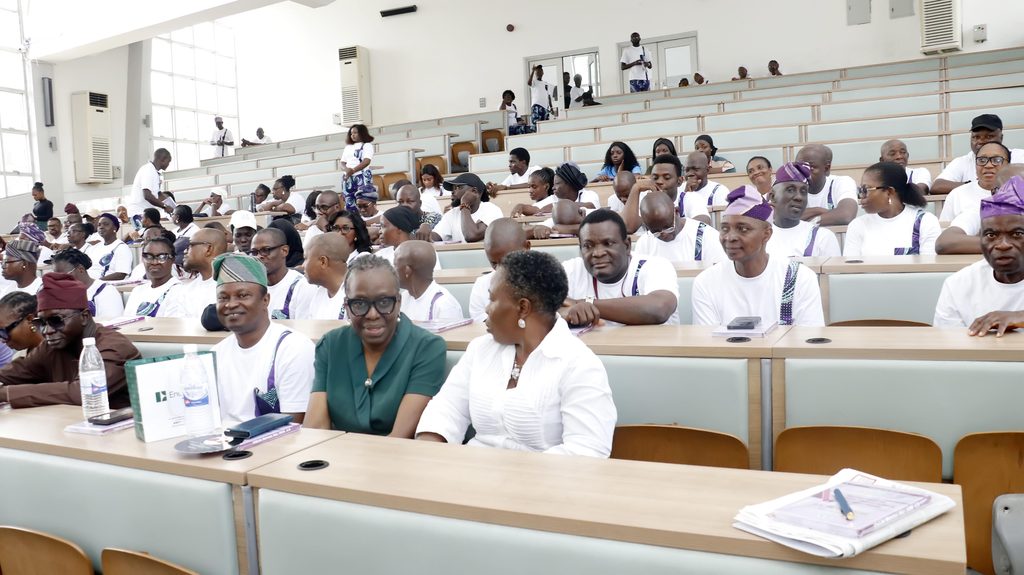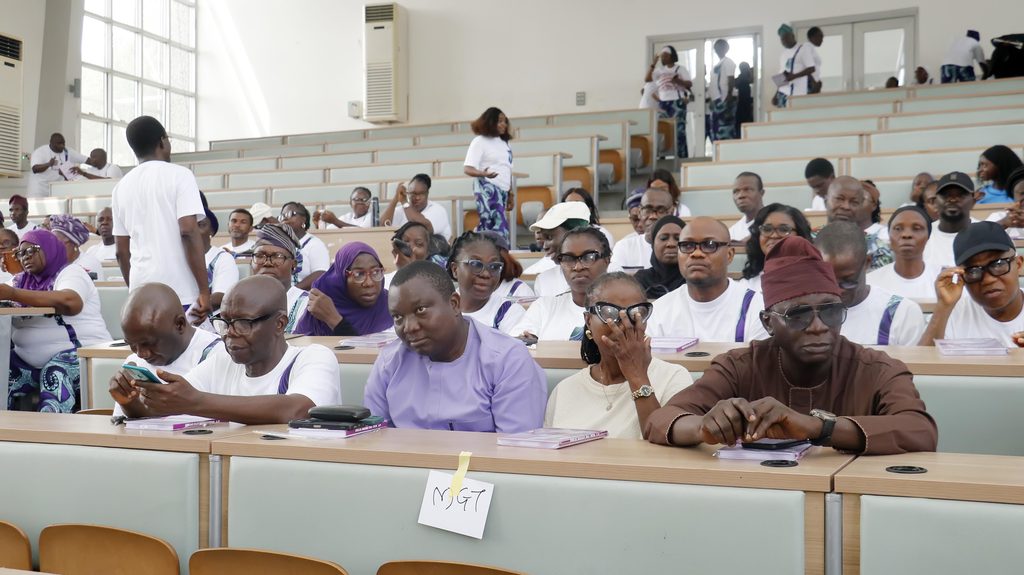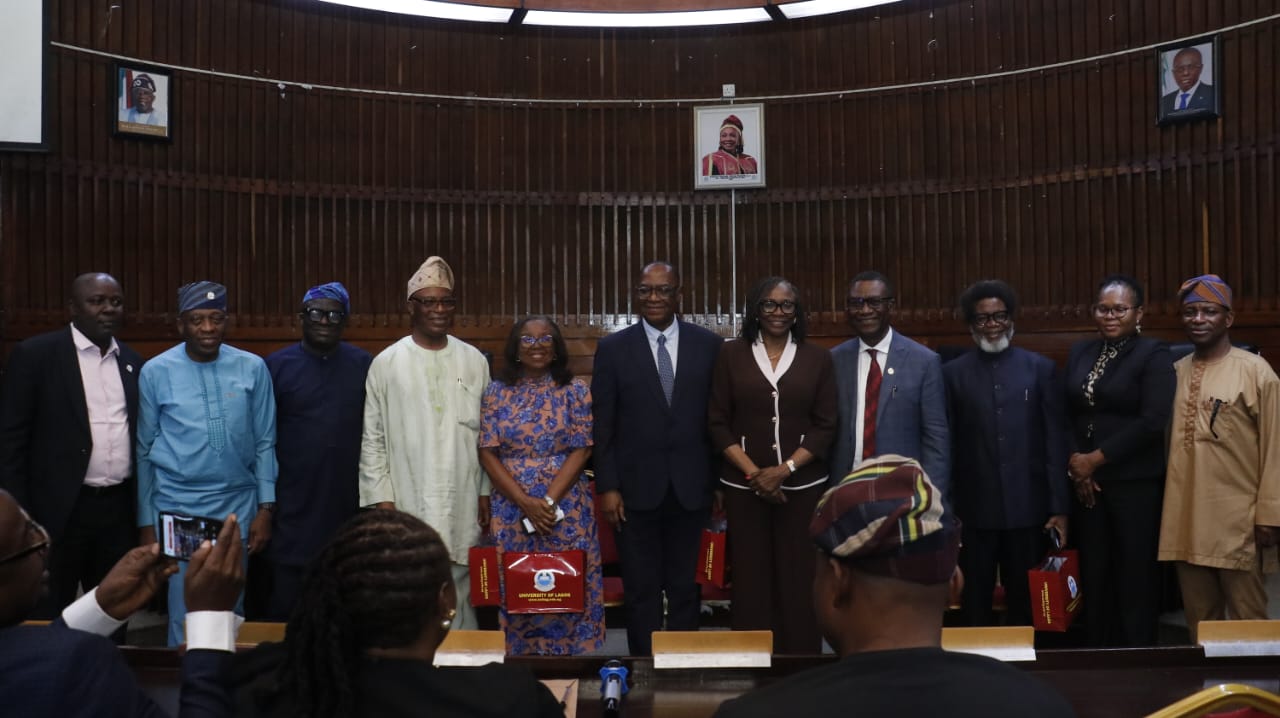

The Vice-Chancellor of the University of Lagos (UNILAG), Professor Folasade Ogunsola, OON, FAS, has charged the University’s Bursary to accelerate digital transformation, strengthen financial accountability and uphold excellent service delivery to support the University’s strategic objectives.

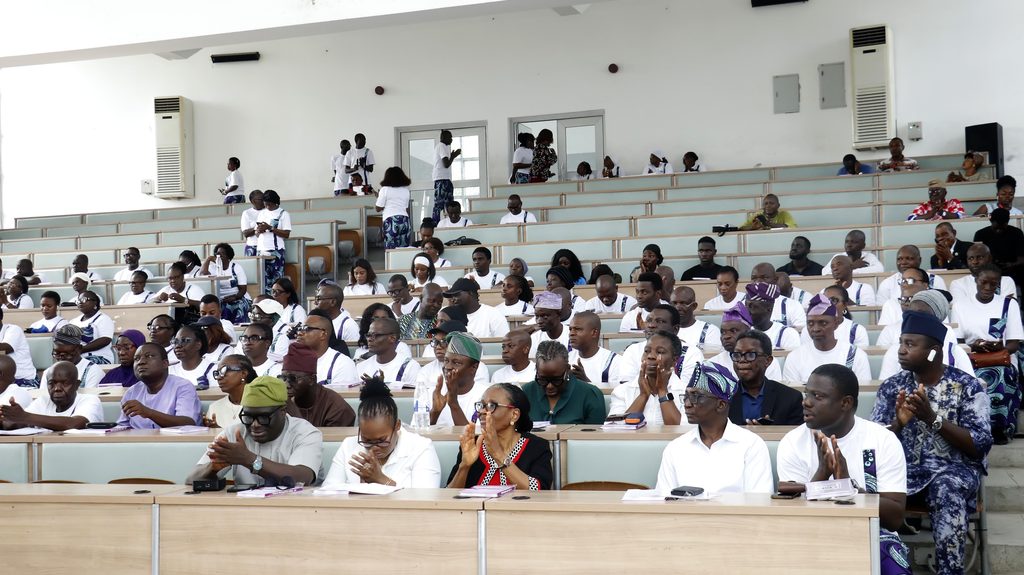
Professor Ogunsola gave the charge at the 4th UNILAG Bursary Day, held on Thursday, October 29th, 2026, at Tayo Aderinokun Hall, Akoka under the theme, “Towards a Smart Bursary:Advancing Efficiency, Accountability, and Service Excellence.
Describing the Bursary as a strategic partner, she explained that the effective management of financial resources was essential to achieving the University’s vision.
She noted that the division’s responsibilities extended beyond collecting and managing funds to ensuring that available resources translated into tangible institutional progress.
VC Commends Bursary’s Financial Stewardship
Reflecting on the University’s financial experience following the COVID-19 pandemic and prolonged industrial action, Professor Ogunsola recalled the difficulties of sustaining essential services when students were off campus and fee revenue was reduced, while electricity bills and other operational expenses continued.
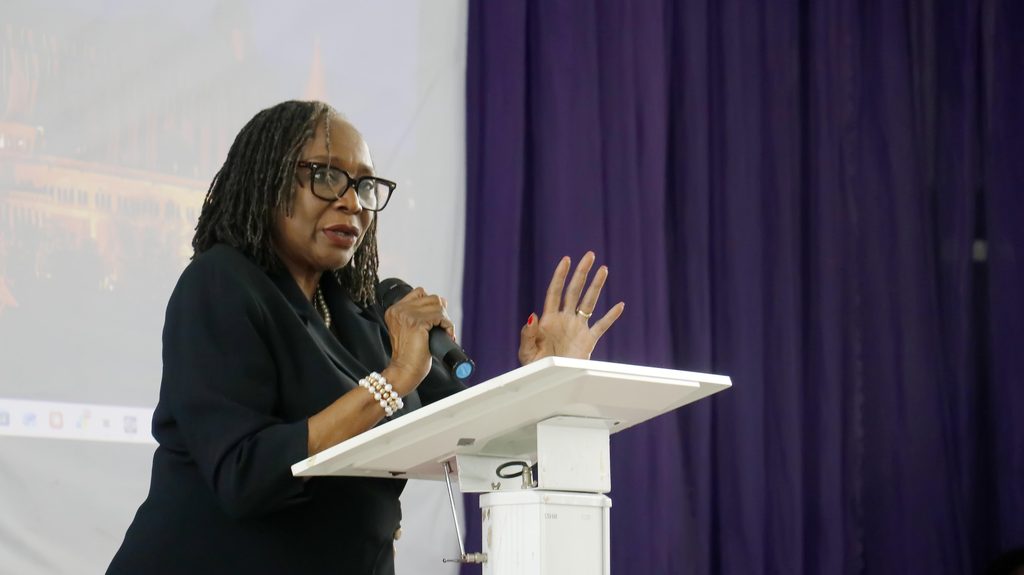
She commended the bursary for helping the University recover from a negative financial position within a remarkably short period, thereby enabling it to undertake critical activities. She also praised the department for ensuring prompt payment to contractors, noting that an external auditor had observed that projects were not abandoned or delayed because of outstanding payments.
The Vice-Chancellor congratulated Bursary staff on their contributions, urging them to sustain their commitment to the University’s progress while recognising the professional knowledge and experience they continued to acquire.
Digital Transformation: A Necessary Shift
Emphasising the essence of technology in building a smart bursary, Professor Ogunsola urged staff to embrace digitalisation despite the initial discomfort that often accompanies changes in established work practices.
She explained that automating routine and repetitive tasks would free staff to concentrate on critical thinking, strategic responsibilities, and higher-value activities.
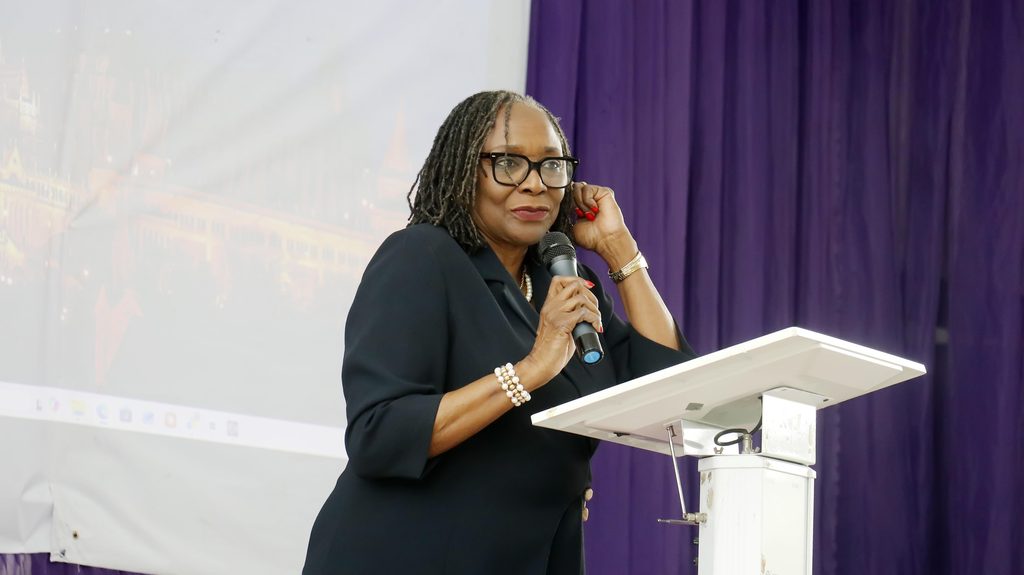
According to her, digital transformation would strengthen the bursary’s capacity to provide informed financial guidance and contribute more meaningfully to institutional decision-making.
She encouraged staff to adapt to emerging systems and processes, stressing that the transition to digital operations was necessary for the department to remain efficient and responsive to the University’s evolving needs.
Professional Integrity at the Heart of Financial Management
The Vice-Chancellor stressed that a smart bursary required more than efficient systems and processes, emphasising the importance of professional integrity, sound judgement, and a genuine commitment to service.
She observed that the management of the University’s finances demanded exceptional honesty and responsibility because of the ethical challenges associated with handling public funds. She commended bursary personnel for upholding these standards and encouraged them to maintain their record of professional conduct.
Professor Ogunsola also urged the bursary staff to approach their responsibilities with diligence and a strong sense of purpose, noting that the value of public service extended beyond immediate financial rewards. She highlighted the importance of helping all stakeholders through timely, responsive, and considerate service, even in a challenging economic environment.
She called on the department to use the annual celebration as an opportunity to renew its commitment to efficiency, accountability, and innovation, particularly by reducing delays and frustrations experienced by those who interact with the bursary.
Concluding her remarks, the Vice-Chancellor commended the Bursar and all members of the department for their contributions to the University’s progress. She urged them to continue upholding professional standards and to recognise their role as strategic partners in shaping the institution’s future.
Bursar Reaffirms Commitment to Efficient, Accountable Services
In her opening remarks, the University Bursar, Mrs. Oluwafunmilola Yetunde Adekunle, FCA, described the theme as timely, reflecting the department’s commitment to becoming more efficient, technology-driven, and responsive to the University’s changing needs.


She explained that a modern bursary must go beyond financial record-keeping and payment processing to support strategic planning, resource management, and decision-making. She identified efficiency, accountability, and service delivery as essential pillars, emphasising process improvement, transparent financial records, effective internal controls, and timely, responsive services.
Mrs. Adekunle further noted that building a smart bursary required more than technology, stressing the importance of staff development, innovation, and teamwork.
She reaffirmed the department’s commitment to sound financial management, effective reporting, and excellent service delivery.
Guest Lecturer Advocates Strategic, Technology-Driven Transformation
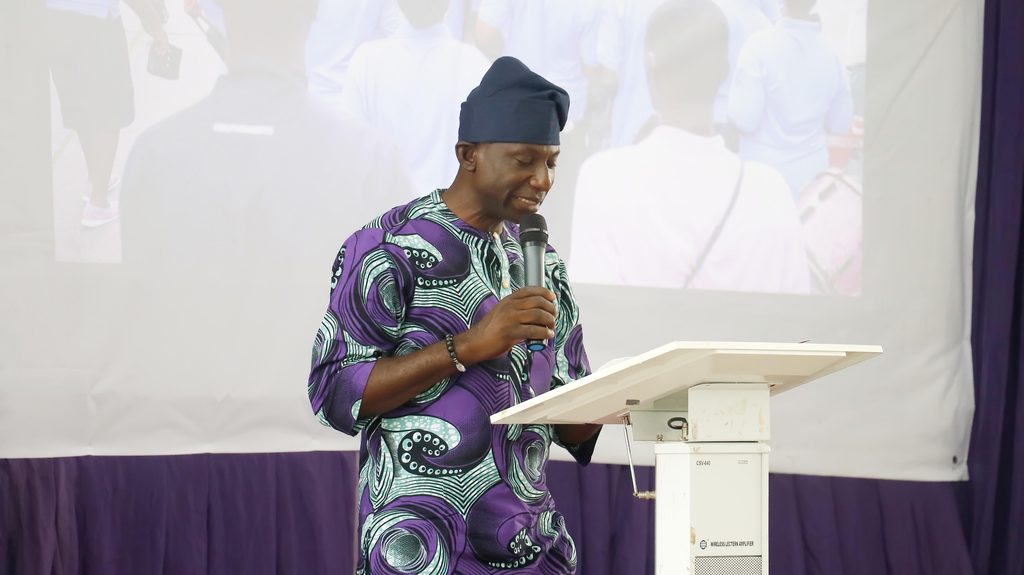
The guest lecturer, Dr Bola Adigun, Partner, Deloitte’s West Africa Strategy, and Business Design Leader, called for a shift from transactional financial operations to a strategic, technology-driven Bursary
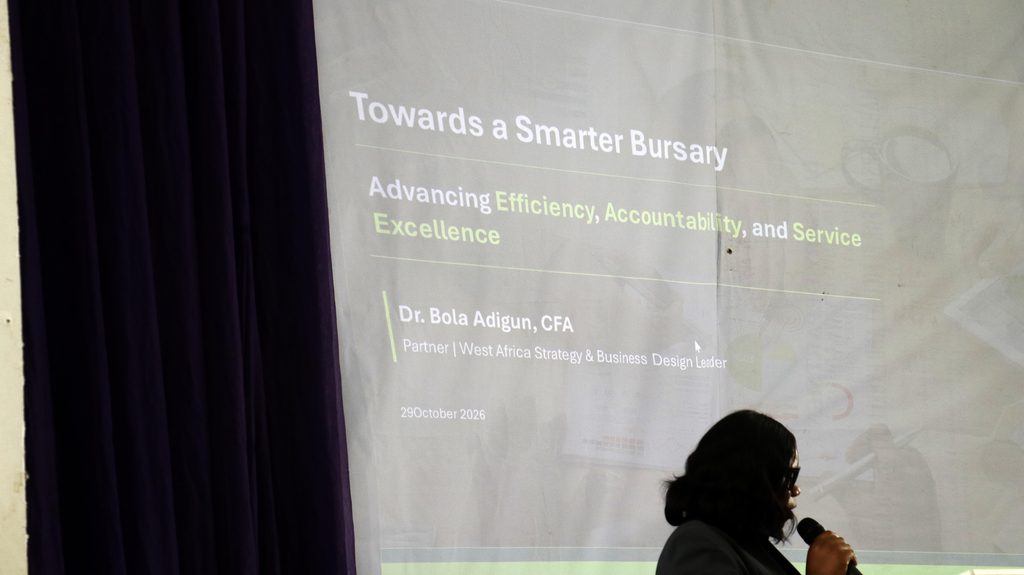

She identified manual processes, fragmented data, and slow reporting cycles as challenges that could undermine efficiency, advocating automation, integrated data systems, and real-time financial insights to improve decision-making.
Dr Adigun highlighted efficiency, accountability, and service excellence as the three pillars of a smart bursary, emphasising transparency, effective internal controls, risk monitoring, and stakeholder-centred services. She also identified artificial intelligence, data analytics, cloud platforms, and systems integration as tools for modernising financial operations.
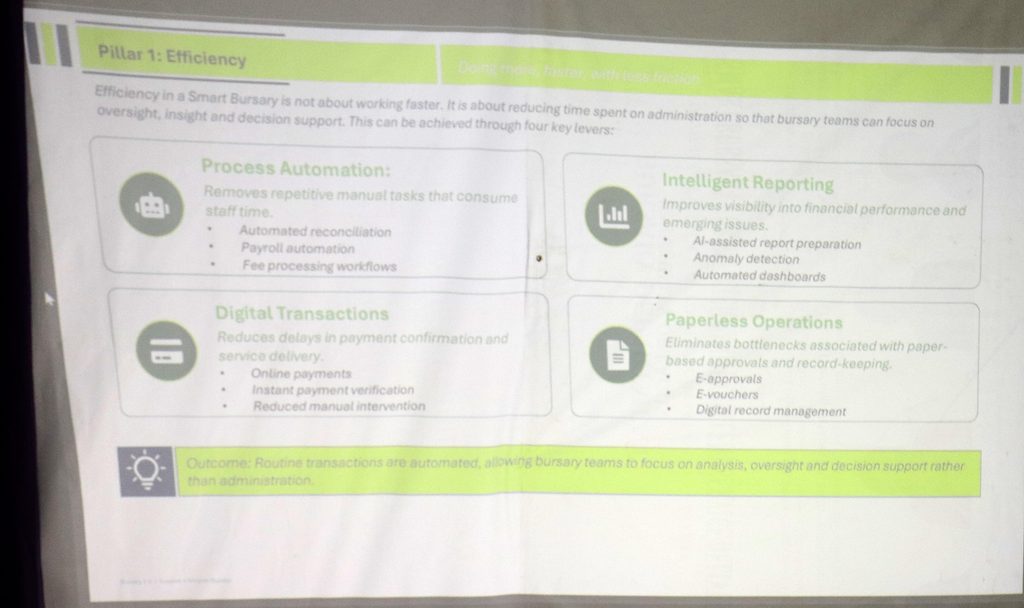



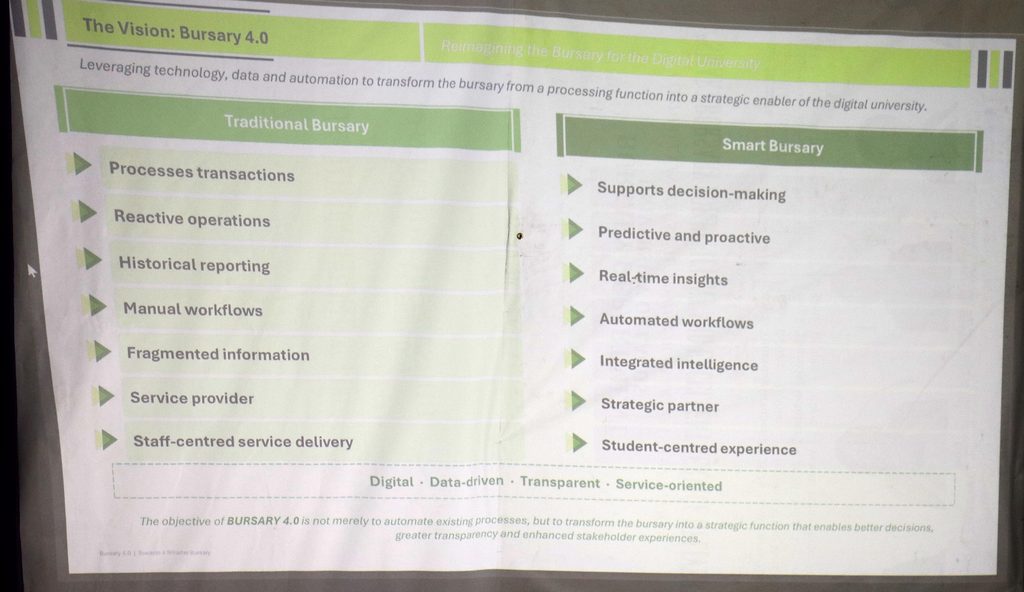
Dr Adigun further emphasised that the transition to a smart bursary must be driven by a clear vision for change, with technology serving as an enabler of efficiency, transparency, and improved stakeholder experience. She encouraged the university to embrace integrated digital solutions, strengthen cybersecurity, and build a service-oriented culture that would position the bursary as a modern, proactive, and strategic partner in institutional administration.
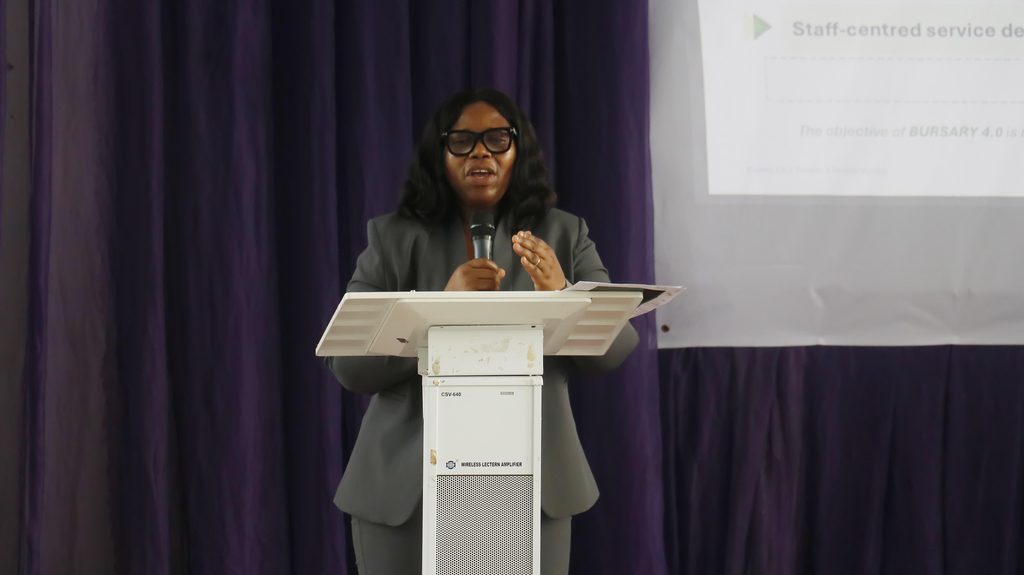
In her call to action, she urged the University to translate its Bursary 4.0 vision into a modern, digitised, and service-oriented model that could serve as a reference point for other institutions.
Former VC Envisions Bursary’s Transformation into a Financial Management Unit

The Chairman of the occasion and former Vice-Chancellor of the University of Lagos (UNILAG), Professor Rahmon Adisa Bello, expressed hope that the University’s bursary may eventually be renamed to reflect its evolving role as a full-fledged financial management division.
Professor Bello described the UNILAG bursary as one of the best in Nigeria, commending its staff for distinguishing themselves within and beyond the University. He also praised the department’s progress in adopting smarter devices, applications, and systems to minimise vulnerabilities and improve operational efficiency.Recalling his time as Vice-Chancellor, Professor Bello explained that he had advocated a shift from the traditional perception of the bursary as merely a unit for receiving and disbursing funds to a more comprehensive financial management unit, equally concerned with resource generation and prudent expenditure.
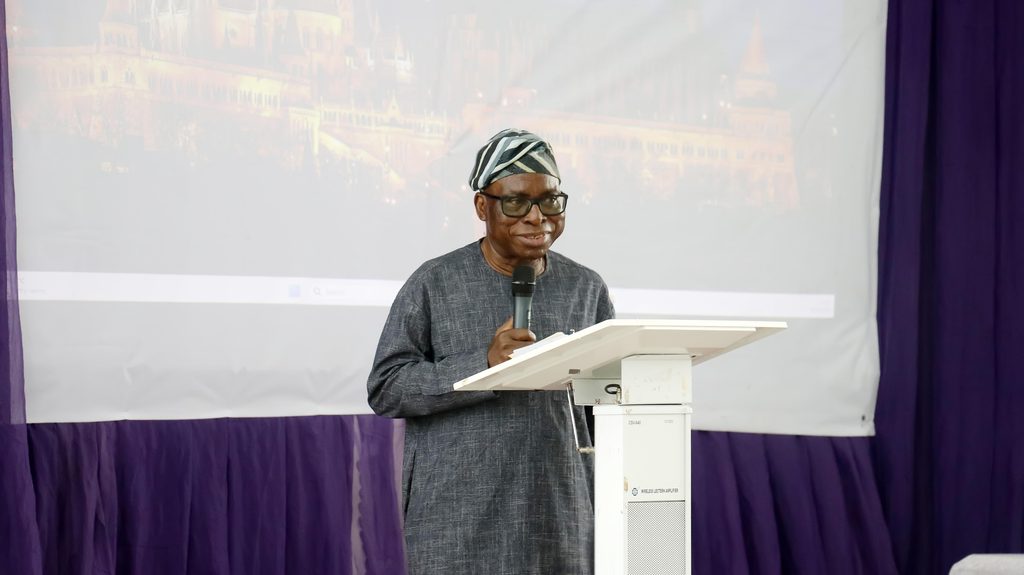

He expressed confidence that the department would continue to evolve, stressing the need to embrace emerging technologies, including artificial intelligence, to improve efficiency and institutional output. While acknowledging the progress already made, he urged staff to remain forward-looking and avoid complacency as the demands of financial administration continue to change.
Bursary Day Offers Opportunity to Renew Commitment to Excellence
The Chairman of the Organising Committee, Mr Sofiu Oyejide Ahmed, described the annual celebration as more than a ceremonial gathering, highlighting its importance as a platform for recognising bursary’s contribution to financial accountability, transparency, prudent resource management and the sustained development of the University.
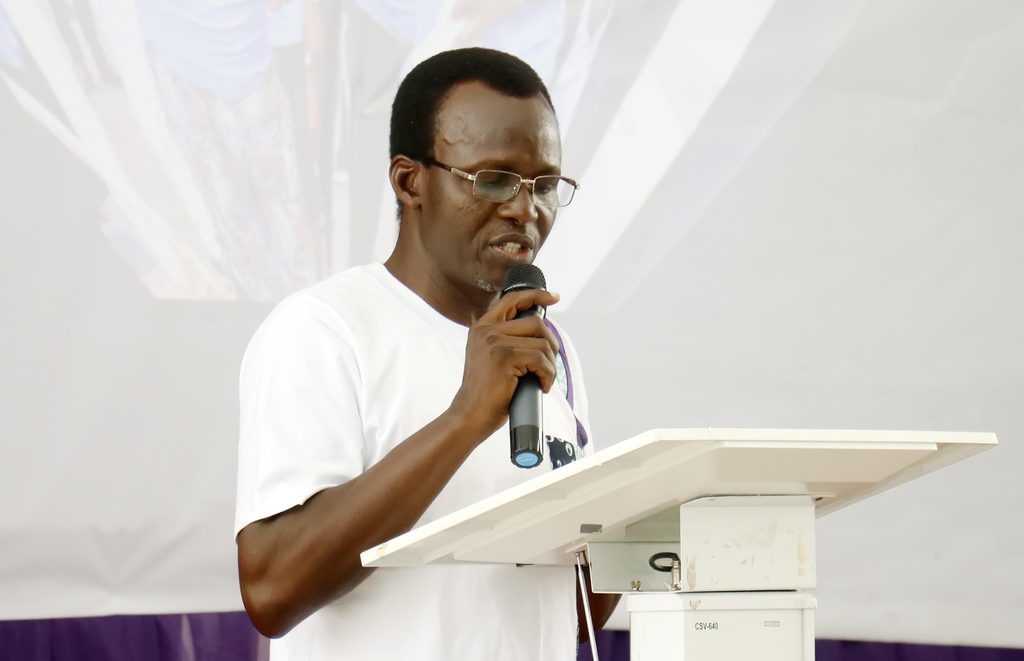
He recalled that the celebration began on Wednesday, October 28, 2026, with indoor games organised for bursary staff at the University’s facilities. The activities provided an opportunity for relaxation and recreation before the public lecture brought the fourth edition of the celebration to its climax.
Mr Ahmed expressed appreciation to the Vice-Chancellor for her support and encouragement, as well as to the guest lecturer, for accepting the invitation to share her professional expertise. He also acknowledged the contributions of the Organising Committee, University Management, sponsors, partners, and colleagues whose efforts helped make the event possible.
He further urged members of the unit to renew their collective commitment to excellence, integrity and service, while using the occasion to strengthen professional relationships, exchange knowledge and explore innovative approaches to financial administration in a rapidly changing environment.
Advancing Financial Accountability and Institutional Development
The 4th UNILAG Bursary Day reinforced the need to align digital innovation with professional integrity, financial accountability, and excellent service delivery.
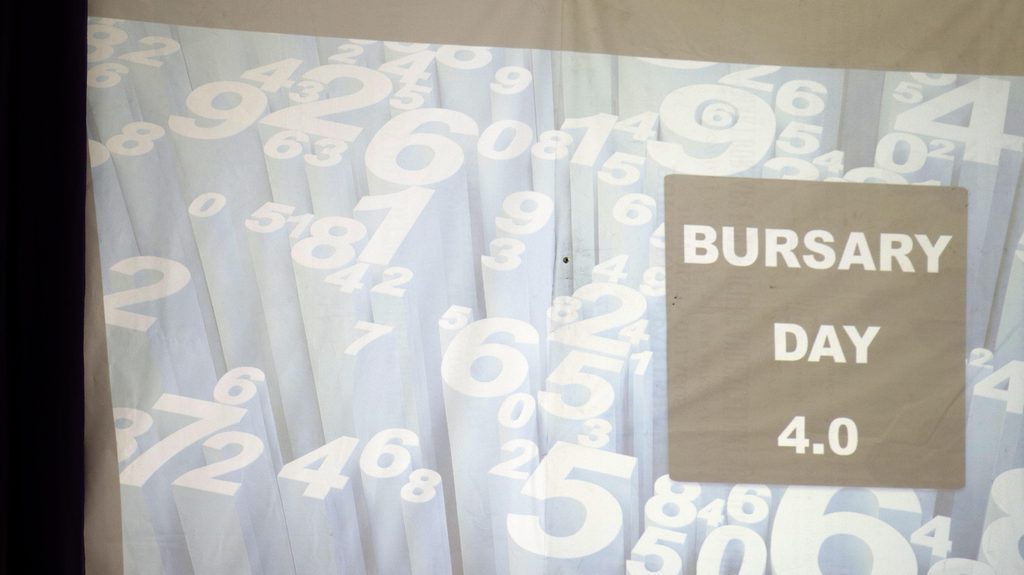
The discussions highlighted the importance of moving beyond routine financial transactions towards a strategic system that supports informed decisions, safeguards public resources, and advances the University’s institutional goals.
As the University pursues its vision of a smarter Bursary, the challenge is to translate these commitments into everyday practice by reducing administrative delays, strengthening transparency and ensuring that financial resources are managed responsibly to advance the University’s people, scholarship and future.
Report: Lynda Onah
Photograph: Islamiat Akanni