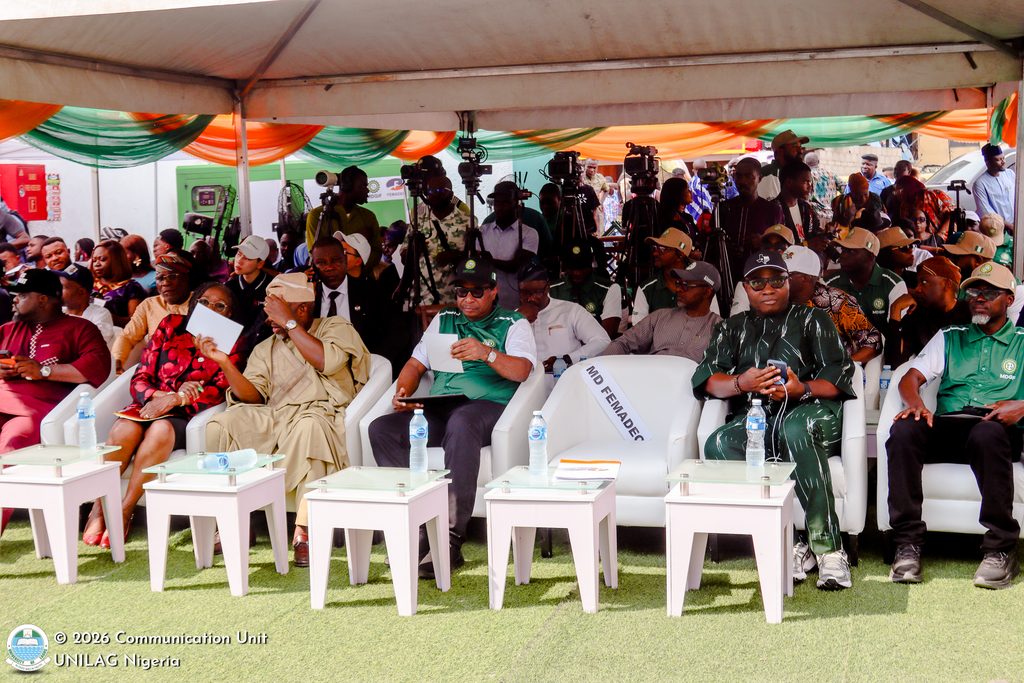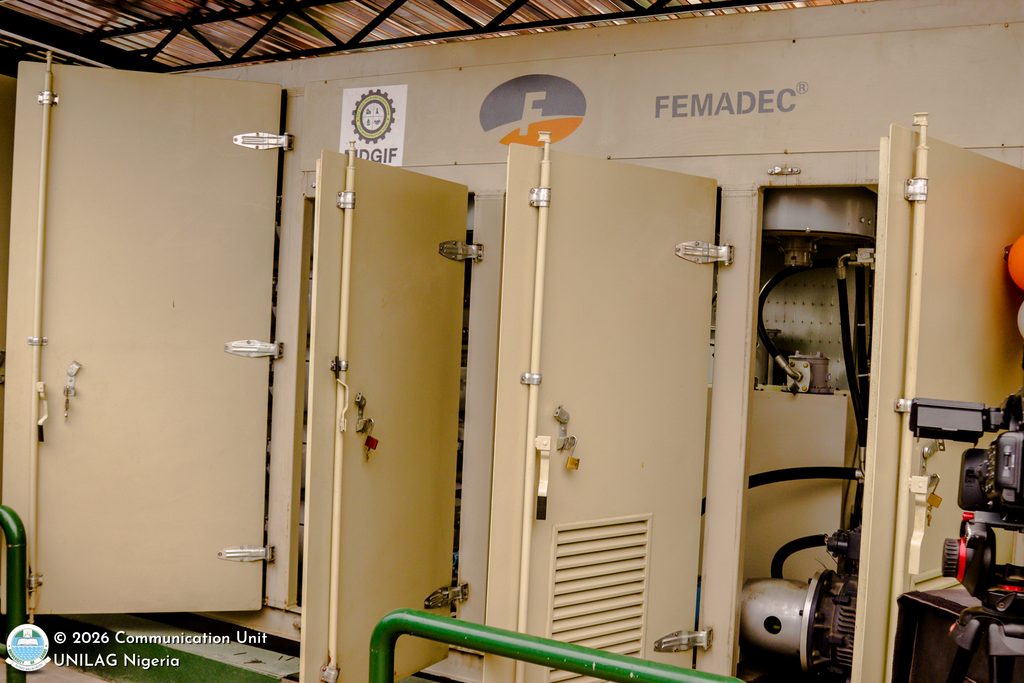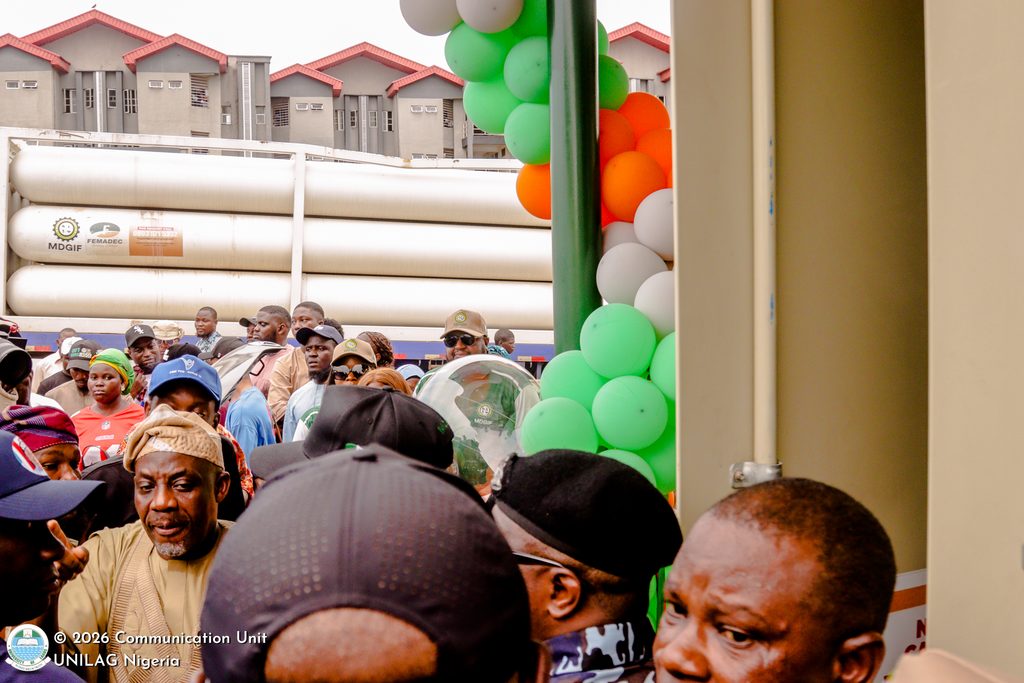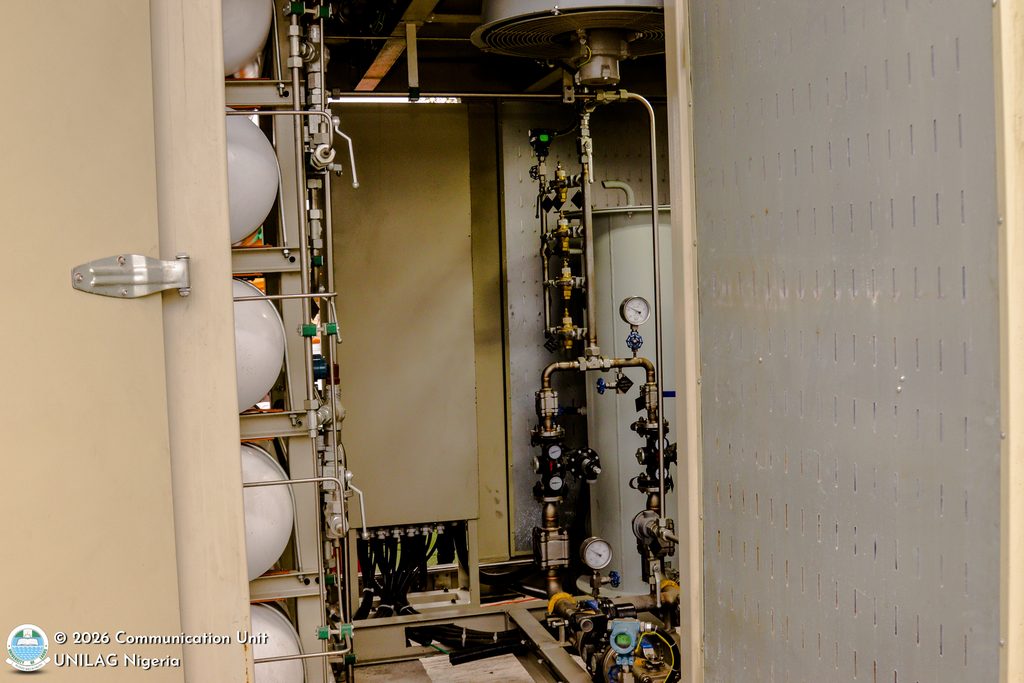

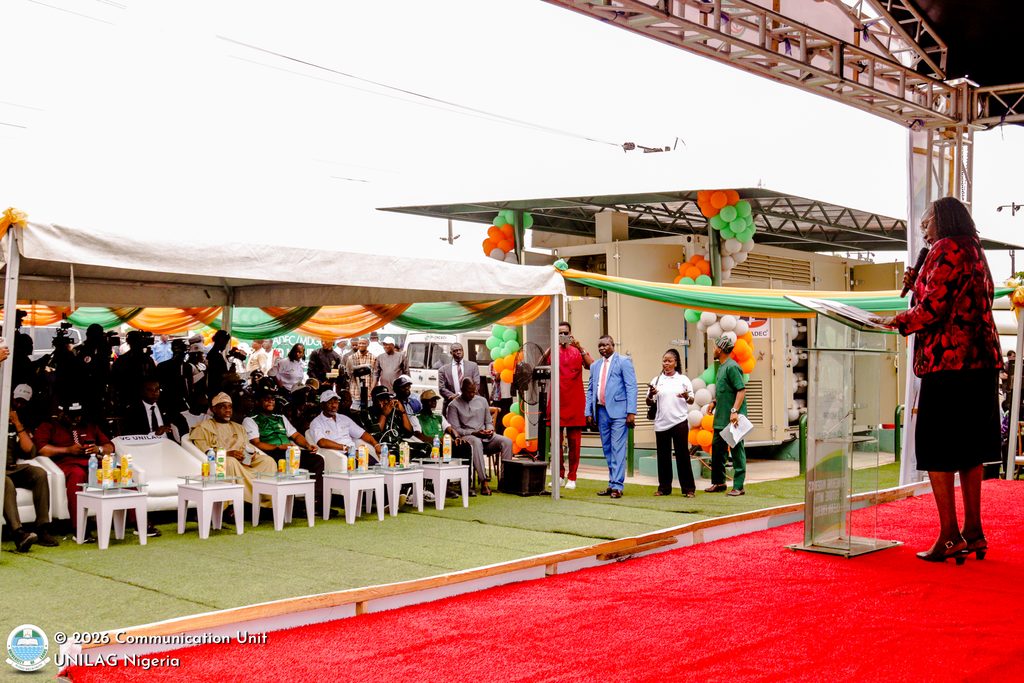
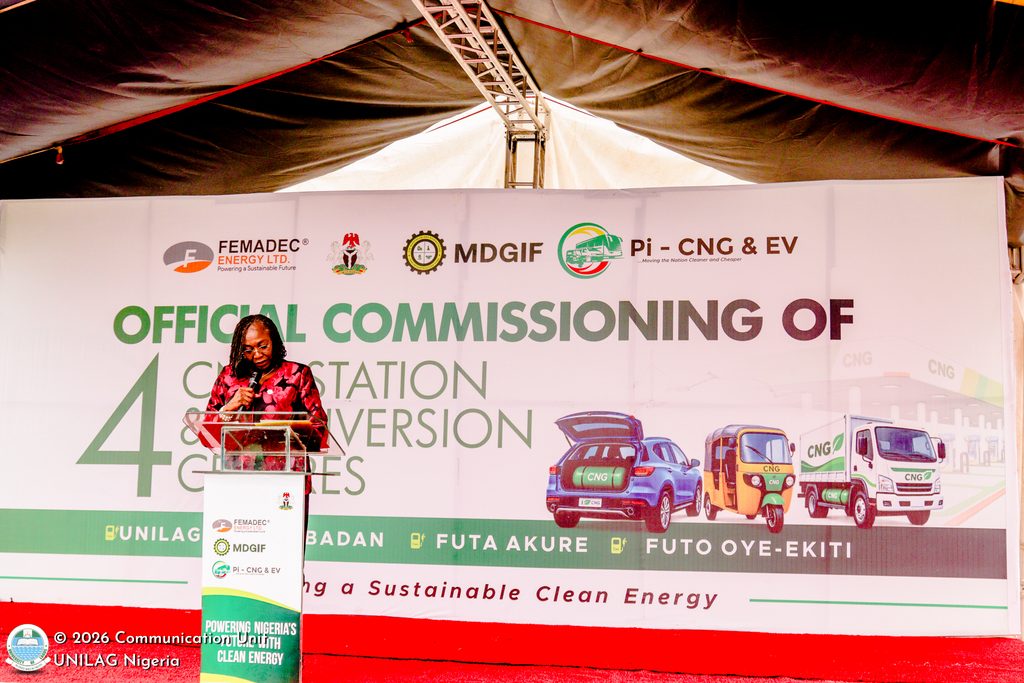
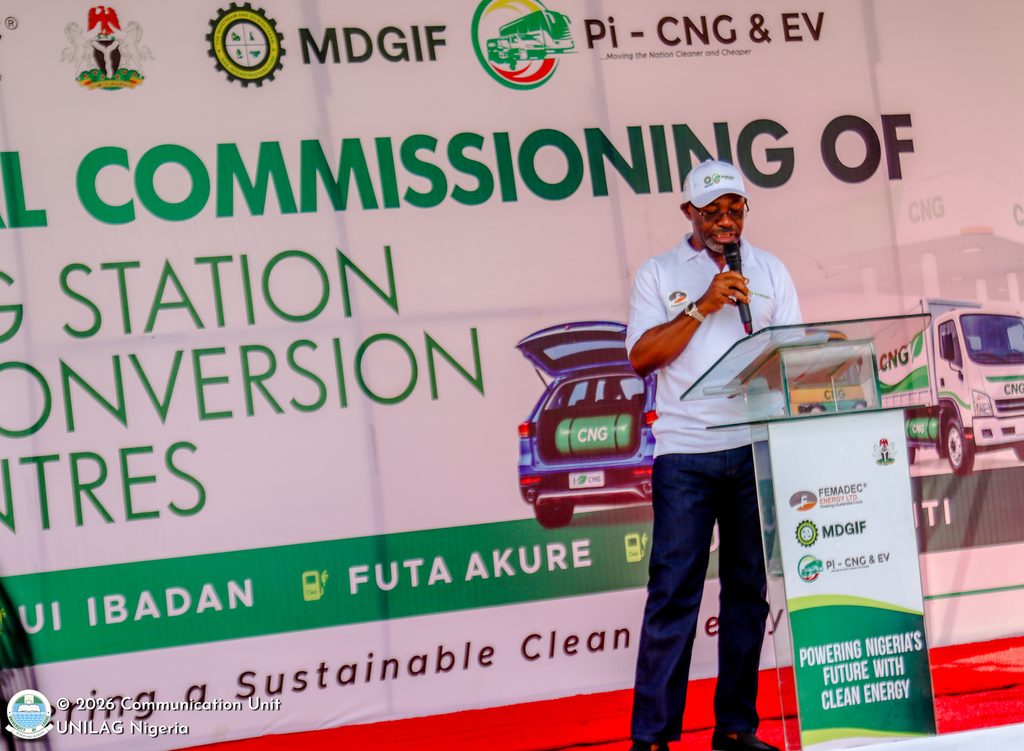
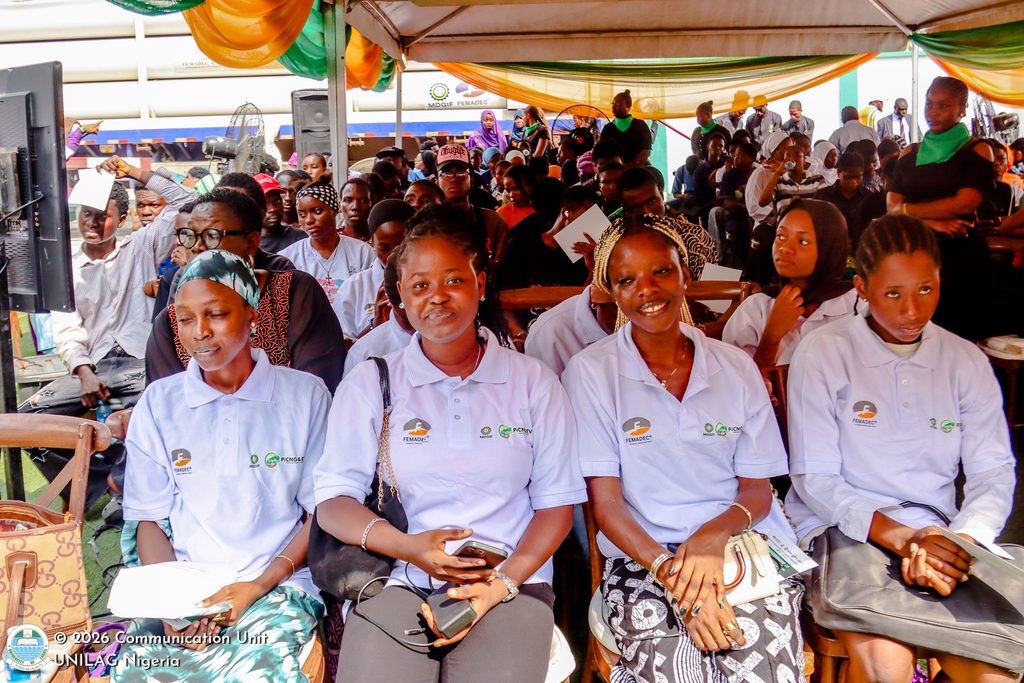
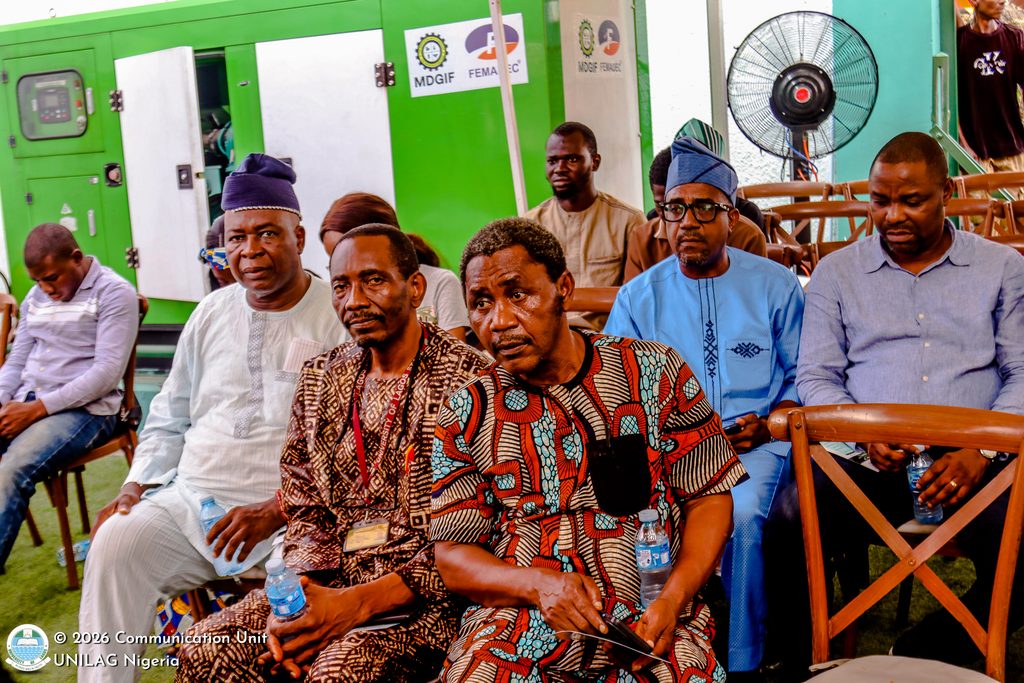
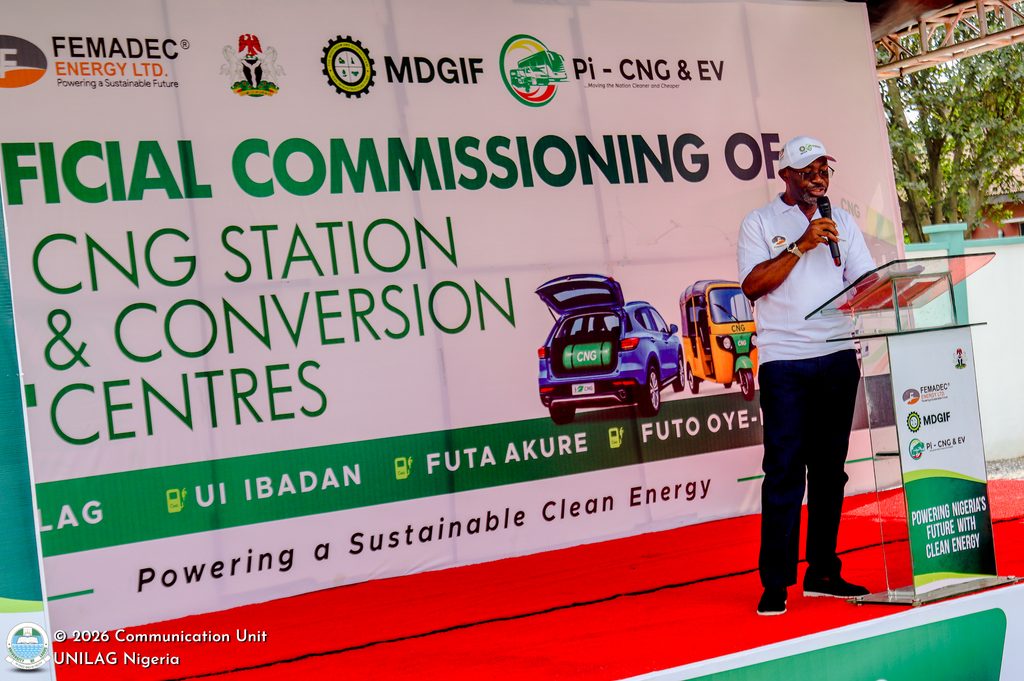
The Federal Government and University of Lagos (UNILAG) have commissioned a Compressed Natural Gas (CNG) Daughter Station and Vehicle Conversion Centre in a collaborative effort to promote cleaner energy, reduce transportation costs and advance sustainable transportation on campus.
The facilities were commissioned on Friday, November 20, 2026, under the Special Palliative Relief on University Transportation (Project SPROUT), an initiative of the Presidential Compressed Natural Gas Initiative (PCNGI) designed to provide affordable and sustainable transportation solutions across federal tertiary institutions in Nigeria.
VC Highlights Facility’s Potential for Sustainability, Research and Innovation
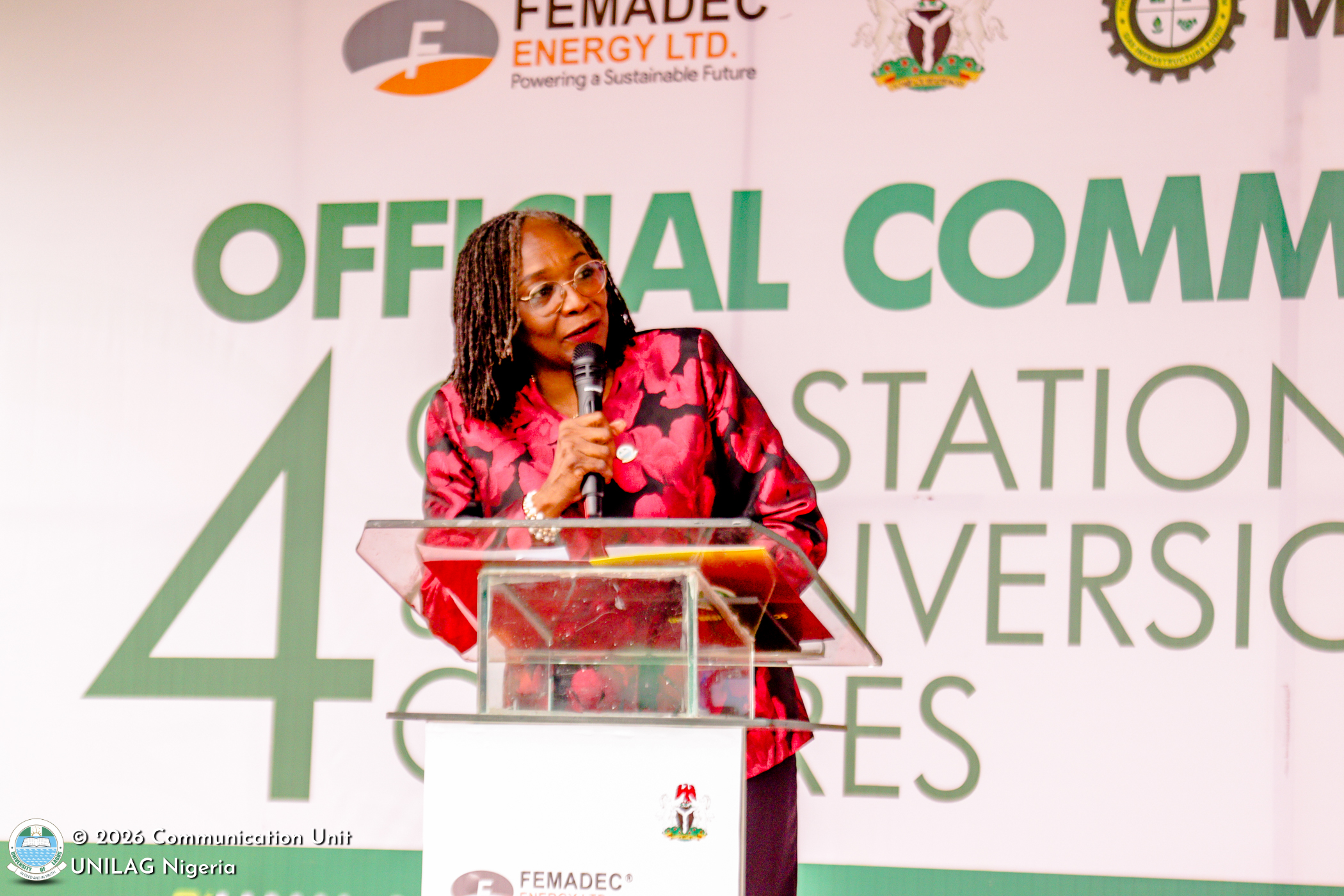
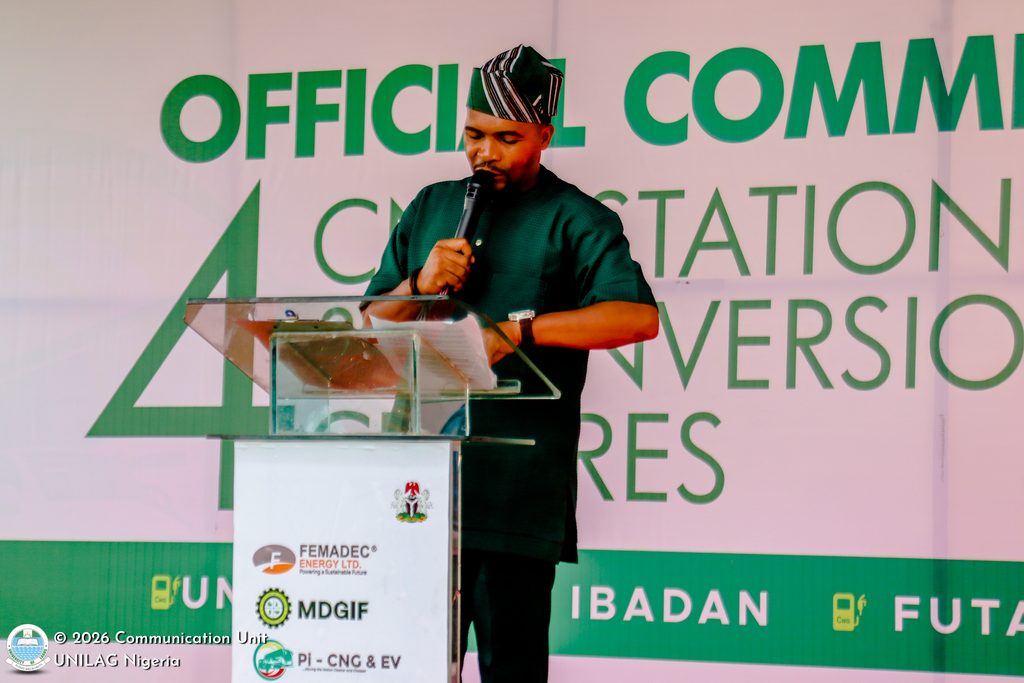
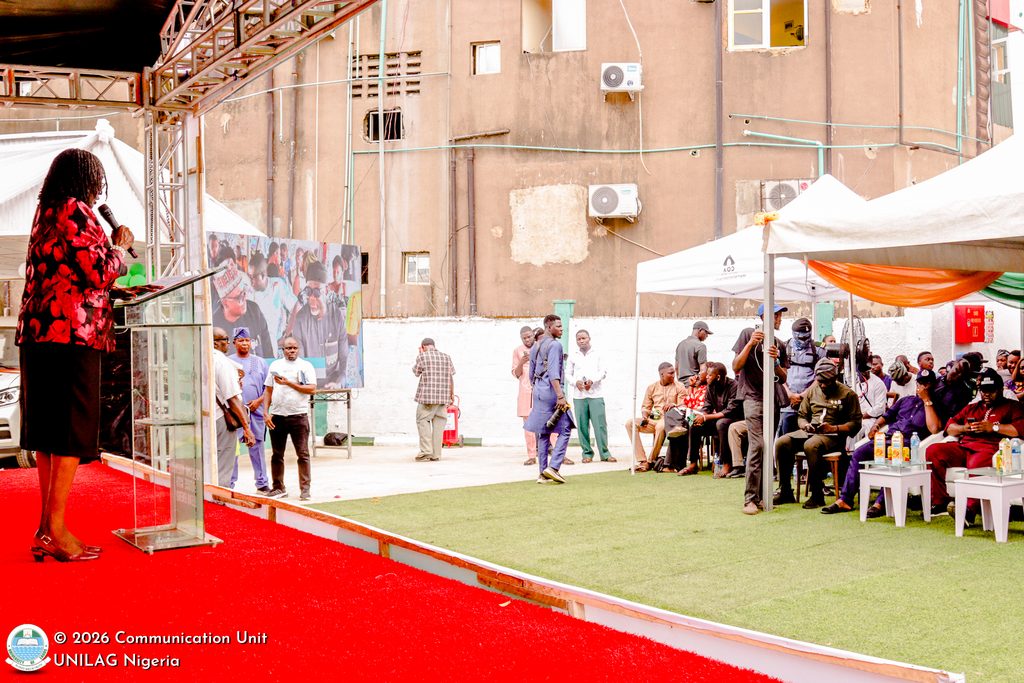
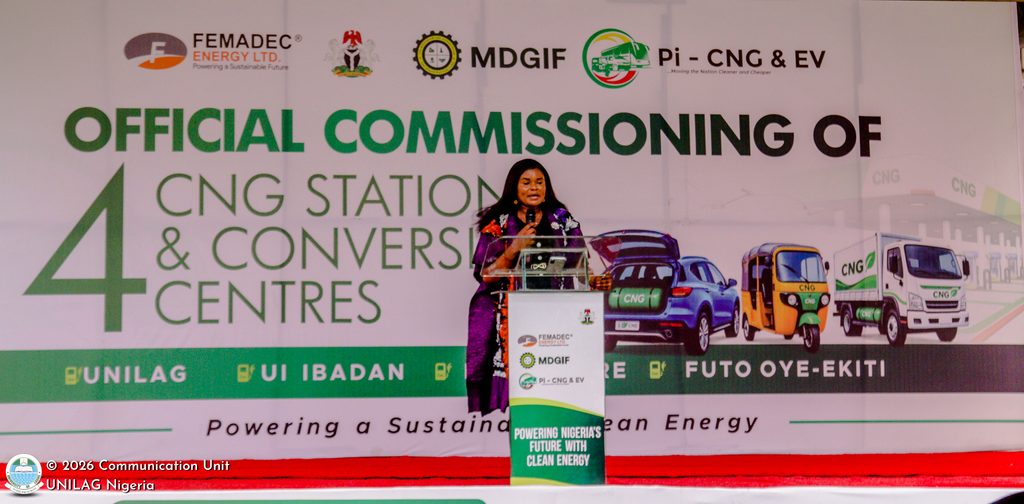
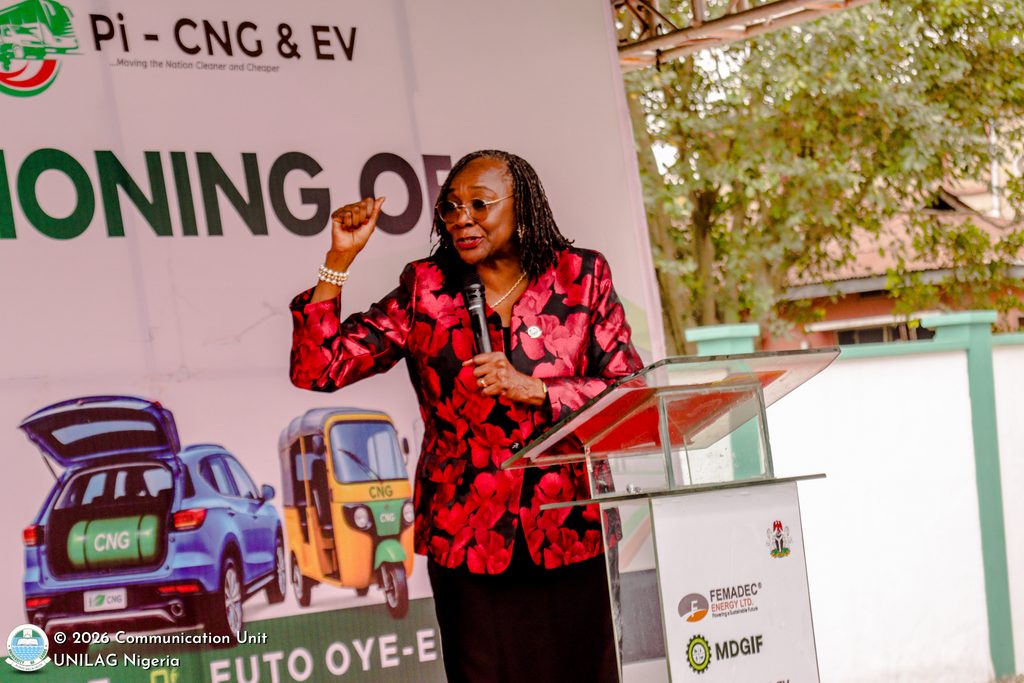
Speaking at the ceremony, the Vice-Chancellor, Professor Folasade Tolulope Ogunsola, OON, FAS, described the commissioning as a significant milestone in the University’s commitment to sustainability, energy efficiency and improved welfare for staff and students.
She noted that the project demonstrated the Federal Government’s commitment to translating its energy policies into practical interventions that directly benefit Nigerians. She particularly acknowledged the partnership between the Midstream and Downstream Gas Infrastructure Fund (MDGIF) and FEMADEC Energy Limited, whose expertise, investment and commitment contributed to the successful delivery of the facility.
Professor Ogunsola explained that the project aligned with the University’s sustainability aspirations, emphasising that a future-ready institution must reflect in its operations the values it teaches and promotes. She identified the adoption of cleaner energy, reduction in operational costs, minimisation of environmental impact and provision of more affordable transportation as important elements of UNILAG’s ambition to build a sustainable university.
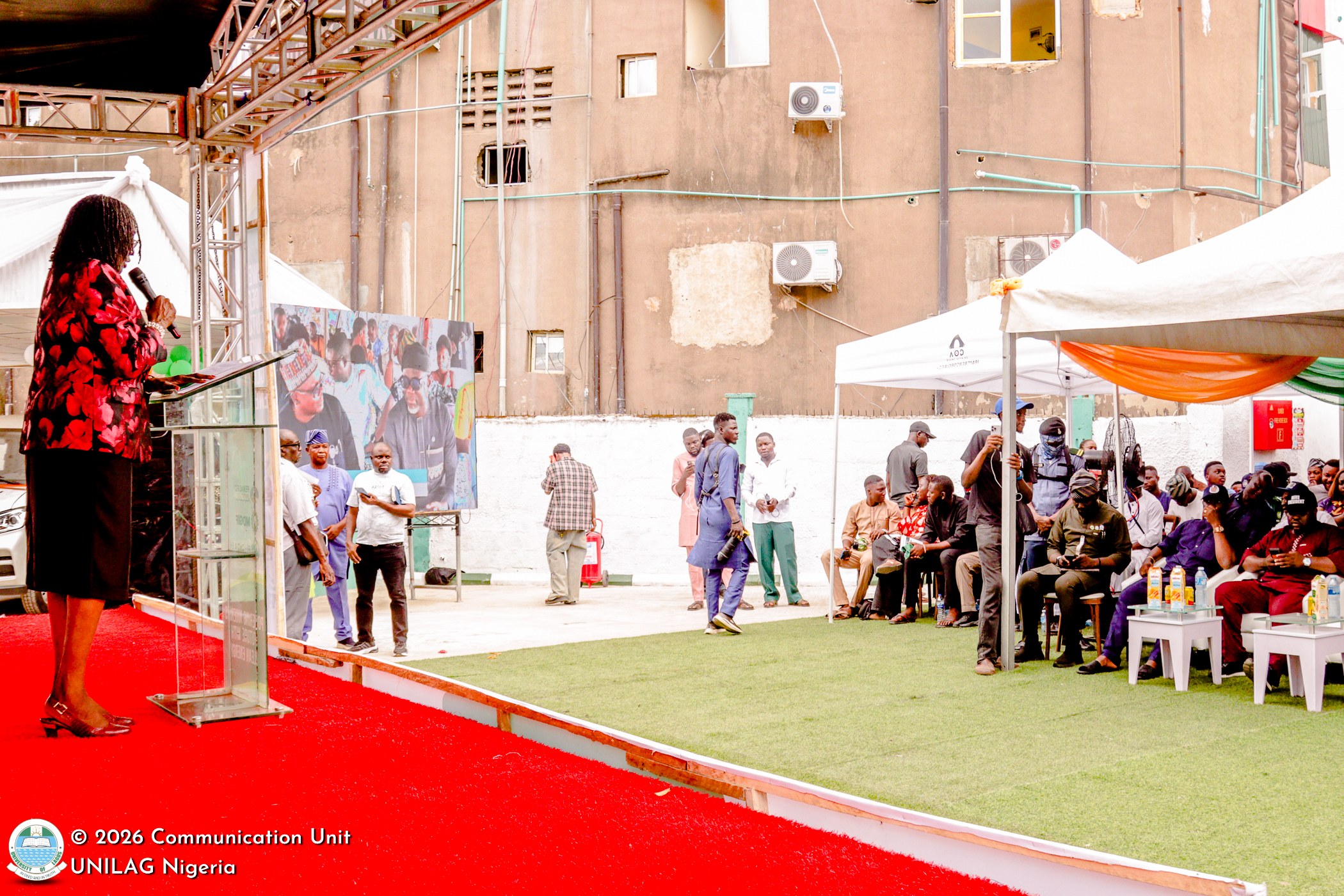
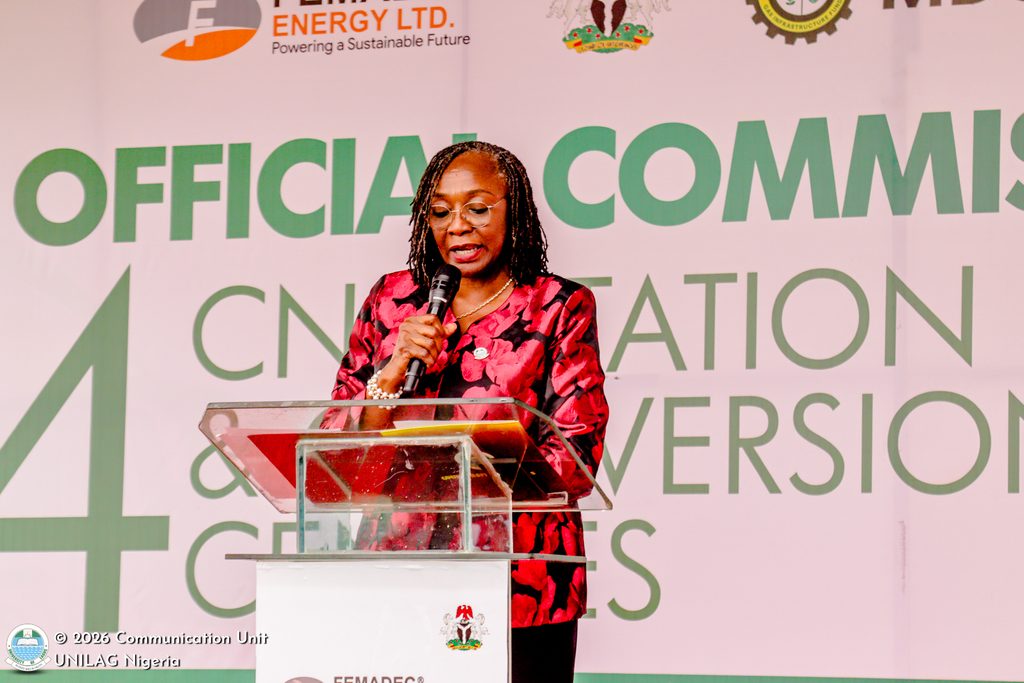

She further noted that the project reflected the Federal Government’s commitment, through the Presidential CNG Initiative, to reducing transportation costs and emissions in the transport sector. She highlighted the importance of collaboration among government, the private sector and institutions of higher learning in developing practical solutions to national challenges.
Beyond its immediate transportation benefits, the Vice-Chancellor highlighted the facility’s potential as a platform for teaching, research, innovation and student development. She explained that it would create opportunities for academic engagement with emerging energy technologies and research in alternative fuels, energy systems, environmental sustainability, engineering and public policy.
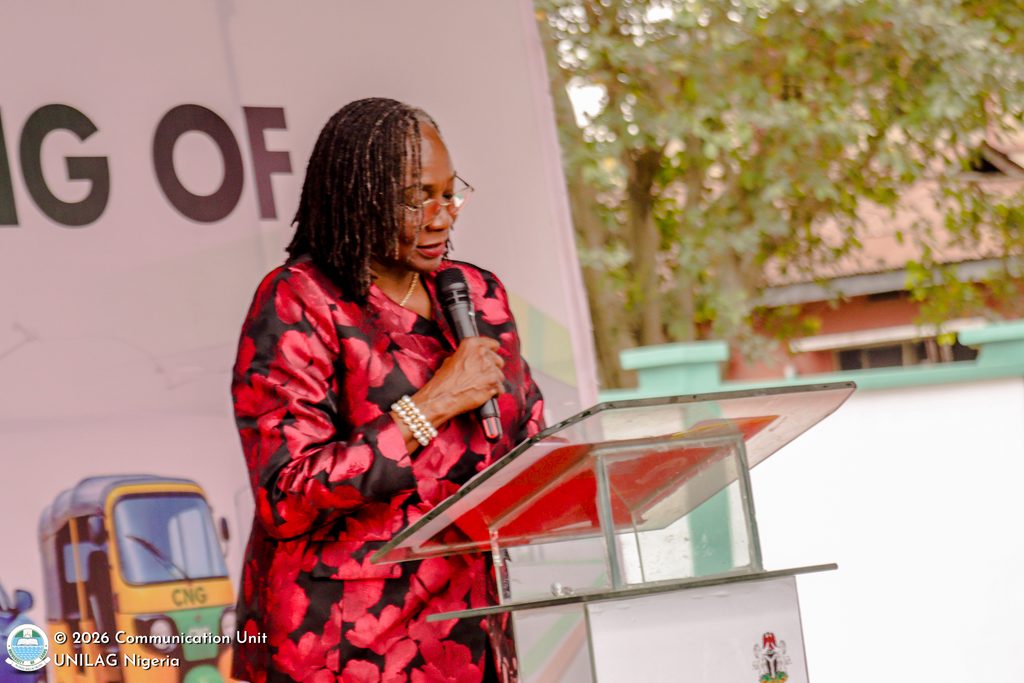
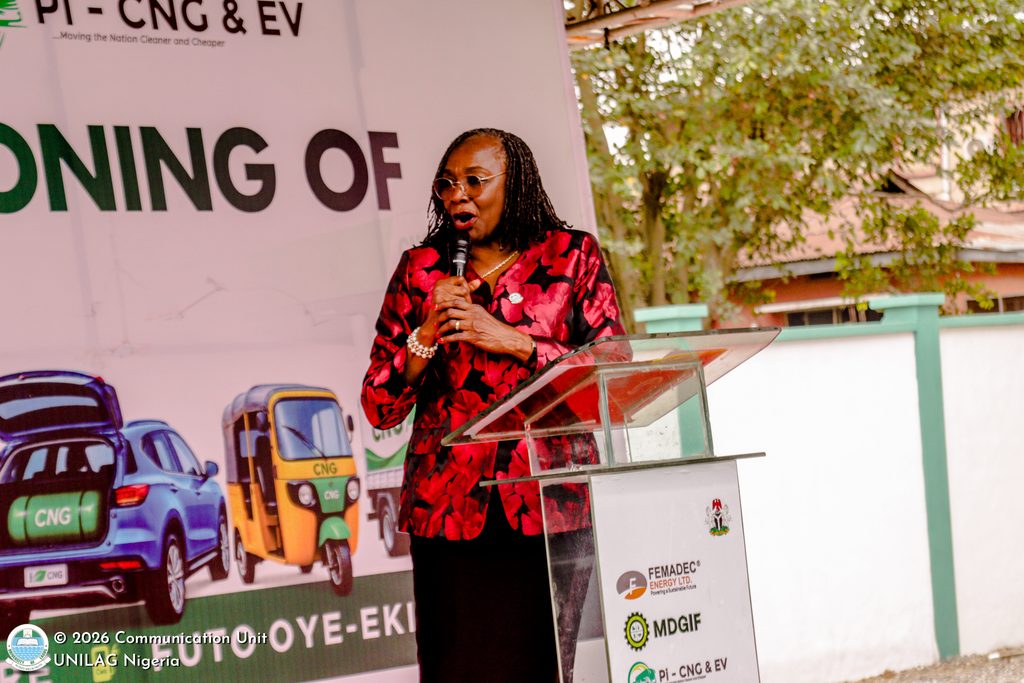
She expressed the hope that the station would serve as a living laboratory where students and researchers could translate theoretical knowledge into practical solutions, develop relevant competencies and contribute to addressing national energy challenges.
Reaffirming UNILAG’s commitment to planetary health and environmental sustainability, she encouraged members of the University community to embrace and responsibly utilise the facility. She also expressed optimism that the partnership would stimulate further initiatives in research, innovation, economic development and environmental responsibility.
She disclosed that 10 vehicle conversions would be provided free of charge, while other interested members of the University community would enjoy conversions at reduced costs. She encouraged staff and students to take advantage of the opportunities offered by the facility and use it responsibly.
Minister Announces 10 CNG Buses, 1,000 Conversion Kits, Promises Lower Transport Fares
In his address, the Honourable Minister of Education, Dr. Maruf Tunji Alausa, CON, announced that UNILAG would receive 10 CNG-powered buses and 1,000 vehicle conversion kits for members of staff under Project SPROUT.
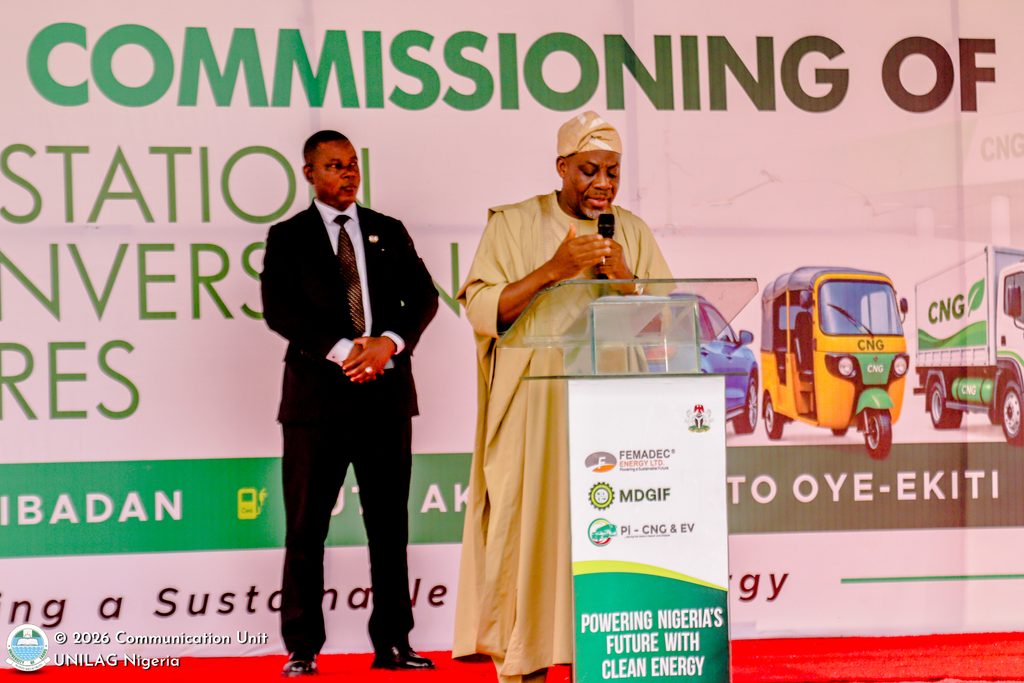

He explained that the benefits of the initiative would extend beyond the provision of infrastructure, noting that the use of CNG could significantly reduce transportation-related fuel expenses. According to him, CNG users could spend approximately 25 per cent of what they would ordinarily spend on conventional fuel.
The Minister consequently assured students that the introduction of the 10 CNG-powered buses should translate into a significant reduction in intra-campus transportation fares. He challenged the University’s management and students to monitor the impact of the intervention, promising to engage the Vice-Chancellor if the expected reduction was not reflected within three months.
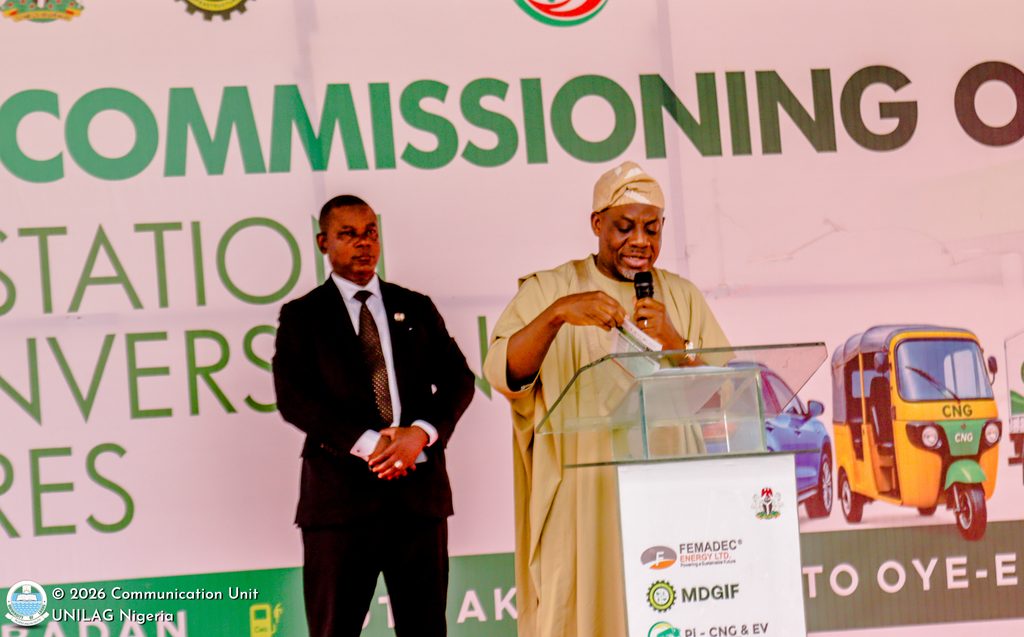

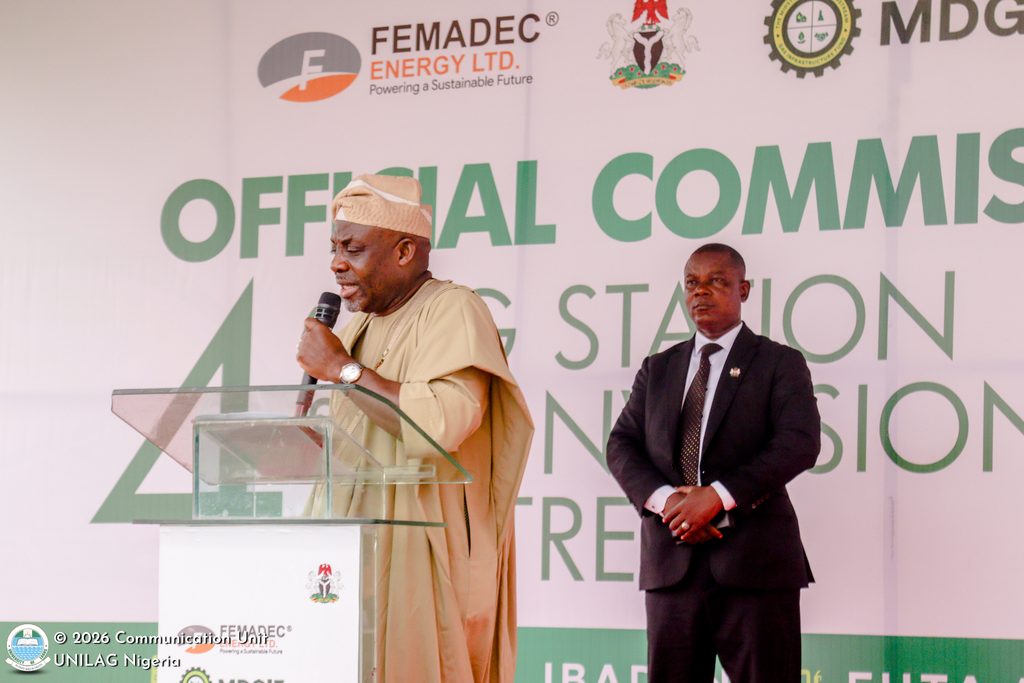
Highlighting the facility’s academic value, Dr. Alausa said the conversion centre would serve as a practical training ground for students of Engineering, Technology and Science, providing opportunities to acquire hands-on experience in CNG technology. He added that the centres would also function as skills-development hubs, in line with the Federal Government’s emphasis on technical and vocational education.
The Minister further outlined the Federal Government’s broader energy interventions in tertiary institutions, including the deployment of solar mini-grid systems and a 12-megawatt mini-grid project aimed at supporting 24-hour electricity supply. He also referenced renewable-energy initiatives involving 20 tricycles as part of efforts to promote cleaner and more sustainable energy solutions.
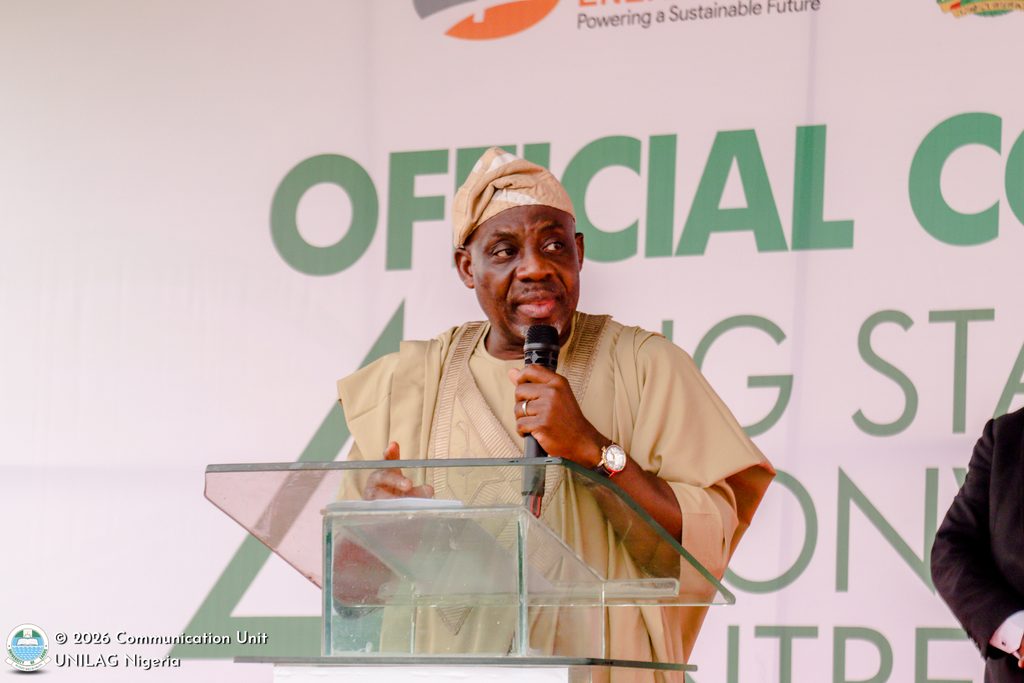
He announced the expansion of the entrepreneurship, innovation and business incubation certification programme pioneered by UNILAG to 14 universities, with plans to extend it to more tertiary institutions in the following year.
Recognising Professor Ogunsola as one of the finest Vice-Chancellors in the Nigerian university system, he commended her leadership and support for the initiative. He also acknowledged the contributions of the President of the National Association of Nigerian Students (NANS) and the University’s Students’ Union leaders.
He urged students to take advantage of the opportunities provided by the Federal Government and demonstrate responsibility in their use of the facilities.
MDGIF Highlights National Gas Infrastructure Development
The Executive Director of the Midstream and Downstream Gas Infrastructure Fund (MDGIF), Mr. Oluwole Adama, described the commissioning as a practical demonstration of the Federal Government’s commitment to making Nigeria’s gas resources beneficial to ordinary citizens.
He explained that the project aligned with the Decade of Gas agenda and the Presidential CNG Initiative, both of which seek to promote domestic gas utilisation and expand the country’s gas infrastructure.

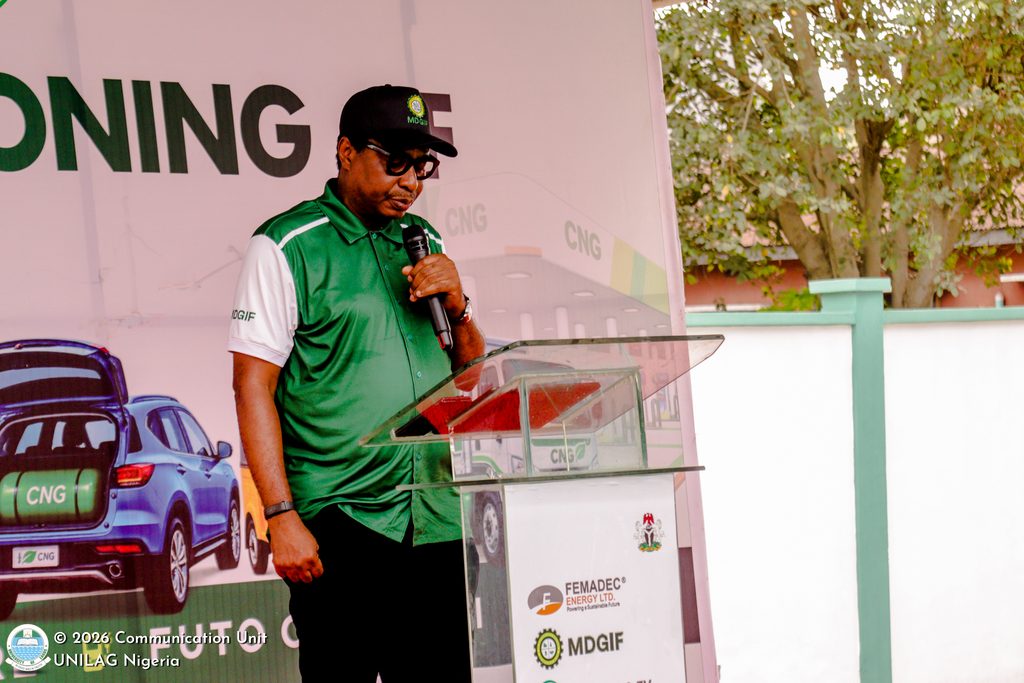





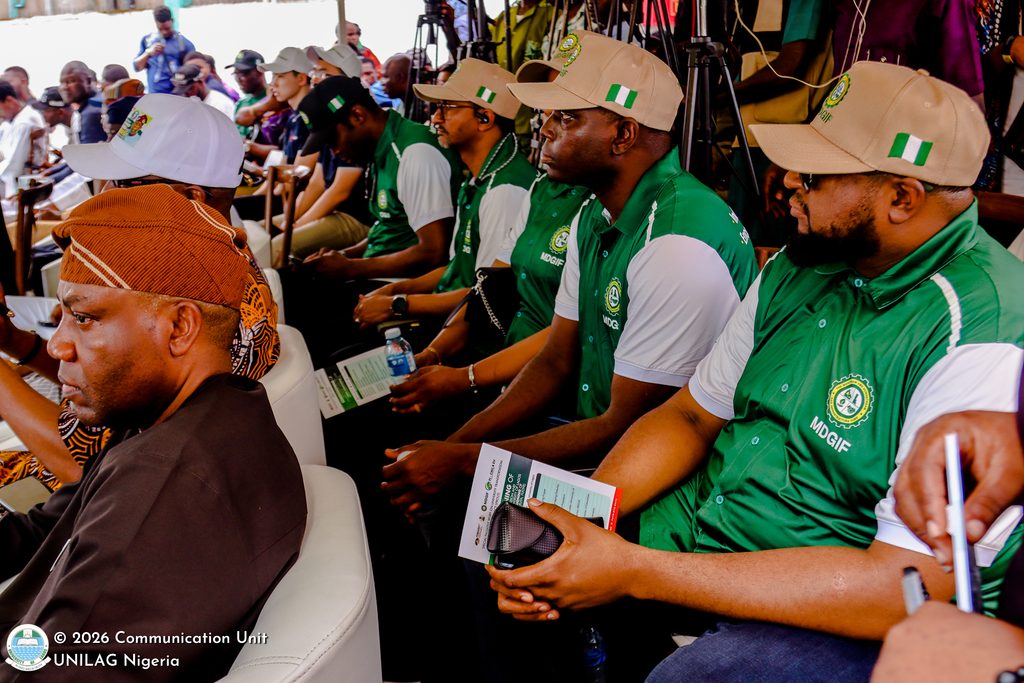

Mr. Adama disclosed that the Fund’s portfolio comprised 31 projects and 205 infrastructure assets across the country. He identified the facilities commissioned at UNILAG and the three other participating universities as Level 1 CNG stations.
He commended the Minister of Education for engaging the Vice-Chancellors and securing institutional support through the allocation of land for the projects. He also encouraged students to explore the opportunities offered by the infrastructure, particularly in engineering, digital systems, safety management, maintenance, research and enterprise.
NANS President Calls for Affordable Fares, Improved Student Mobility
In his goodwill message, the President of the National Association of Nigerian Students (NANS), Comrade Akinteye Babatunde Afeez, described the initiative as an important intervention in student welfare, noting that transportation remained a significant daily expense for students across tertiary institutions.
He commended the Vice-Chancellor for her responsiveness to students’ concerns and her role in restoring the Students’ Union at UNILAG. He also appealed for the timely completion of the proposed Student Experience Centre, describing it as an important addition to the University’s student development infrastructure.
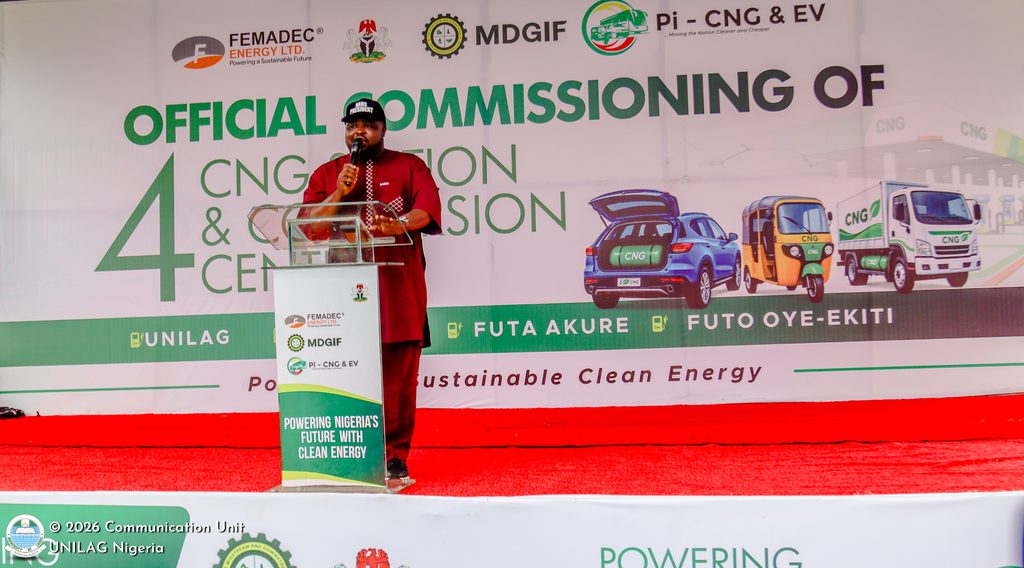

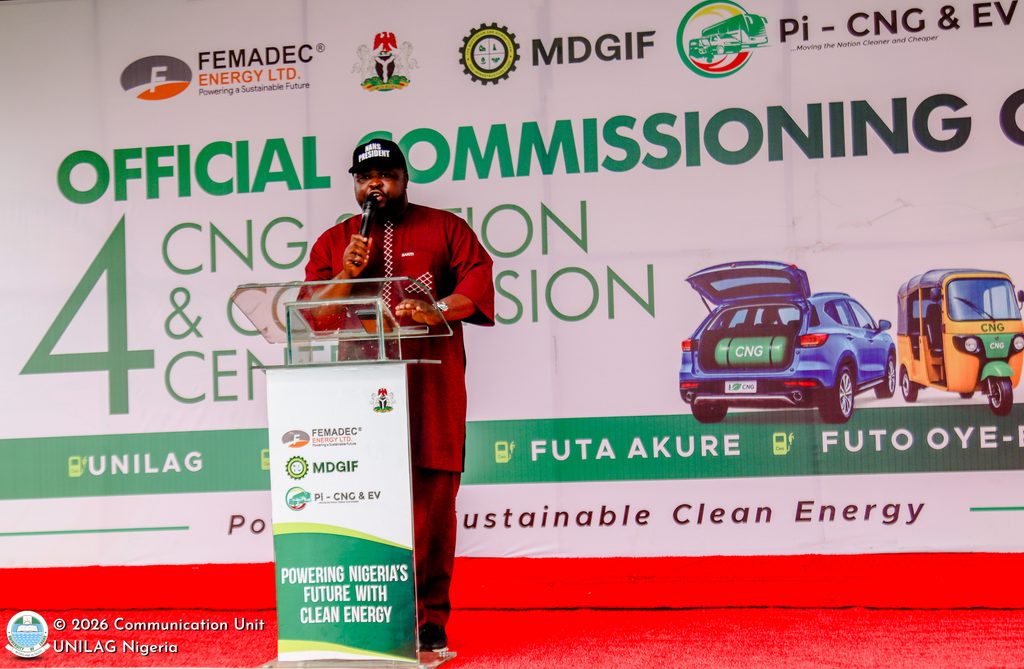



Comrade Afeez emphasised that the success of Project SPROUT should be measured by its direct impact on students through affordable transportation fares, reliable services, improved mobility and proper maintenance of the facilities. He urged students to protect the infrastructure, stressing that it had been provided for their benefit.
FEMADEC Energy Highlights Role in CNG Infrastructure Delivery
The Managing Director of FEMADEC Energy Limited, Engr. Fola Akinnola, delivered the welcome address, highlighting the company’s role in providing the CNG infrastructure and vehicle conversion facilities. He described the commissioning of the CNG station at the University of Lagos as another milestone in the company’s nationwide 20-campus CNG rollout.
He commended the Minister of Education, Dr. Maruf Tunji Alausa, for supporting the initiative and acknowledged the contributions of the Midstream and Downstream Gas Infrastructure Fund.

Engr. Akinnola explained that the facility would help reduce transportation costs and carbon emissions within the UNILAG community while providing students with practical training in gas infrastructure management, vehicle conversion and maintenance.
He reaffirmed FEMADEC Energy’s commitment to supporting the expansion of the programme beyond the initial 20 universities.
CNG Facilities Commissioned at Four Federal Universities
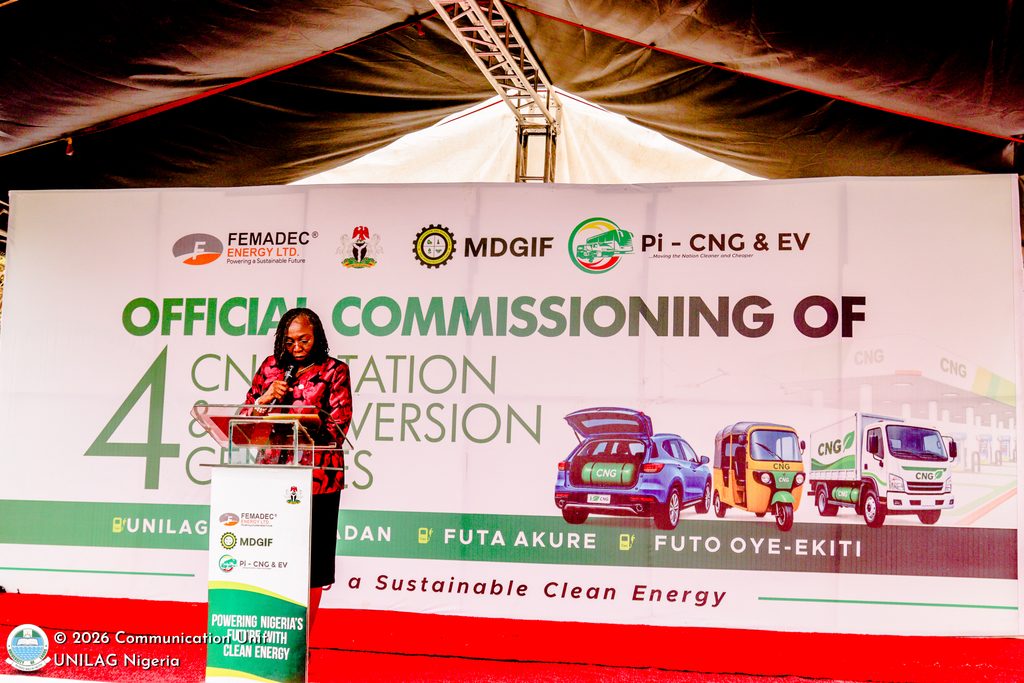
The commissioning ceremony also featured the remote commissioning of similar facilities at the University of Ibadan (UI), Federal University of Technology, Akure (FUTA), and Federal University Oye-Ekiti (FUOYE), extending the initiative to four universities in the South-West.
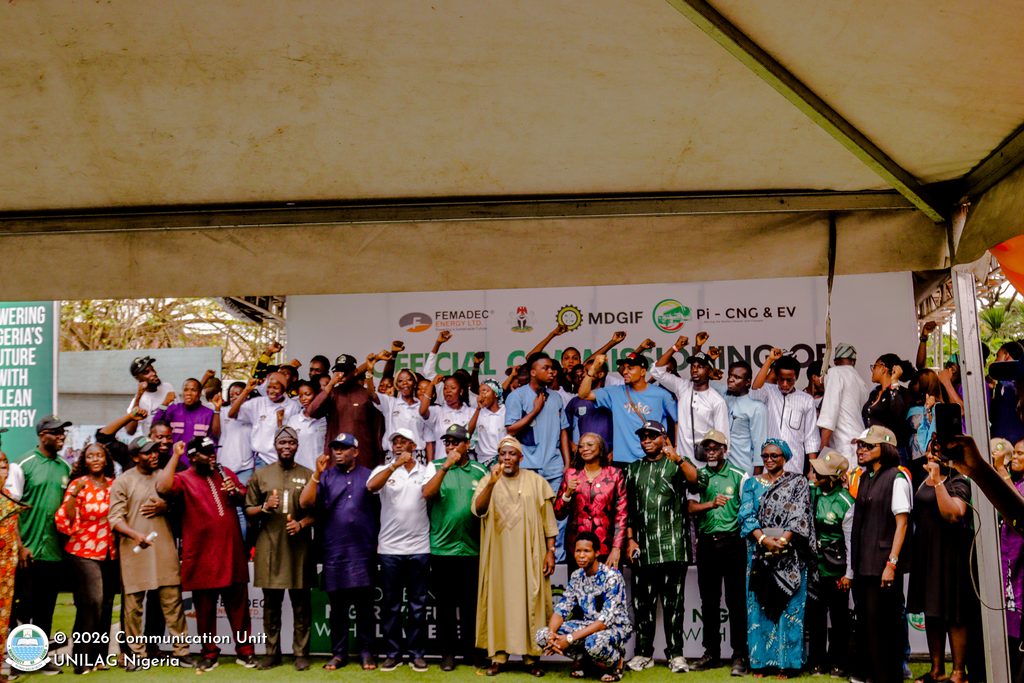
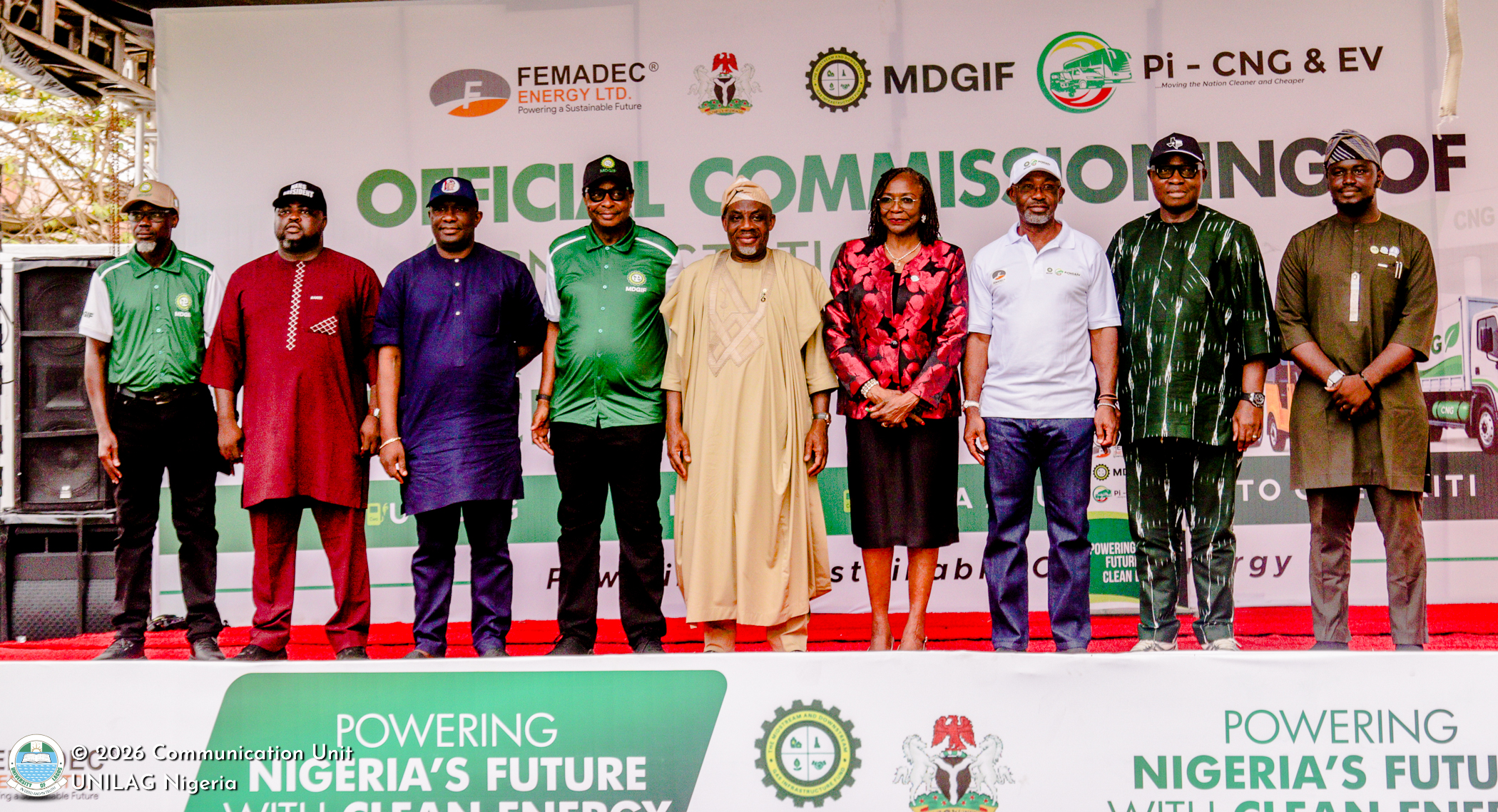
The event culminated in the official commissioning and ribbon-cutting of the UNILAG CNG Daughter Station and Vehicle Conversion Centre by the Honourable Minister of Education, the Vice-Chancellor, the Executive Director of MDGIF and the Managing Director of FEMADEC Energy Limited.
The commissioning marks a significant step in UNILAG’s commitment to sustainable campus development, positioning the University not only as a beneficiary of cleaner and more affordable energy but also as an active contributor to Nigeria’s energy transition.
Through the Federal Government’s partnership with FEMADEC Energy Limited and other stakeholders, the initiative provides a practical pathway to reducing transportation costs and carbon emissions while enhancing students’ technical capacity. It further reinforces the University’s role in promoting innovation, research and sustainable development.
Report: Lynda Onah
Photography: Joshua Micheal