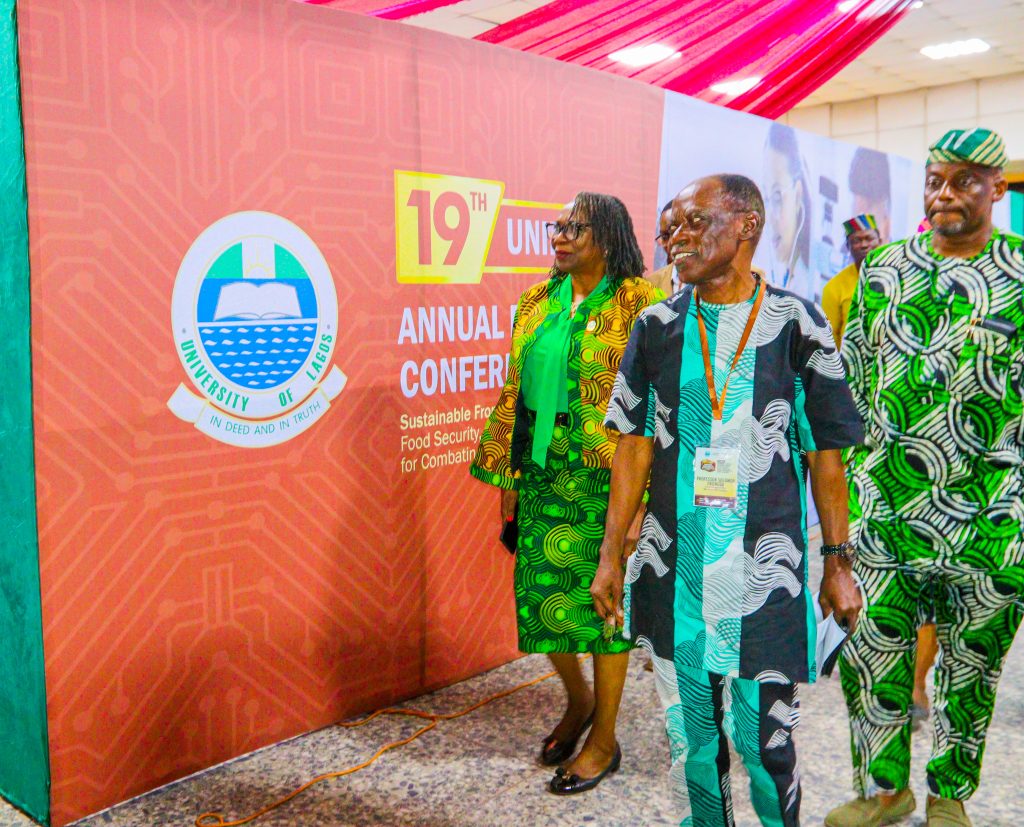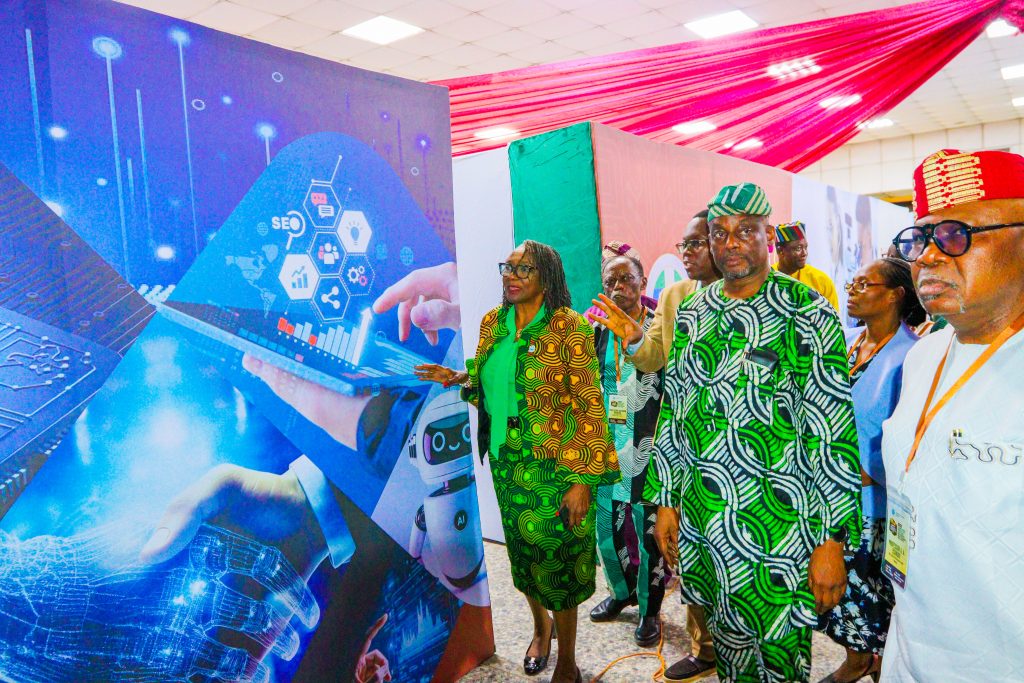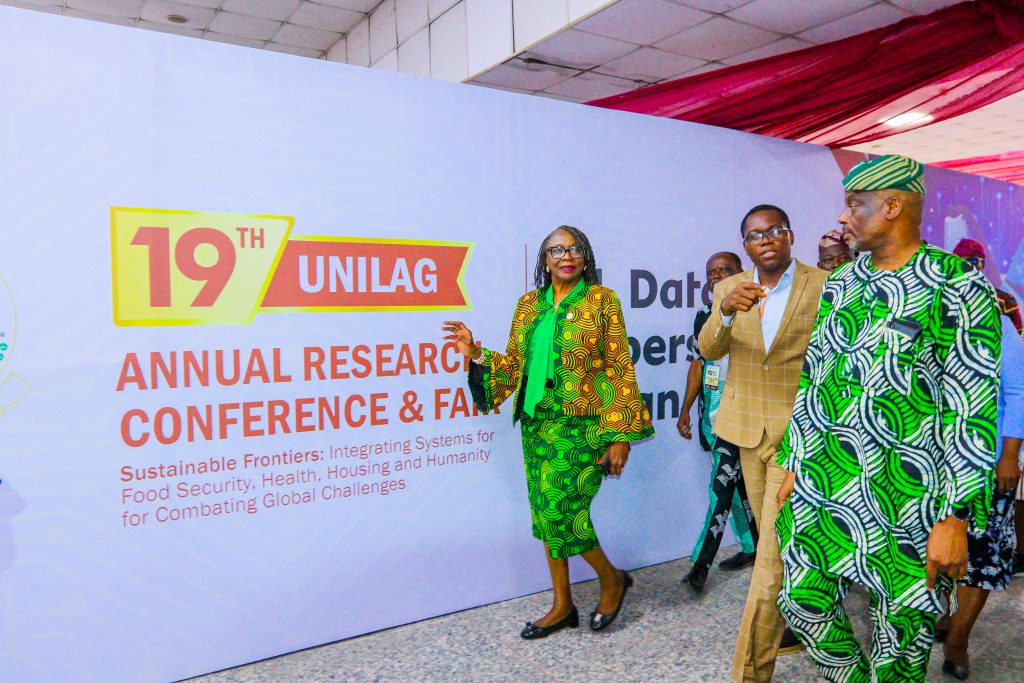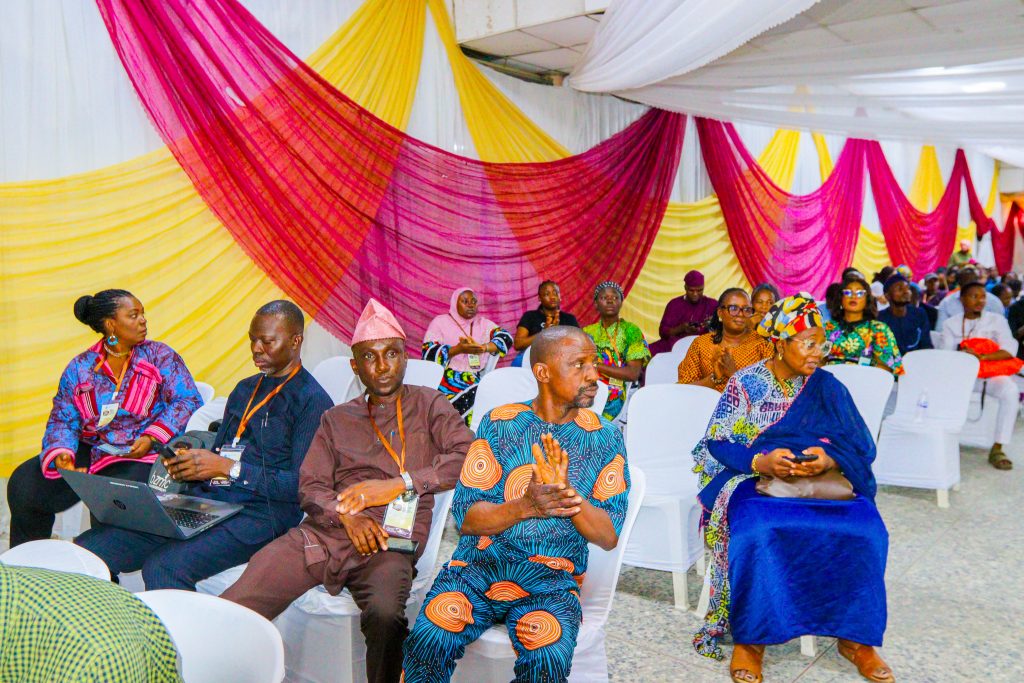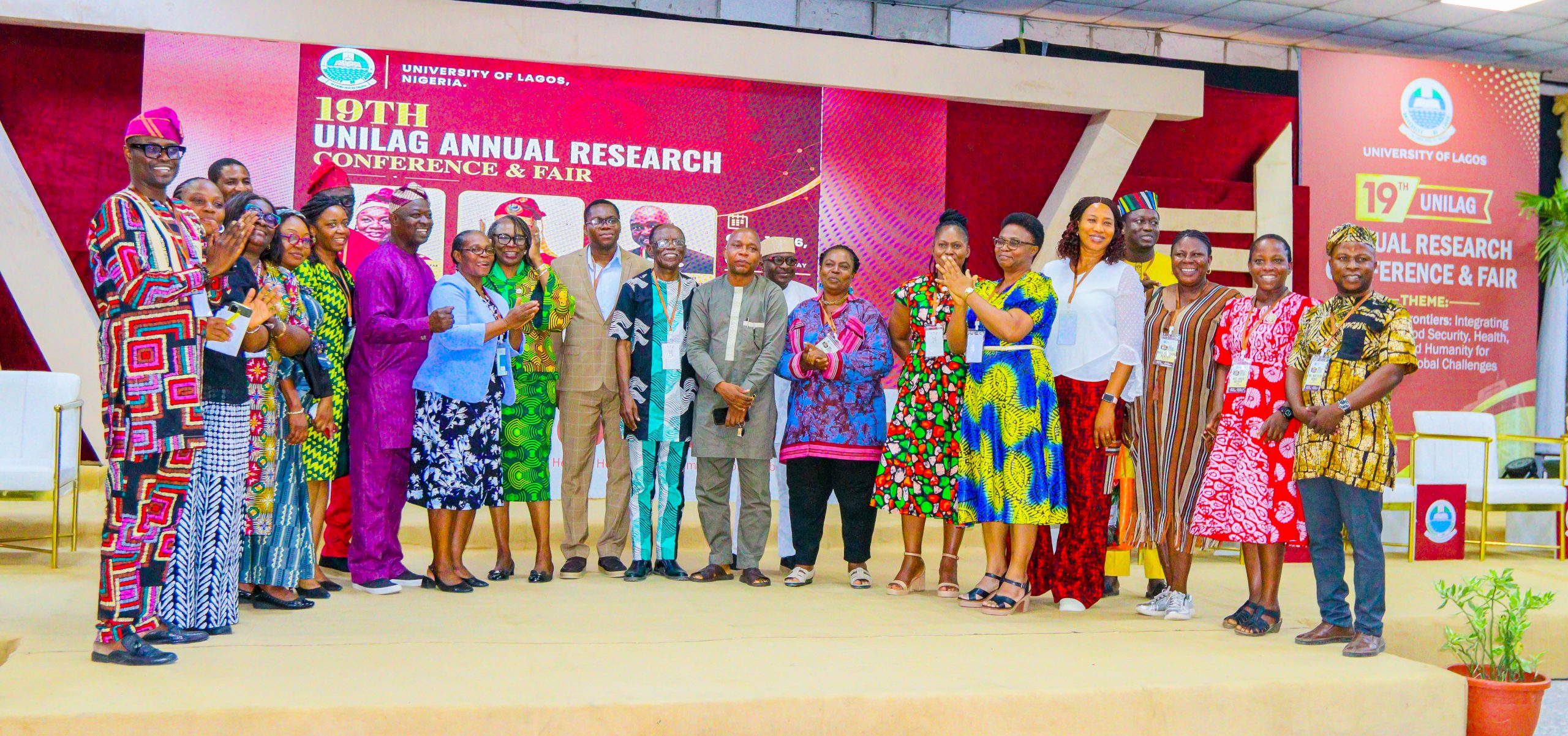
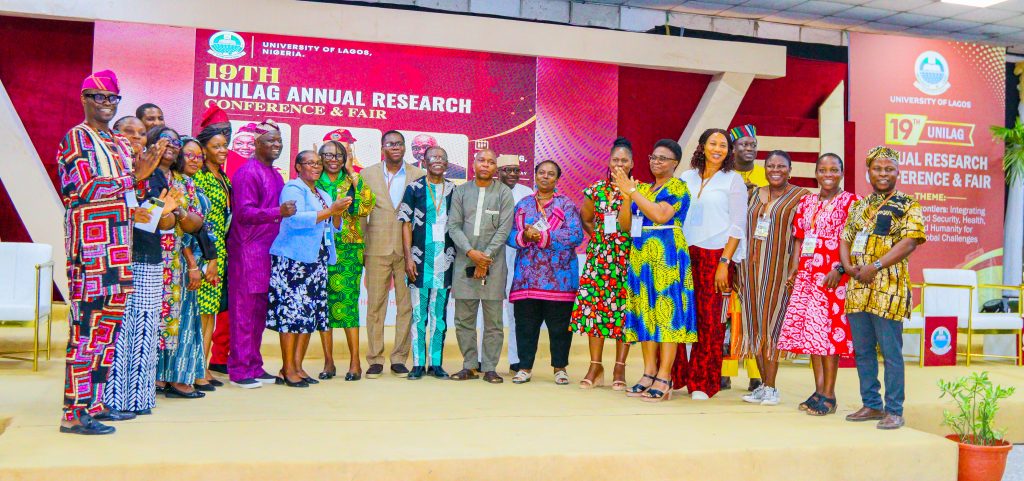
The University of Lagos (UNILAG) concluded its 19th Annual Research Conference and Fair on Friday, 16 October 2026, with the maiden PhD Colloquium, awards for outstanding research, and a renewed charge for researchers to translate findings into practical solutions to societal challenges.
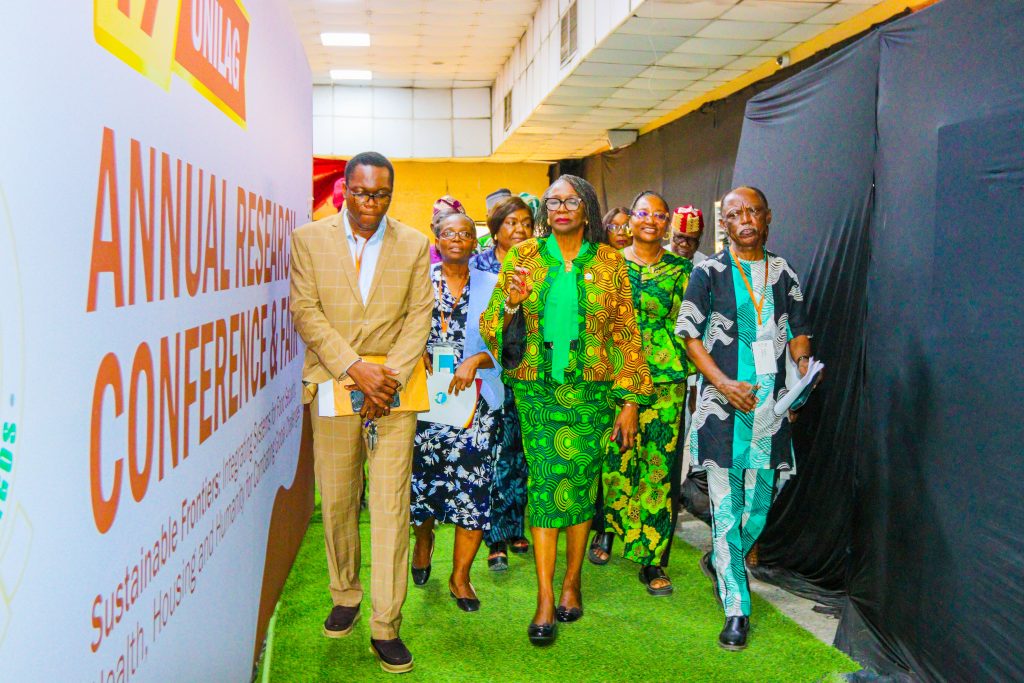
The conference and fair, held from 14 to 16 October 2026, and themed “Sustainable Frontiers: Integrating Systems for Food Security, Health, Housing and Humanity for Combating Global Challenges,” brought together researchers and stakeholders to explore interdisciplinary approaches to pressing societal needs.
Researchers Charged to Pursue Impact-Driven Solutions
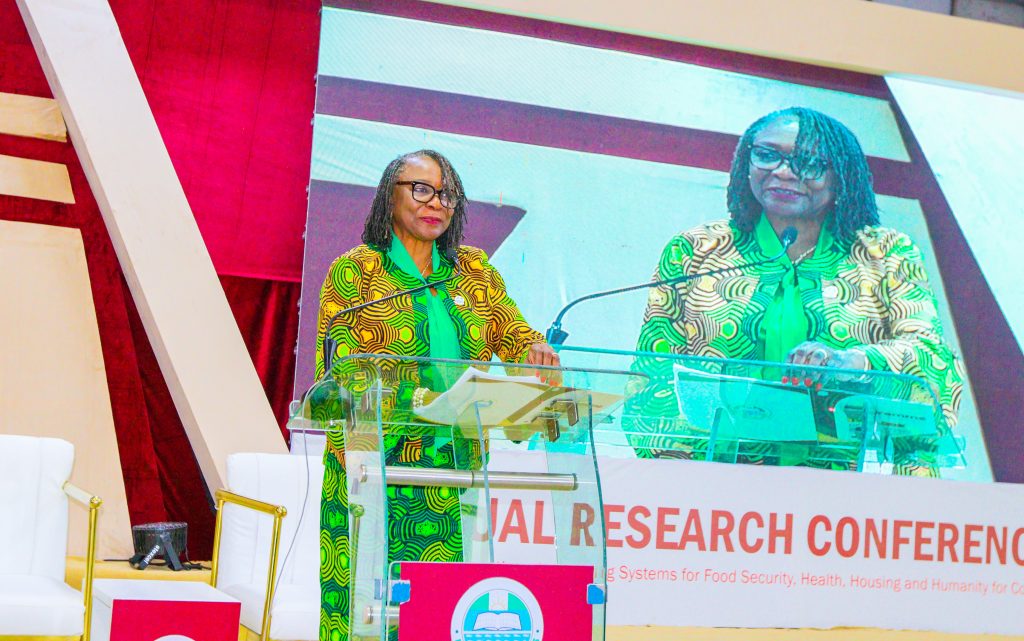
Speaking at the closing ceremony, the Vice-Chancellor, Professor Folasade Tolulope Ogunsola, OON, FAS, described the conference as the best edition so far and expressed confidence that the next would surpass it. She commended the organising committee for its brilliant innovations and emphasised the essence of interdisciplinary collaboration in producing research that addresses real-world problems.
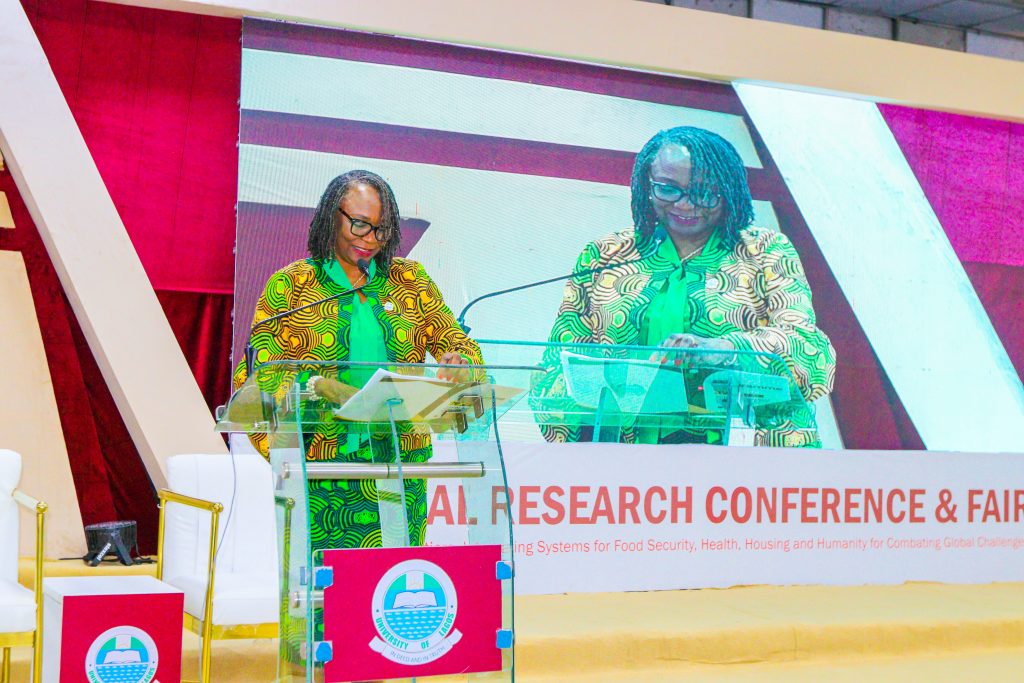
Professor Ogunsola urged researchers to move beyond disciplinary boundaries and pursue work that contributes to development, noting its relevance to Africa’s Agenda and the need to continually push the boundaries of knowledge. She observed that Africa feels the effects of global warming more acutely than those primarily responsible for emissions, stressing that complex problems require collaborative, multidisciplinary solutions rather than siloed approaches.
She particularly endorsed the PhD Colloquium’s “Beyond Thesis” focus, describing the postgraduate school as a major hub where students learn to ask the right questions to solve real-world problems.
In her words, “We cannot determine the problems within our walls. We must go out to where the problems are impacting.”
She further charged the university community by reiterating a nursery rhyme echoed by a panellist at the opening ceremony of the International Week 2026, stating that, “If we are good, then we must be better, and if we are better, we must go for best, and if there’s anything we are doing that’s easy, well, that’s not what we should be doing. It should be difficult; it should scare us, and then we will truly make change.”
Maiden PhD Colloquium Rewards Outstanding Researchers
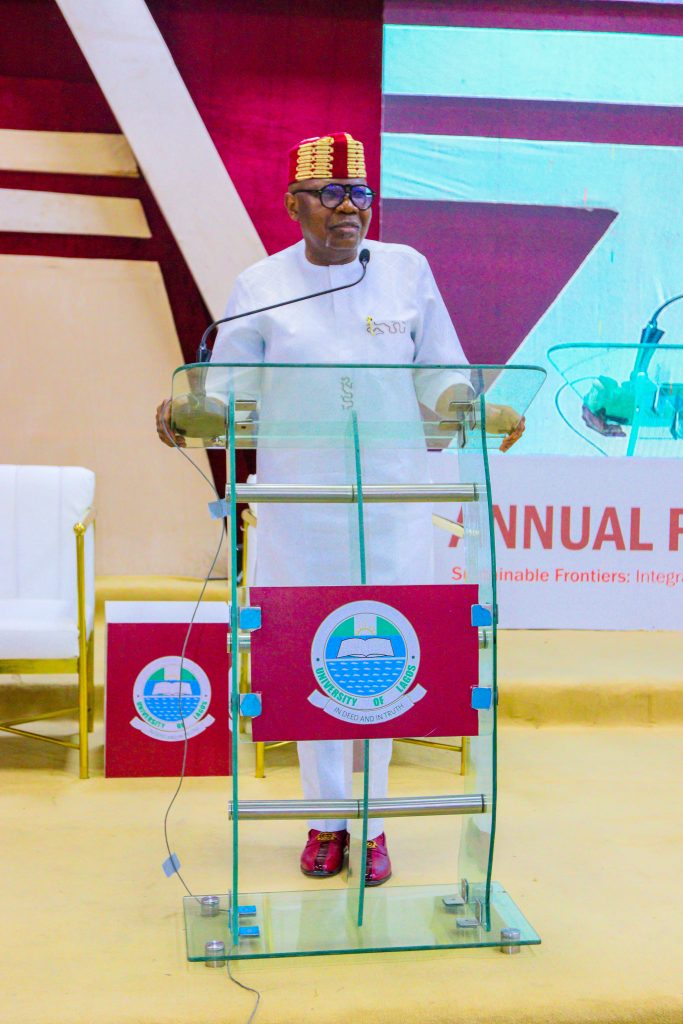
Earlier on, the Dean, School of Postgraduate Studies (SPGS), Professor Abraham Osinubi, opening the PhD Colloquium, welcomed professors, members of the School’s Board, which he described as “the largest board in the University of Lagos,” and scholars from different fields. He noted that the event celebrated not only the ten selected presenters but also “the determination to submit oneself to intellectual rigor, the discipline to investigate, and the intellectual audacity to imagine solutions to our societal problems.”
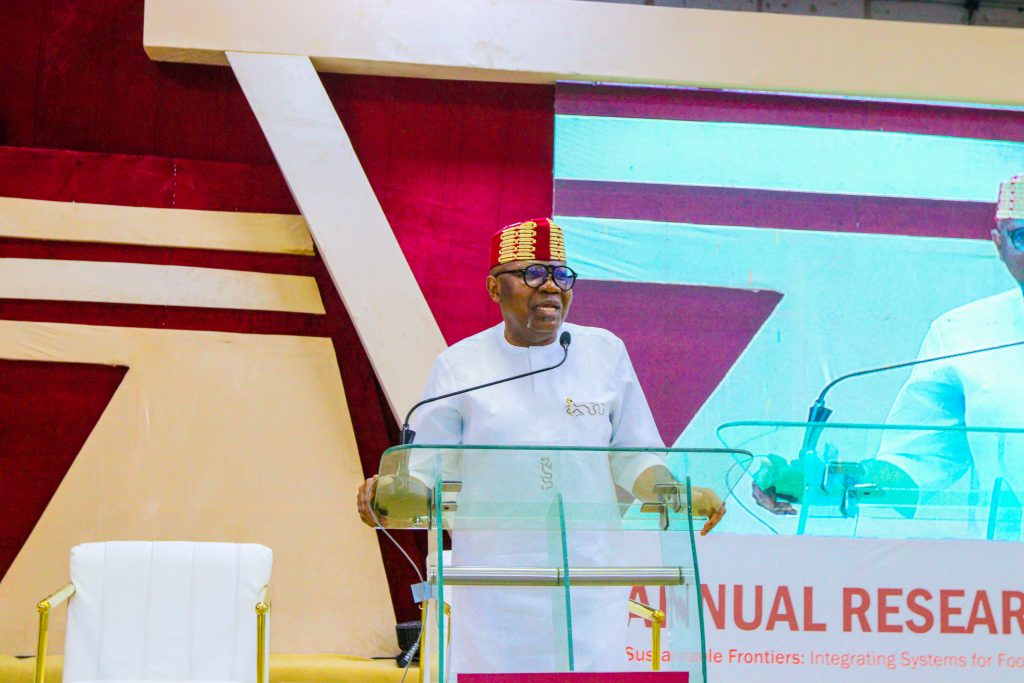
Quoting Aristotle’s observation that “all men by nature desire to know,” he stressed that curiosity alone is insufficient; the pursuit of knowledge requires methodological rigour, intellectual honesty, discipline, and academic humility.
He framed the colloquium around the Three Cs: compete only with one’s previous best, collaborate, and celebrate oneself for participating in the conference. He also pledged that SPGS would monitor the candidates to the very end of their sojourn at the University of Lagos and secure industry support beyond the initial monetary awards.
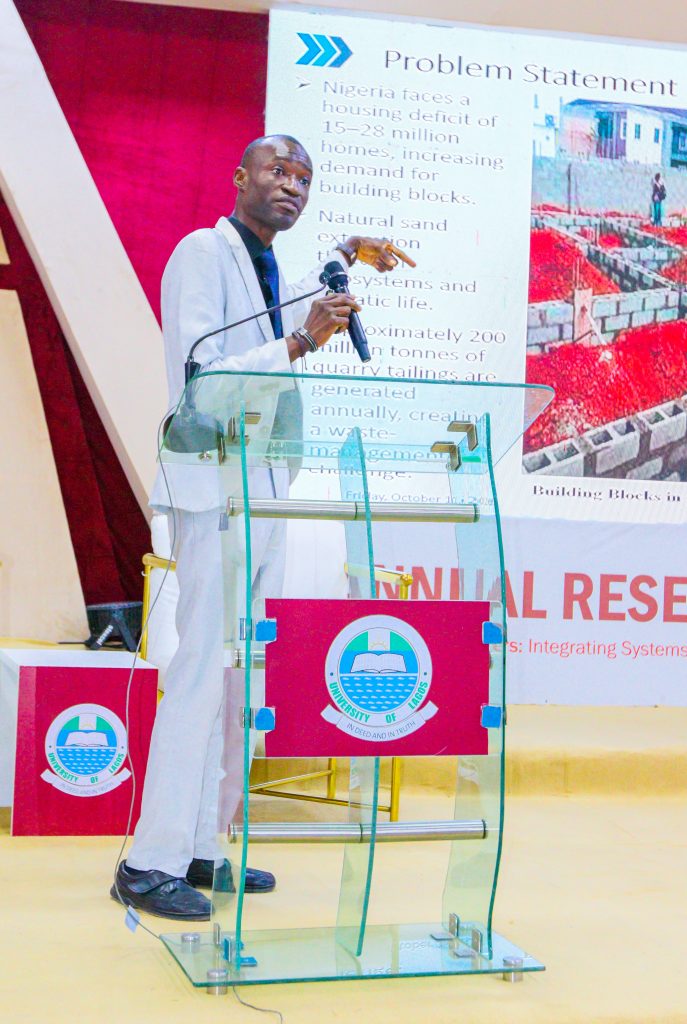
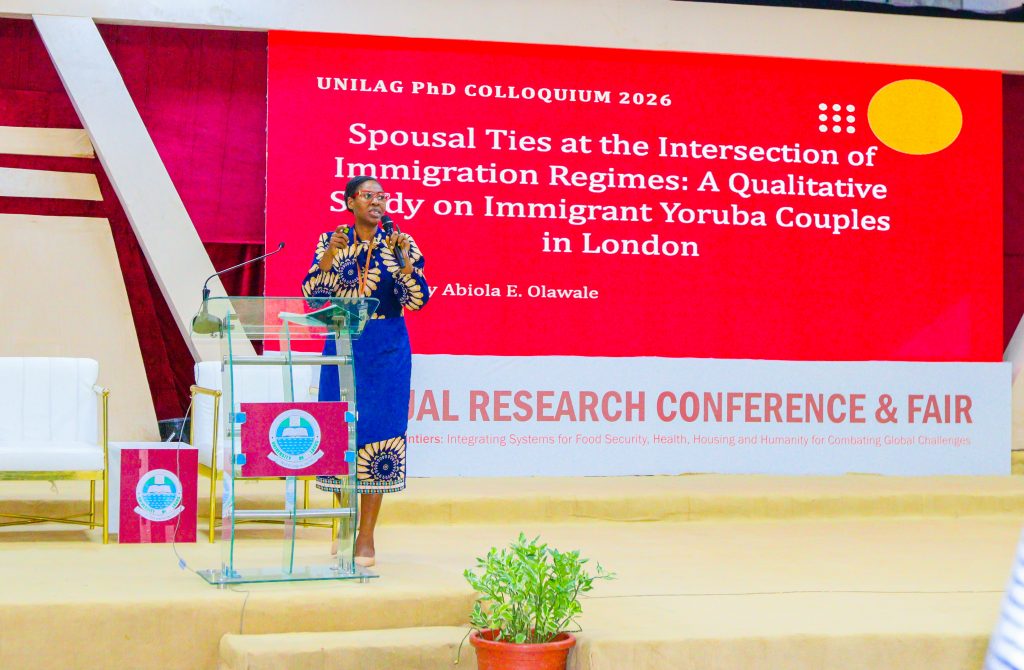
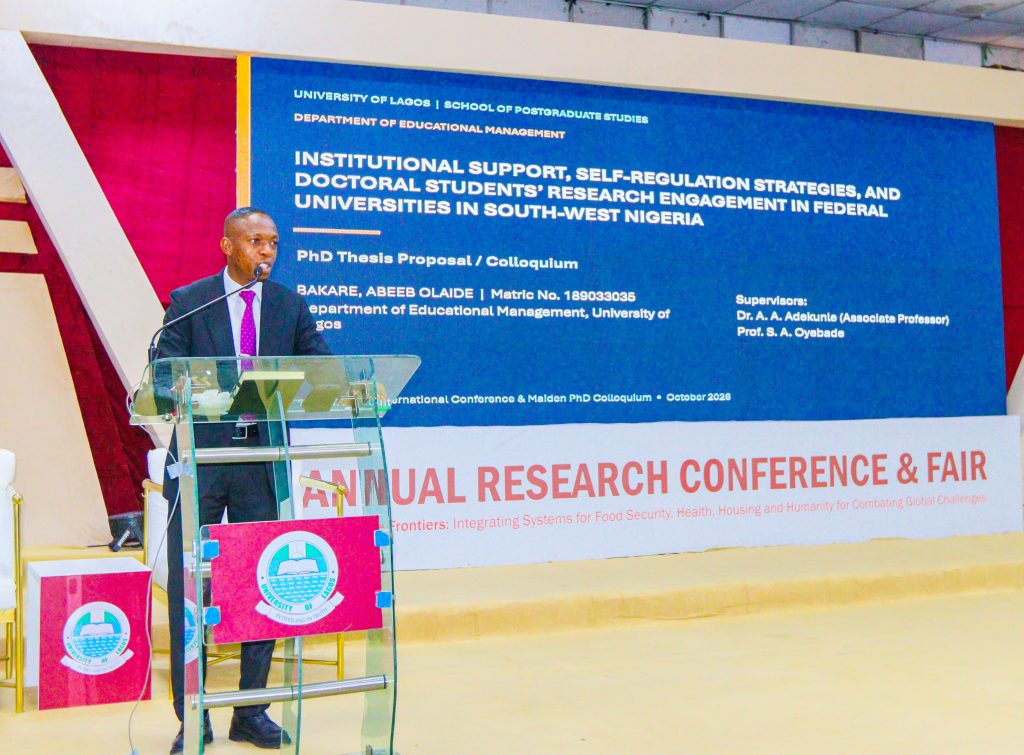
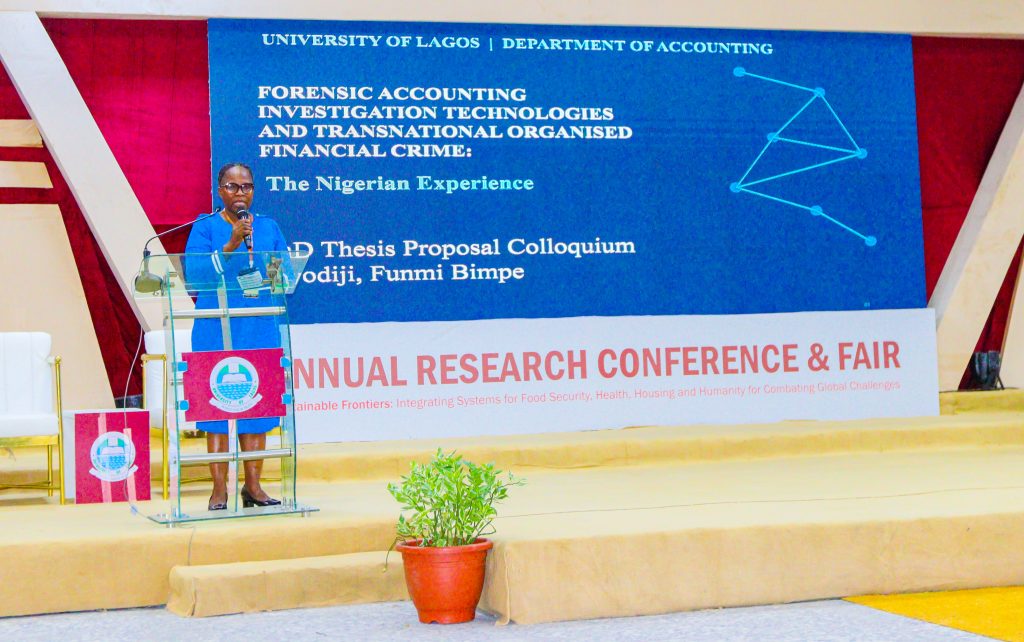
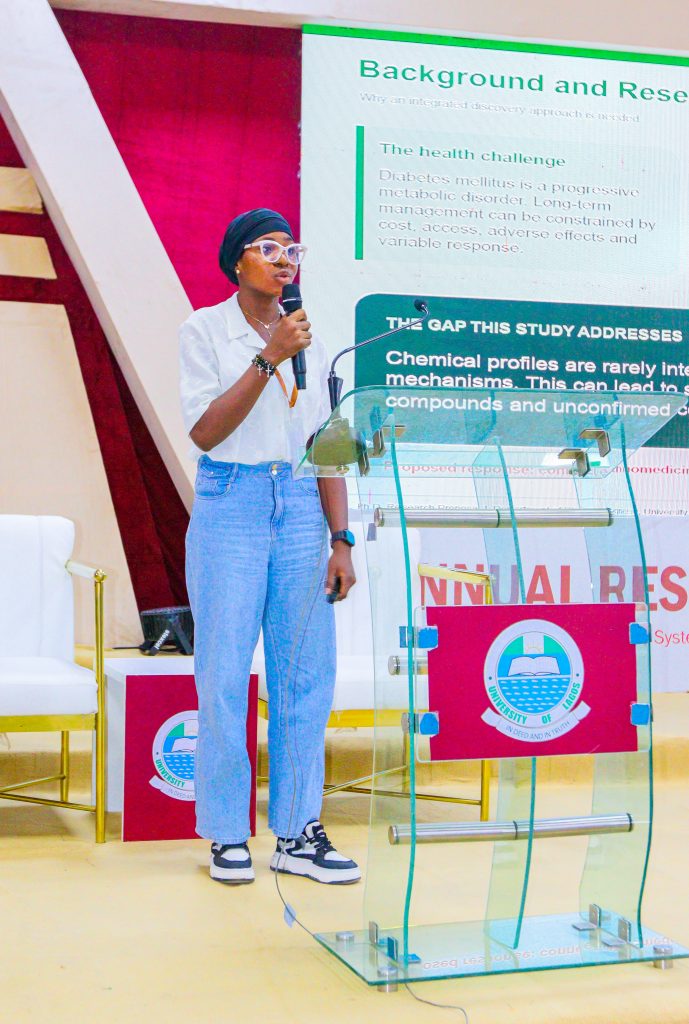
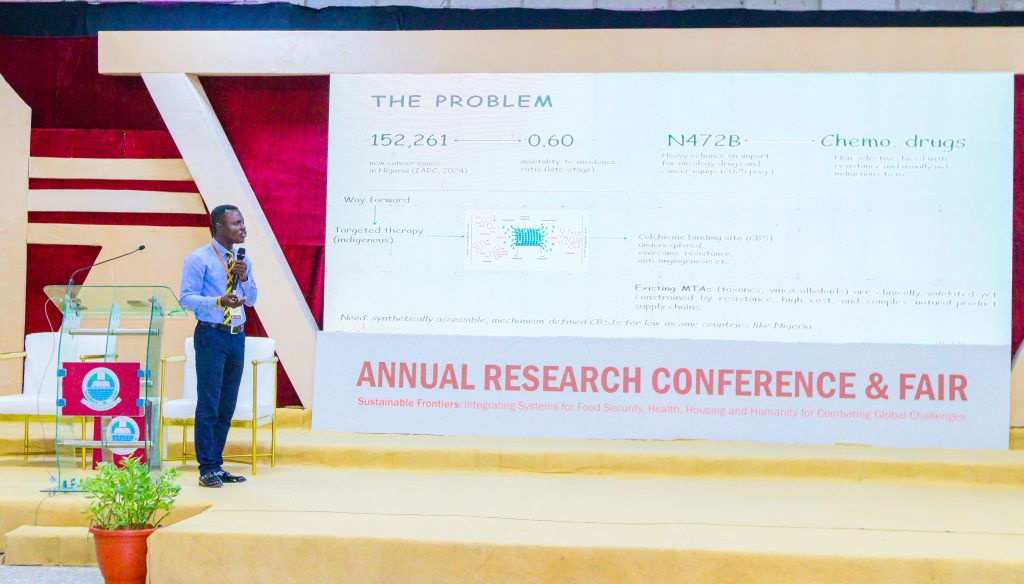
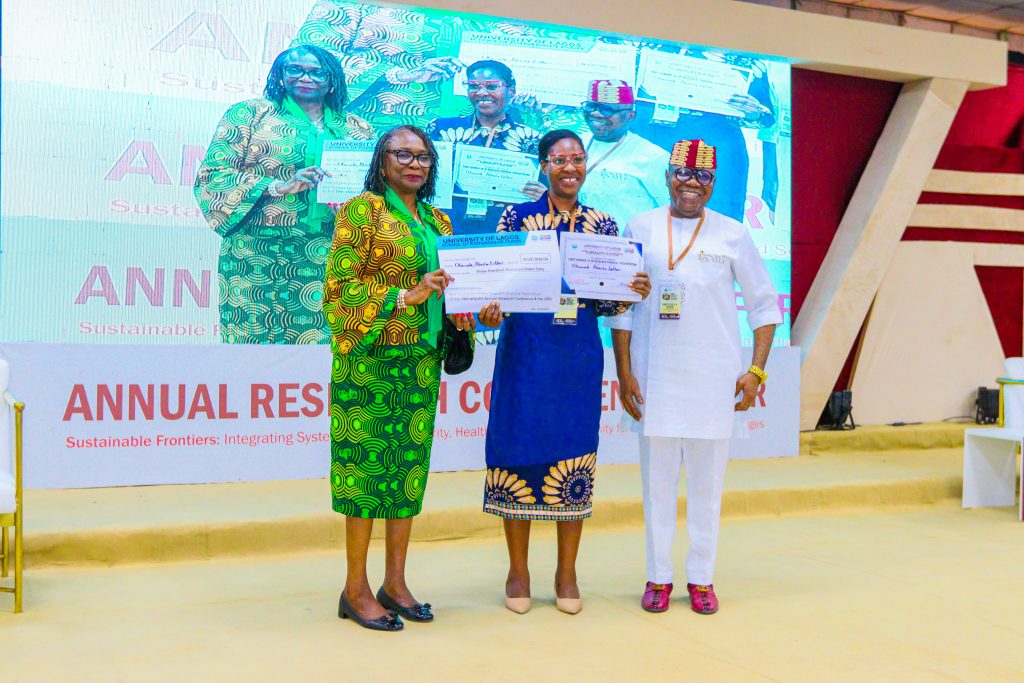
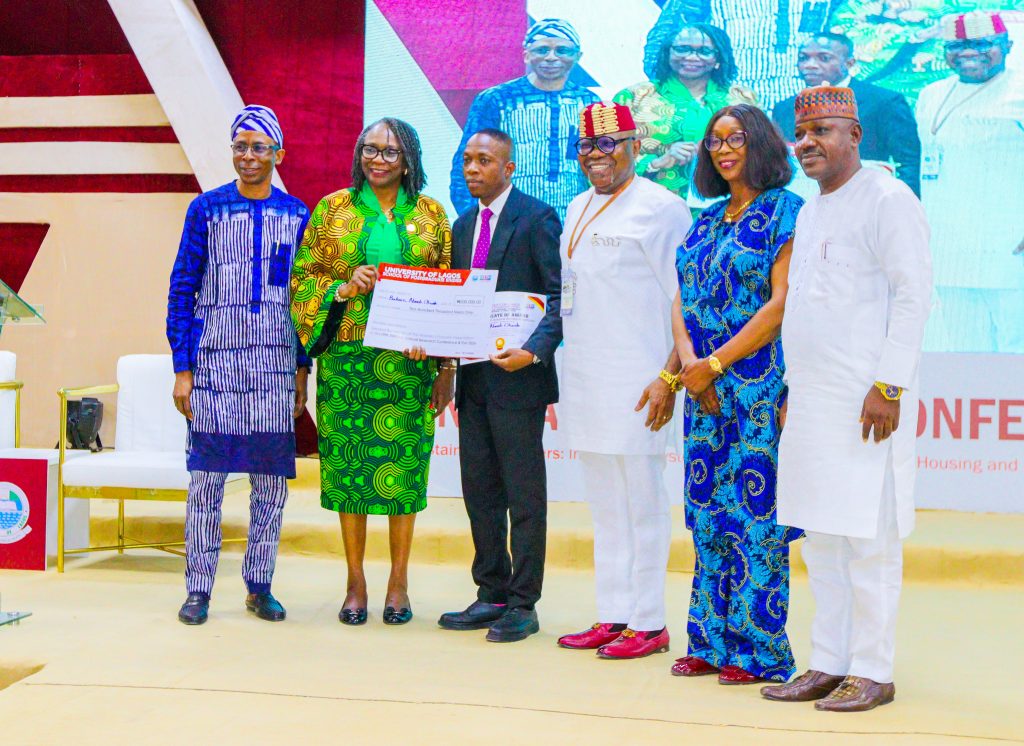
A major highlight of the conference was the maiden PhD Colloquium, introduced to provide doctoral researchers with a platform to present and strengthen their research proposals. Submissions underwent plagiarism and AI-related checks. After six presentations on stage, the top three participants received monetary awards of ₦500,000, ₦300,000, and ₦200,000, respectively.
The winners were:
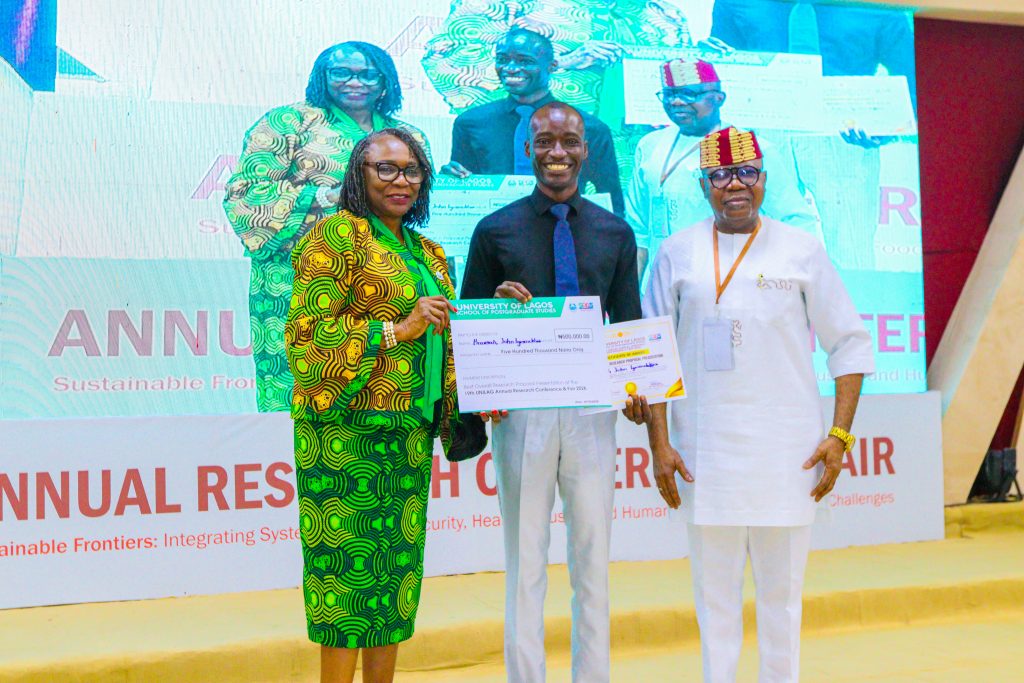
- Champion ( ₦500,000): John Igeimokhia Braimah, Department of Civil and Environmental Engineering, for research on using quarry dust (stone dust) as a sustainable alternative to natural sand in building blocks, supported by machine-learning models to predict compressive strength.
- First runner-up (₦300,000): Abiola Esther Olawale, Institute of African and Diaspora Studies, for a qualitative study on spousal ties and the negotiation of immigration regimes among Yoruba immigrant couples in London.
- Second runner-up (₦200,000): Bakare Abeeb Olaide, Department of Educational Management, for research on institutional support, self-regulation strategies, and doctoral students’ research engagement in federal universities in Southwest Nigeria.
Certificates were also presented to three winners in each of the conference’s sub-themes, as well as to the recipients of the Best Humanities Poster Presentation and Best Sciences Poster Presentation.
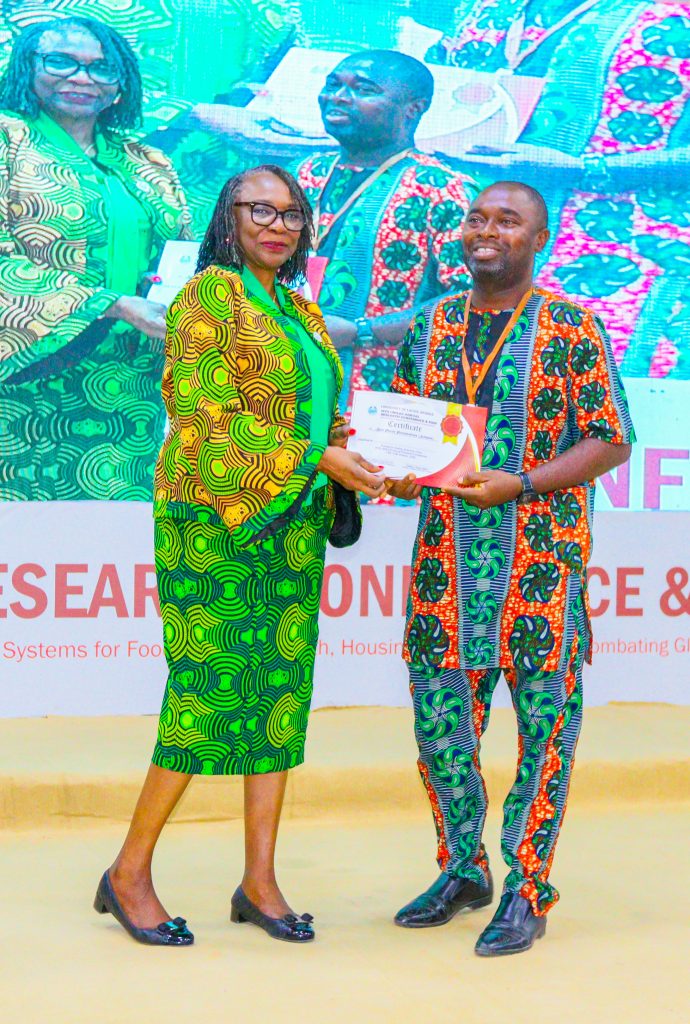
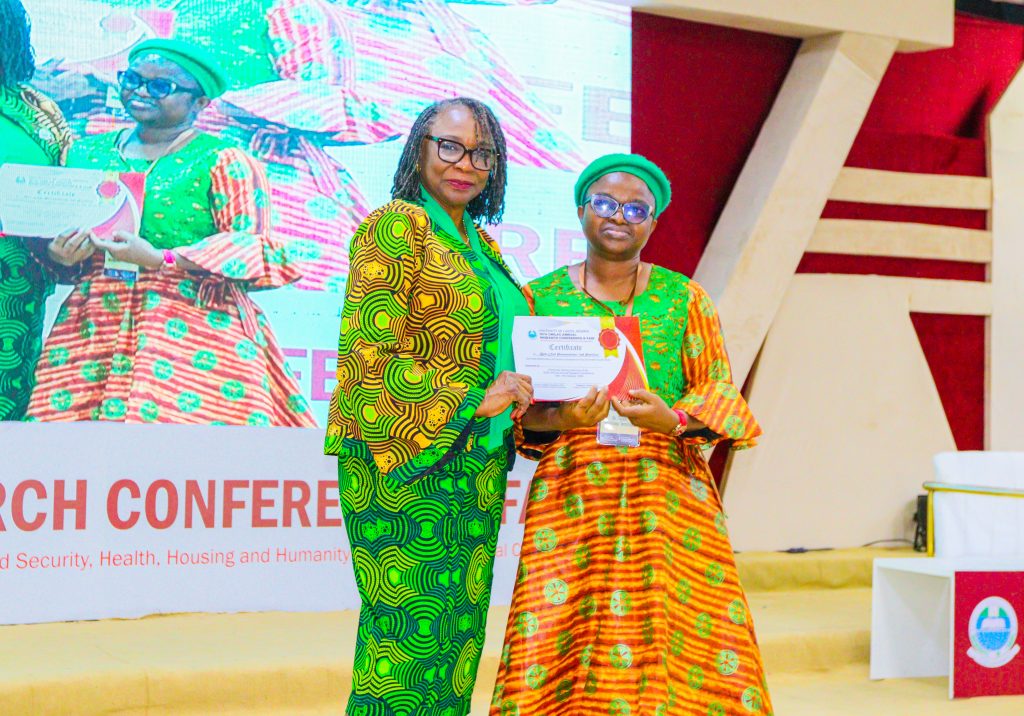
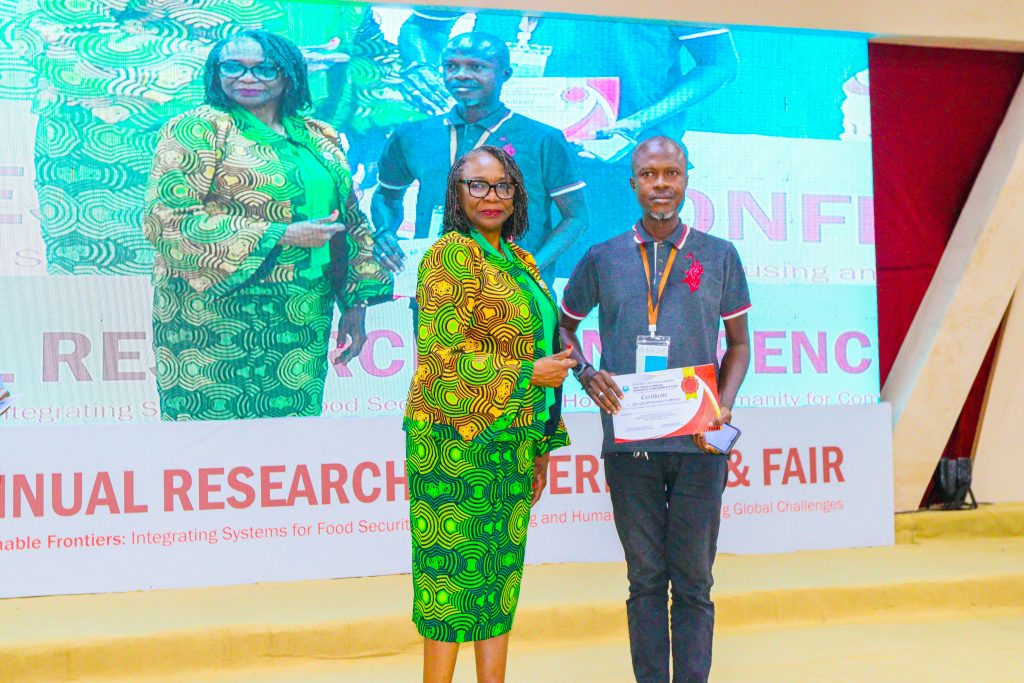
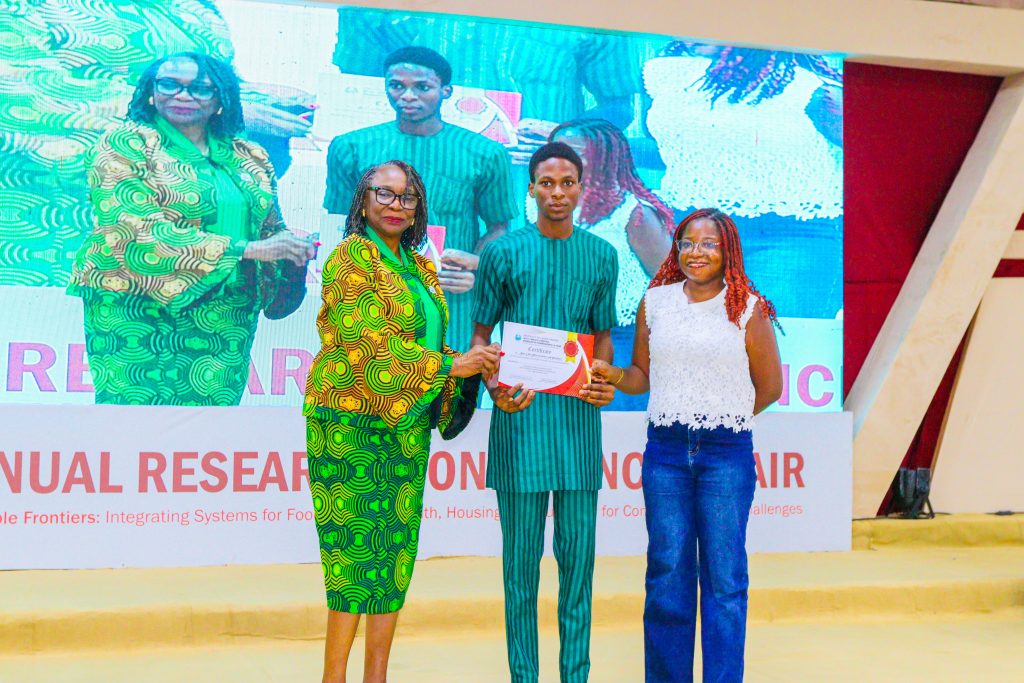
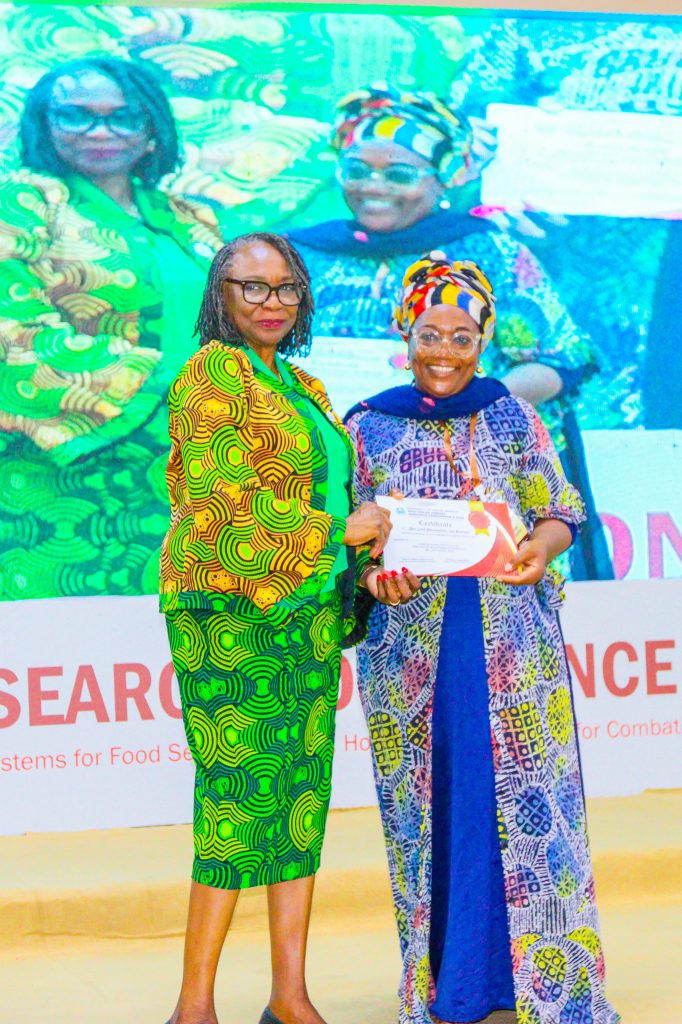
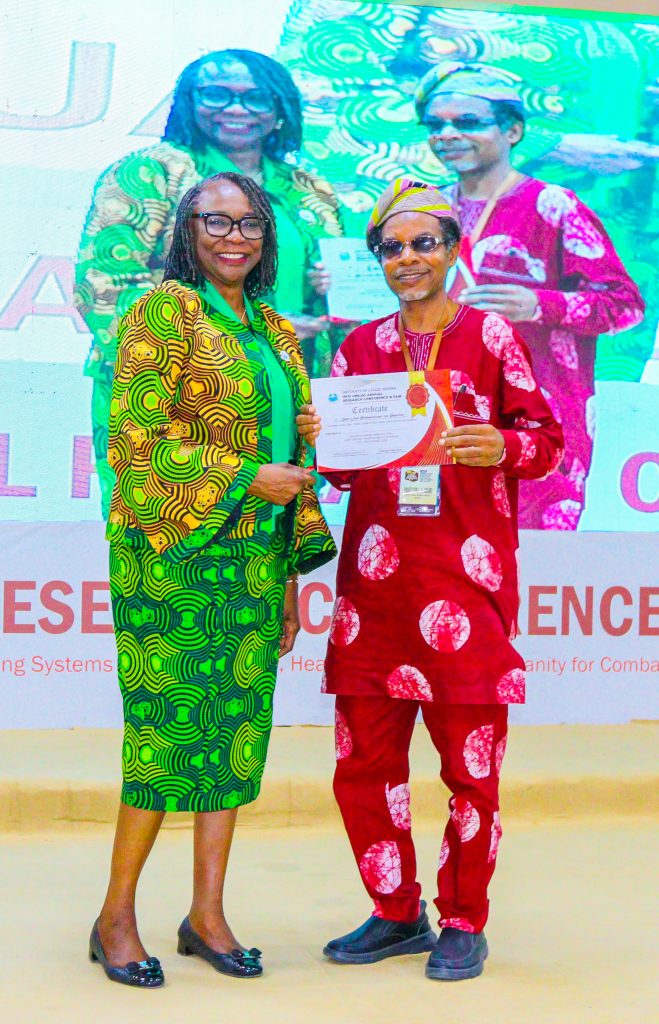
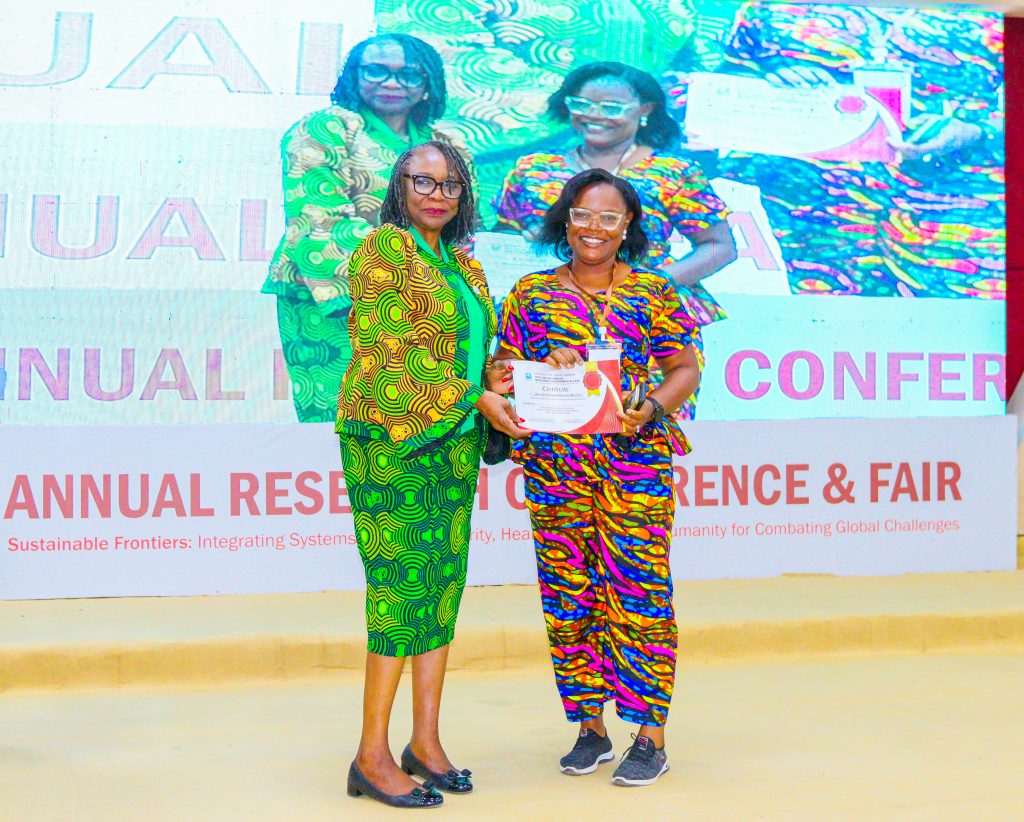
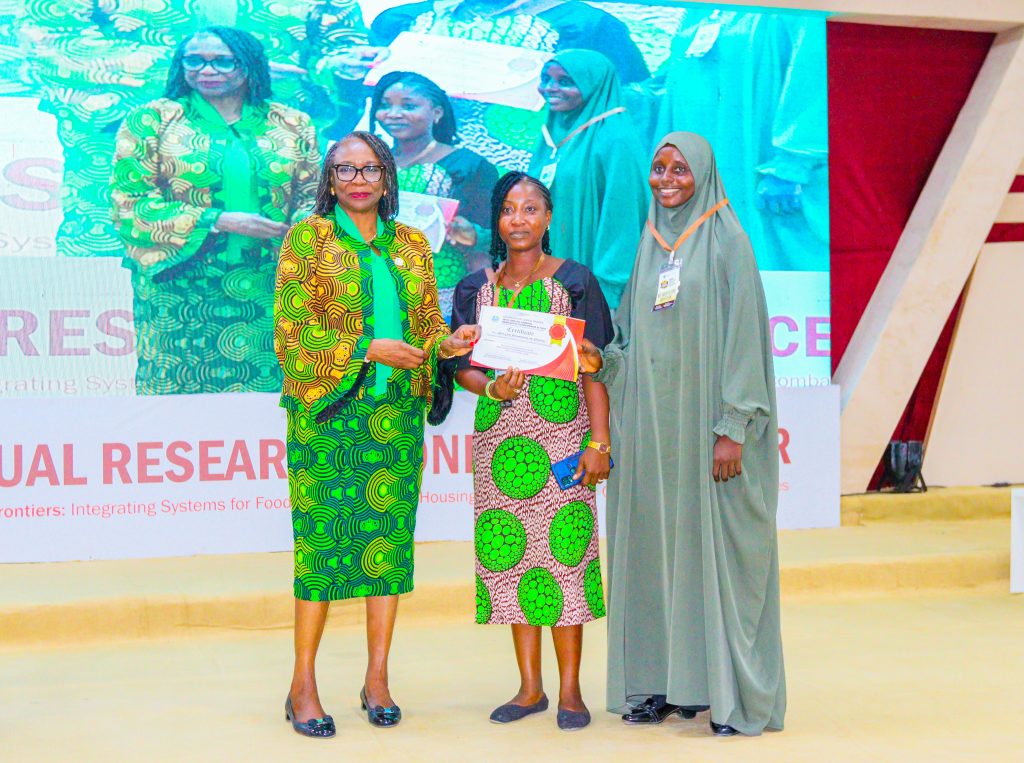
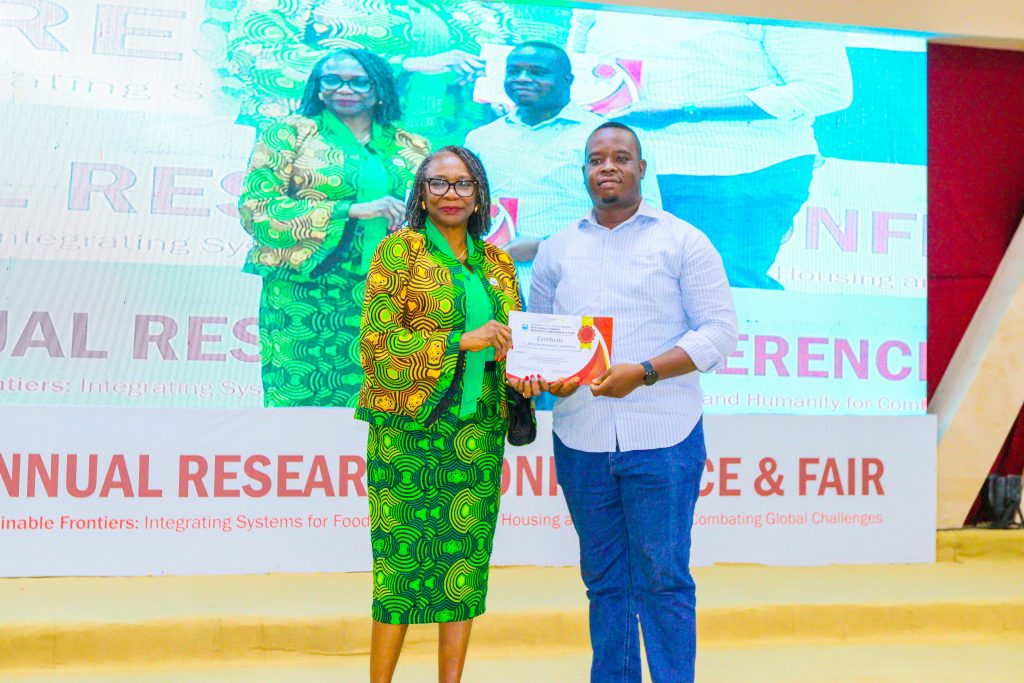
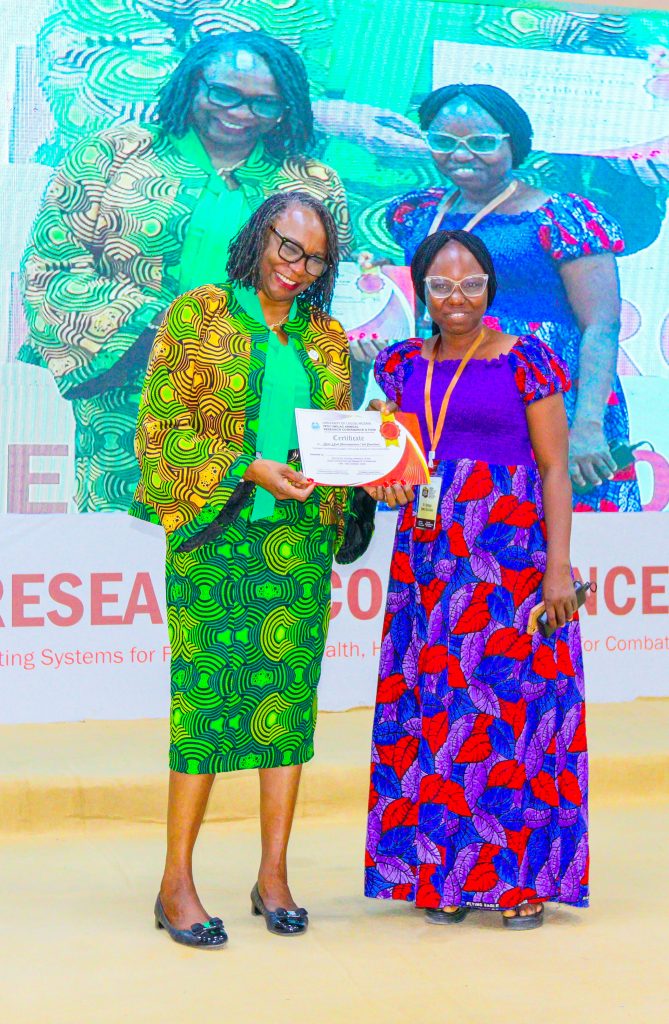
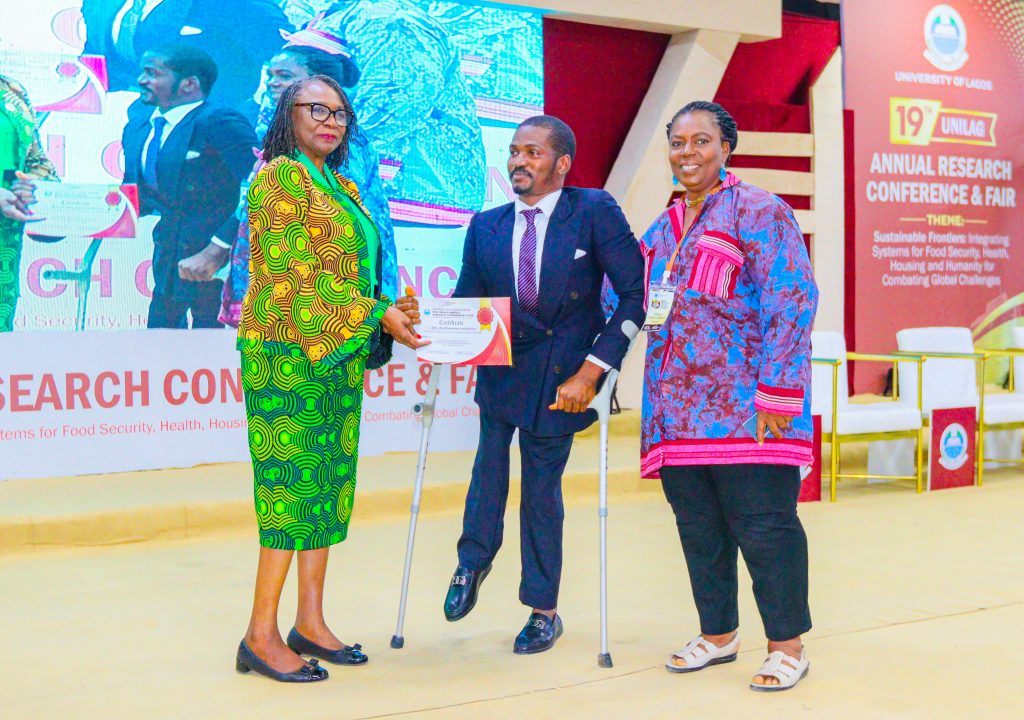
The recognitions celebrated the quality, originality and relevance of the research contributions presented during the conference, highlighting the depth and diversity of scholarship showcased and further underscoring UNILAG’s commitment to celebrating excellence across different research formats and thematic areas.
Experts Urged Researchers to Translate Knowledge into Wealth and Societal Impact
In a postgraduate open mic discussion presentation titled “From Thesis to Wealth Creation: The Missing Link,” Dr Damilola Fagboro of the Department of Accounting, Faculty of Management Sciences, and Director of the International Academy of Forensics, identified action as the critical link between academic research and tangible impact.
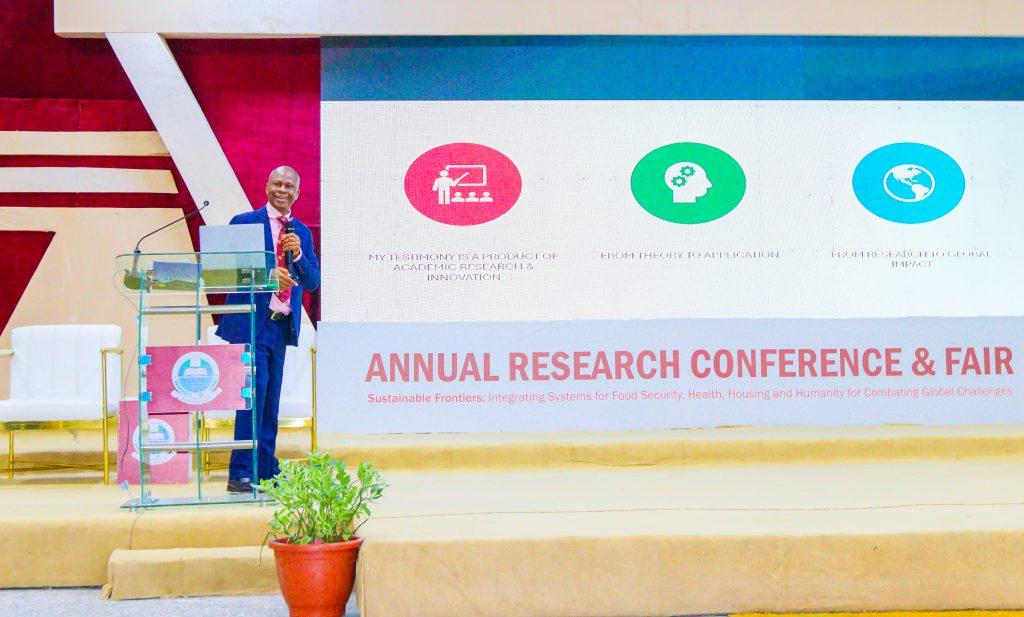
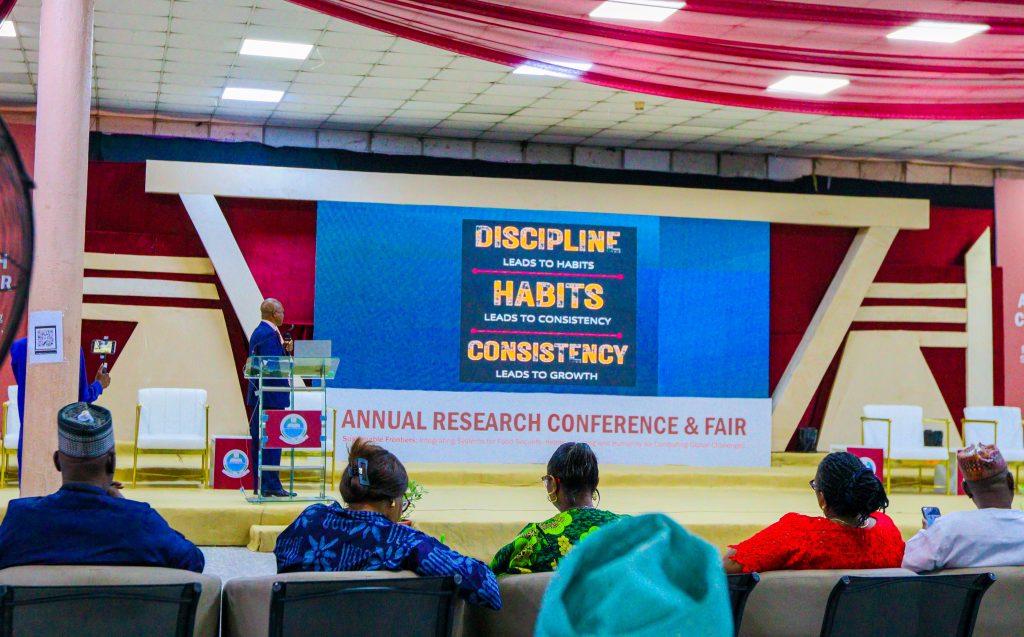
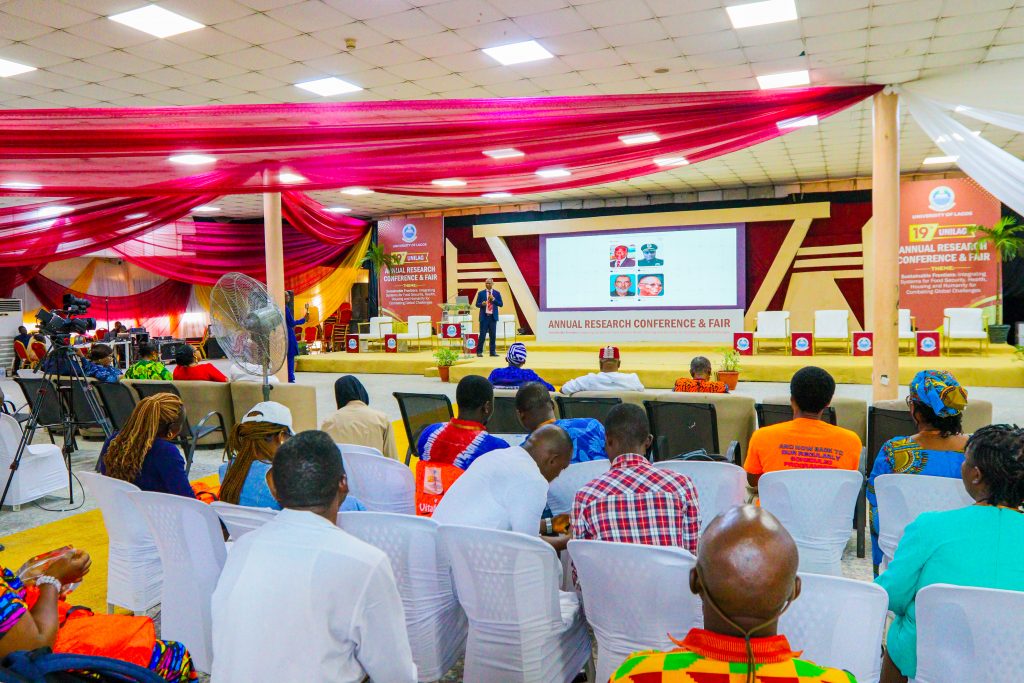
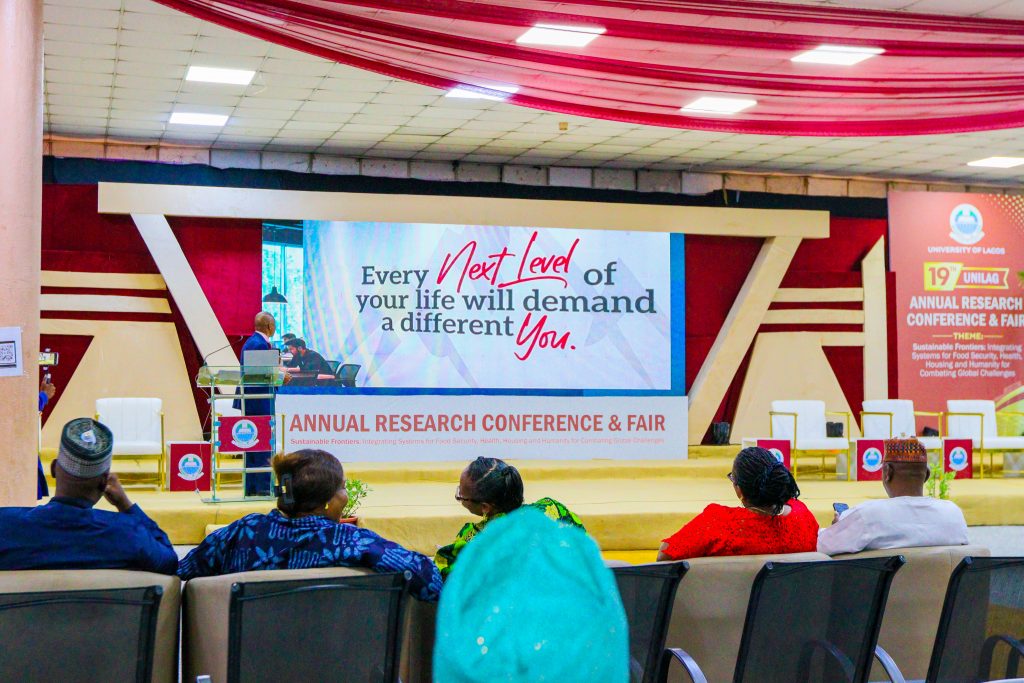
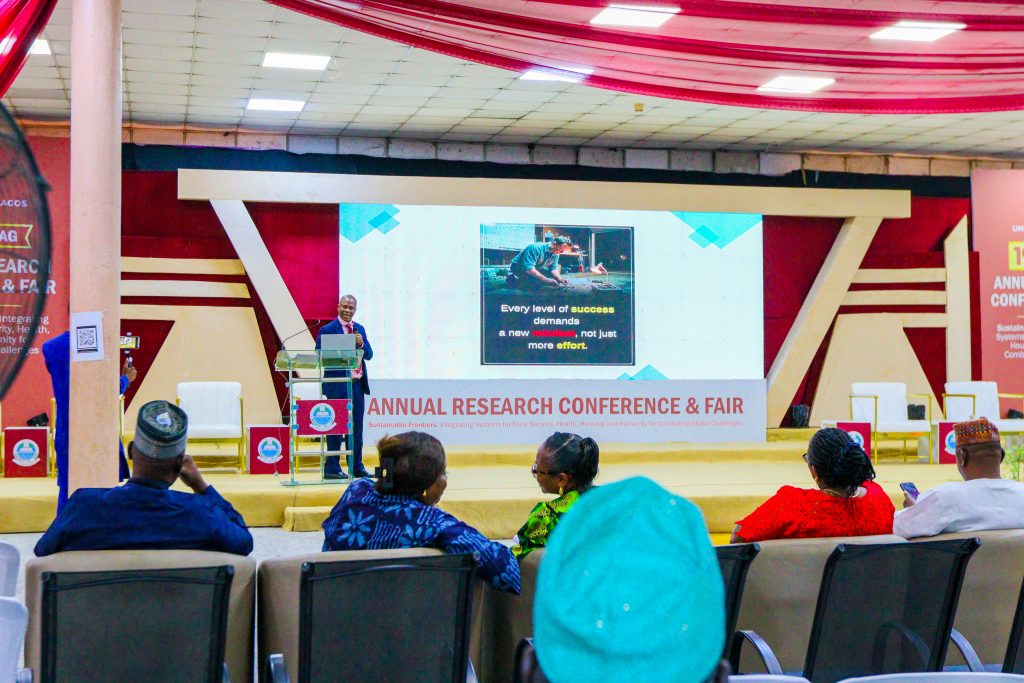
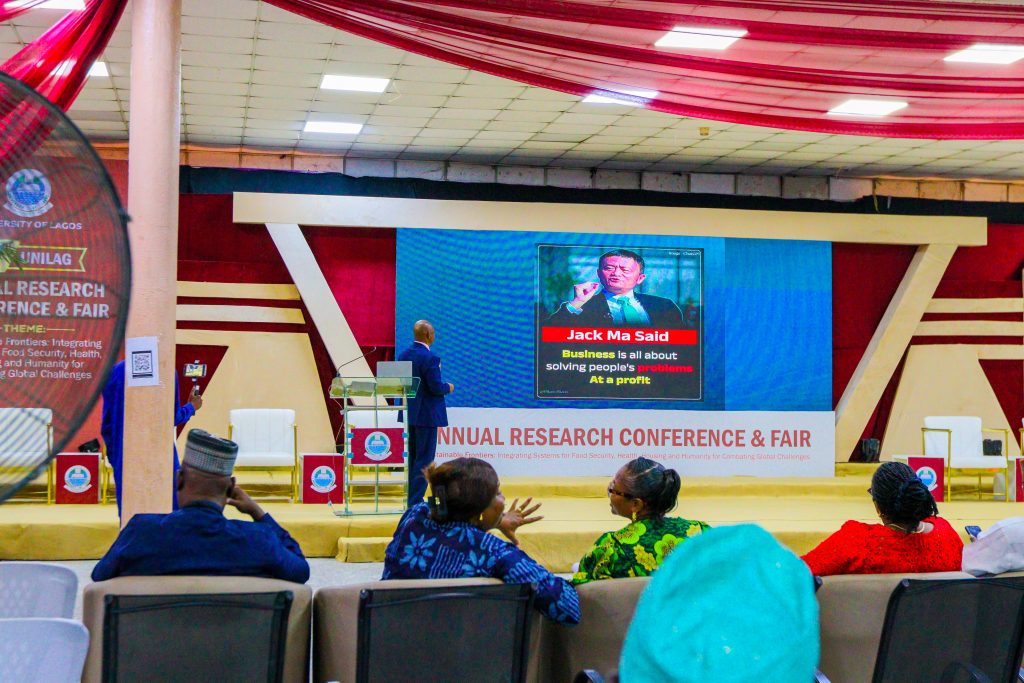
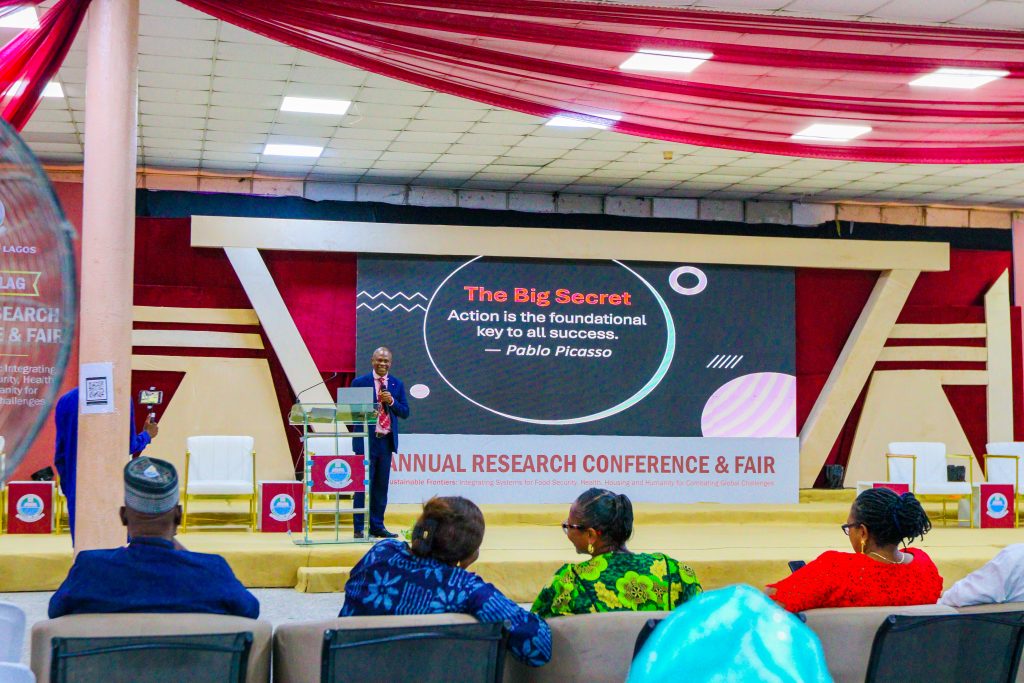
He urged researchers to focus on societal problems, build networks, collaborate across disciplines, and develop the interpersonal skills needed to translate theoretical knowledge into practical outcomes.
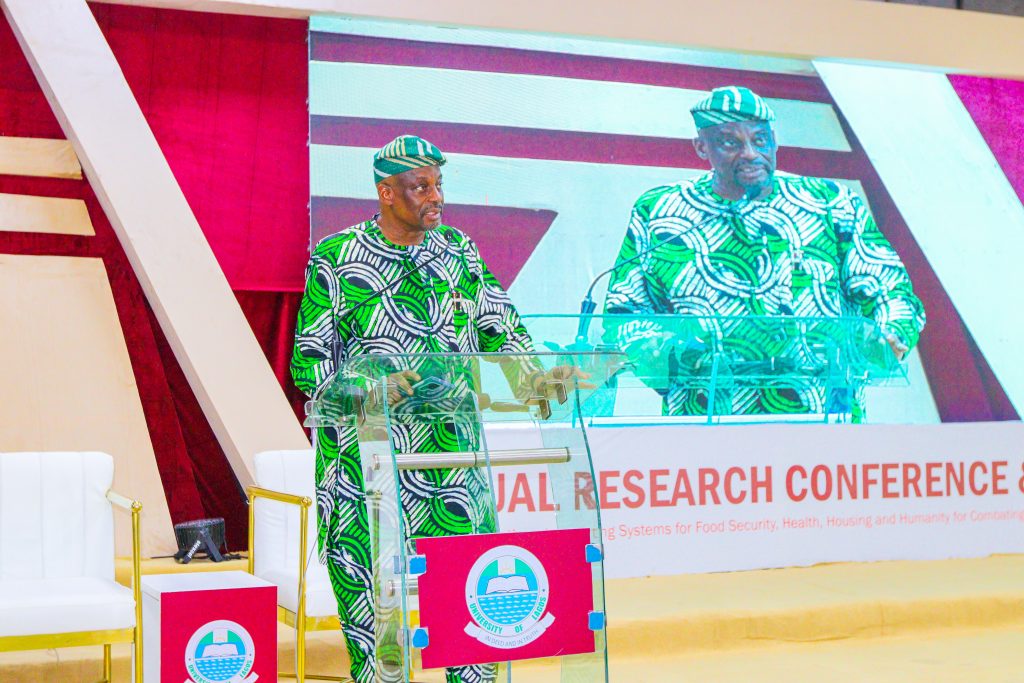
Similarly, the Deputy Vice-Chancellor, Development Services, Professor Foluso Ebun Afolabi Lesi, stressed that research should go beyond generating knowledge to solve problems. He called for research outcomes to be translated into useful applications and, where appropriate, commercialised for wider societal benefit.
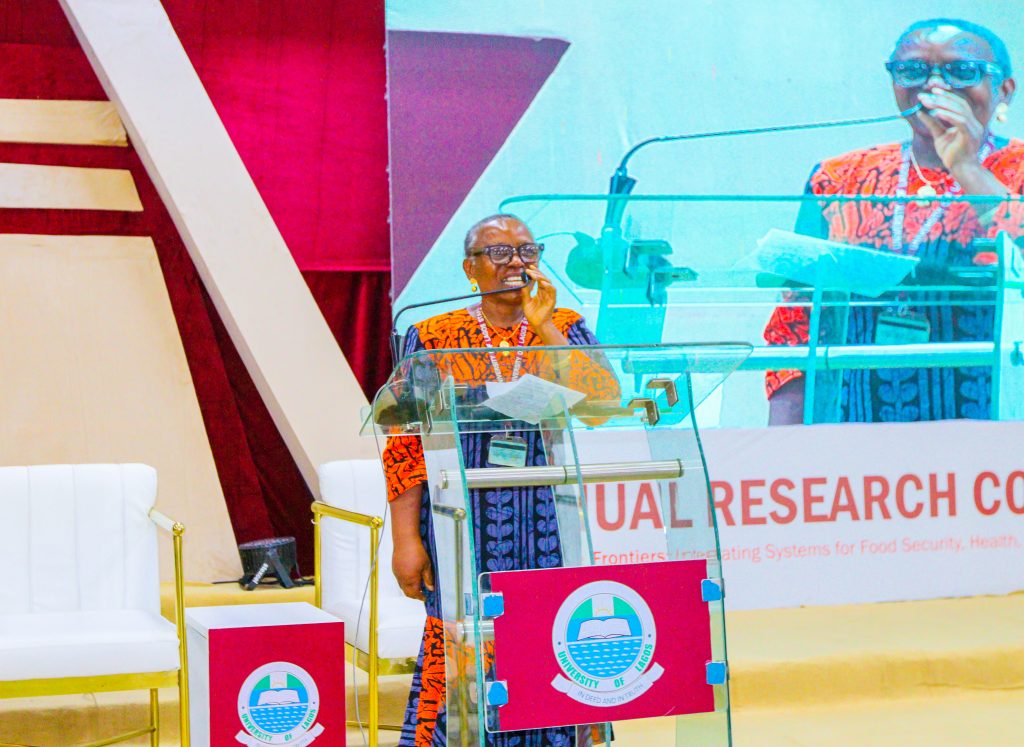
Likewise, Professor Kemi Odukoya, a professor of pharmacy who chaired the 13th and 14th editions of the conference, described the research fair as an important platform for showcasing scholarly work. She emphasised translating research into practical outcomes and urged senior academics to provide greater support for emerging scholars. She also expressed expectations for the 20th edition in 2027, noting the shift from research as “perishing” to research as “flourishing.””
Conference Highlights Interdisciplinary Research and Impact-Focused Collaboration
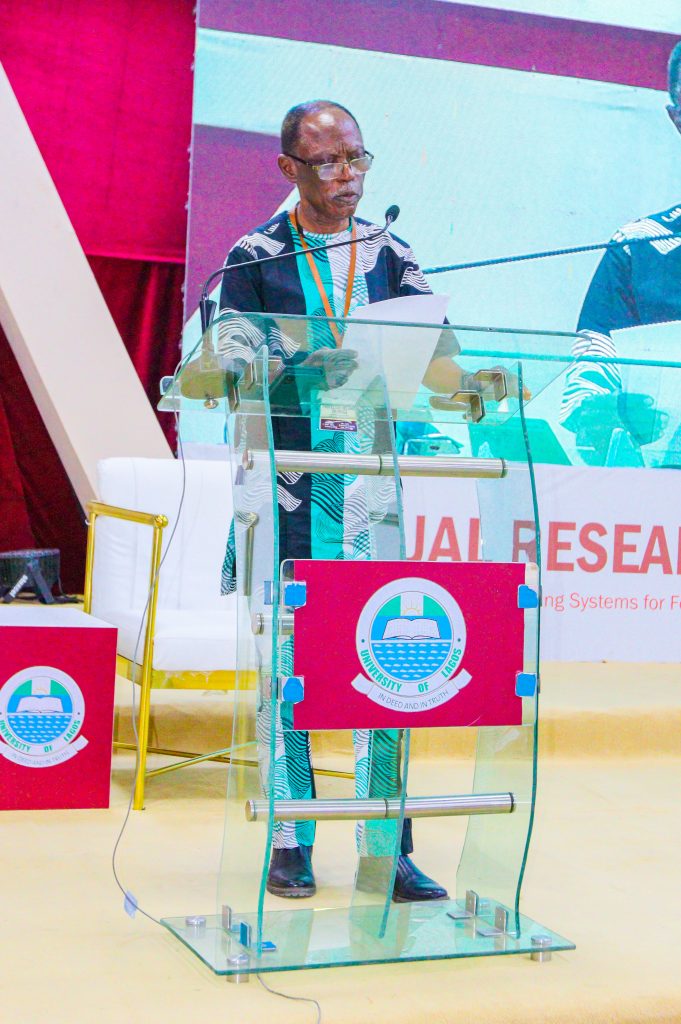
Presenting the conference communique, Professor Solomon Okunuga highlighted the key activities, outcomes and recommendations of the three-day event. The full communique, detailing the conference proceedings, research priorities and recommendations, is attached to this report for further reading.
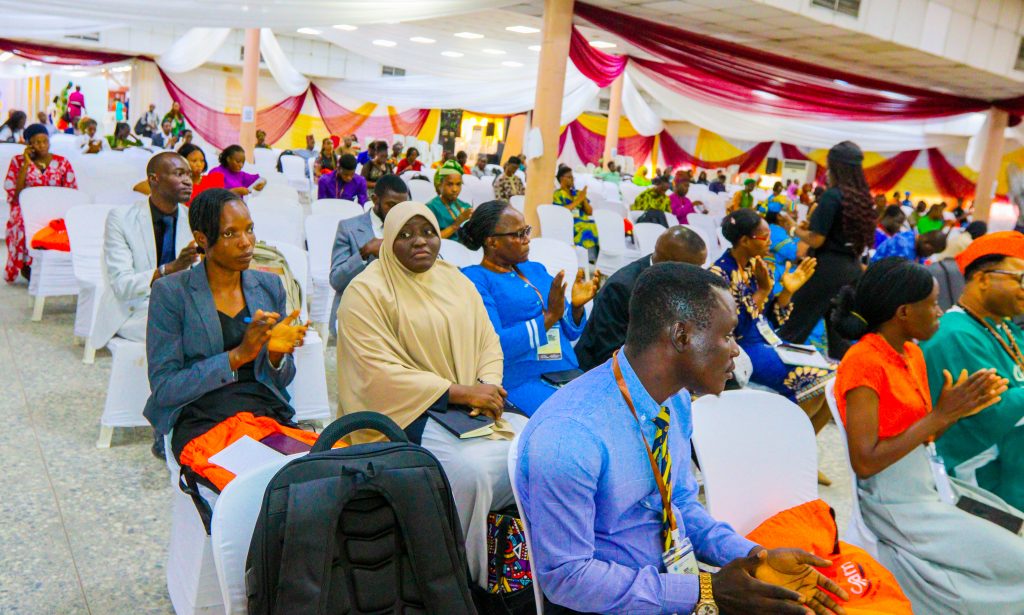
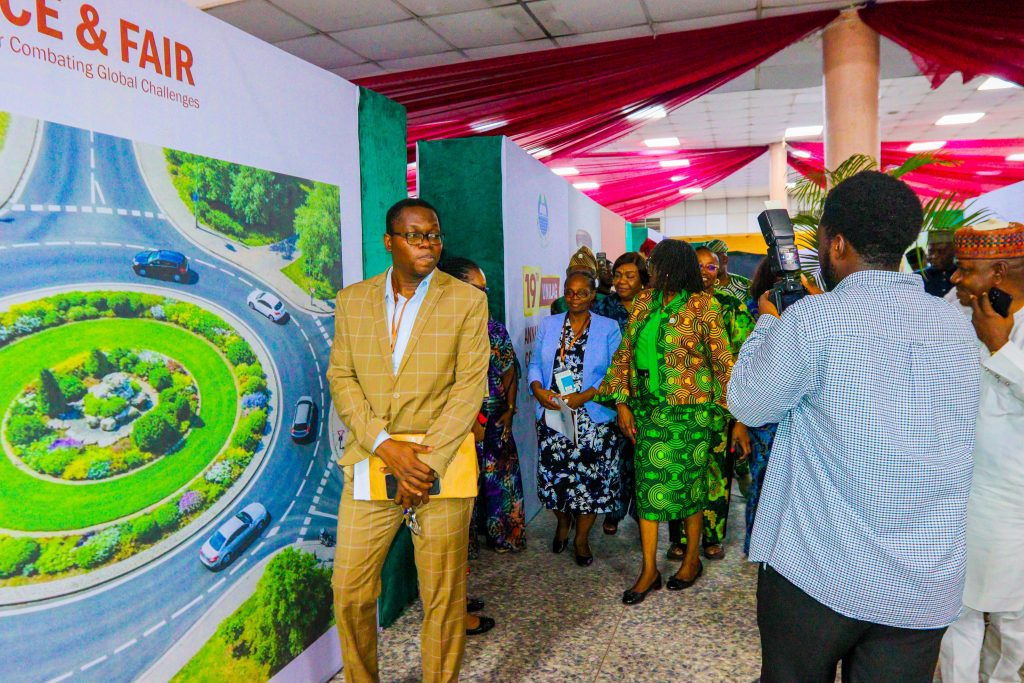
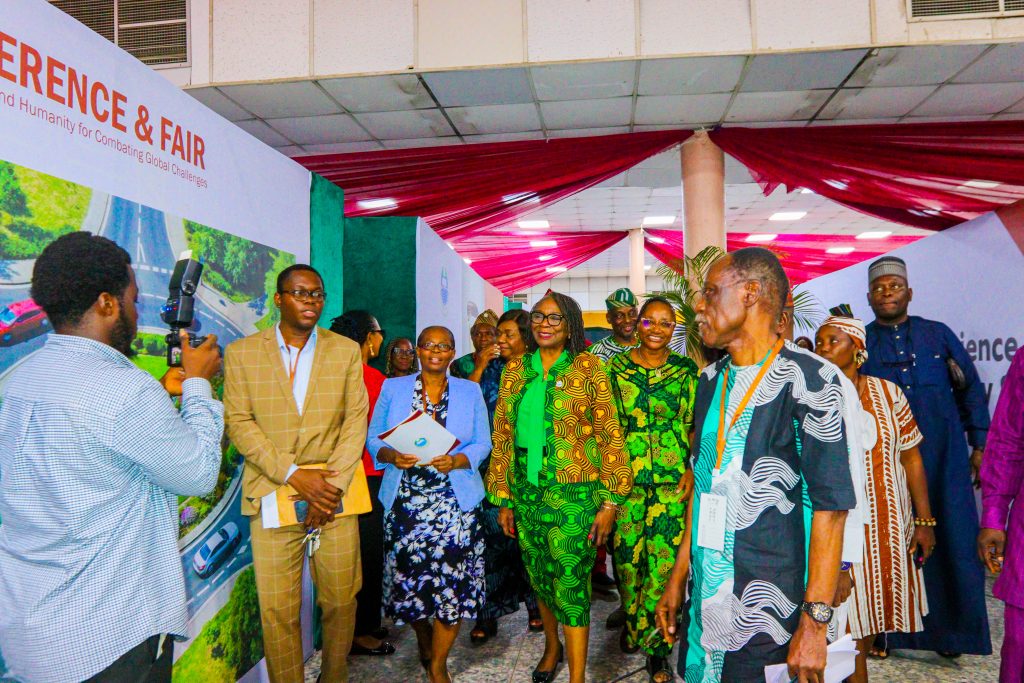
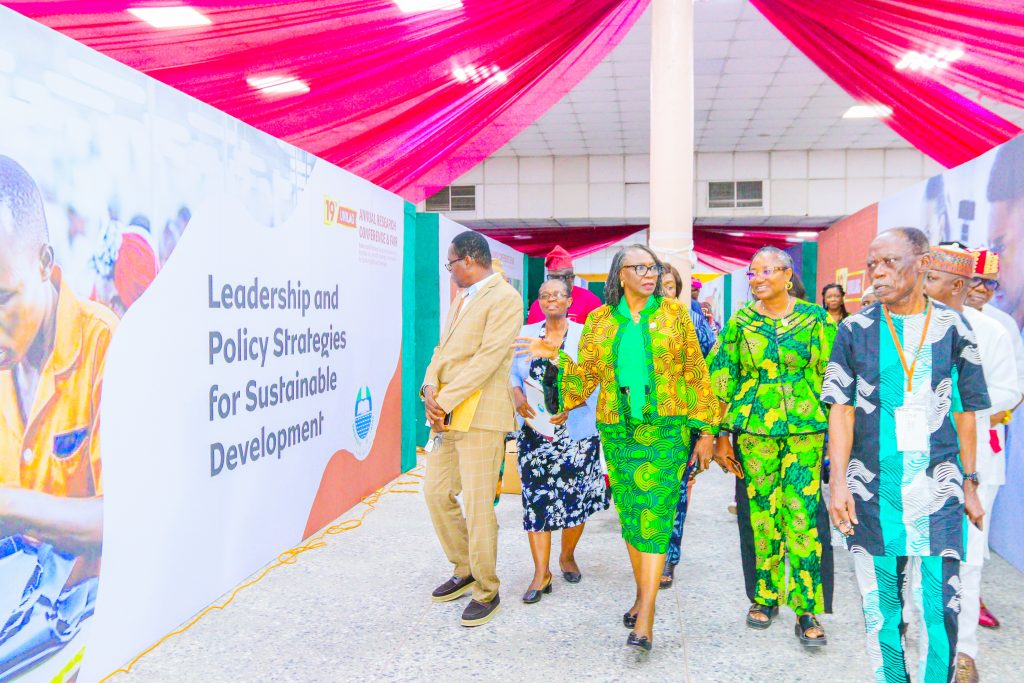
The conference recorded 193 poster presentations, 389 oral presentations and more than 650 registered participants. Parallel sessions covered artificial intelligence, data science, cybersecurity and clean technology; biotechnology and genomic innovations; cultural heritage and the humanities; leadership and policy; public health and drug discovery; smart cities and environmental resilience; social policy and human security; and transformative education.
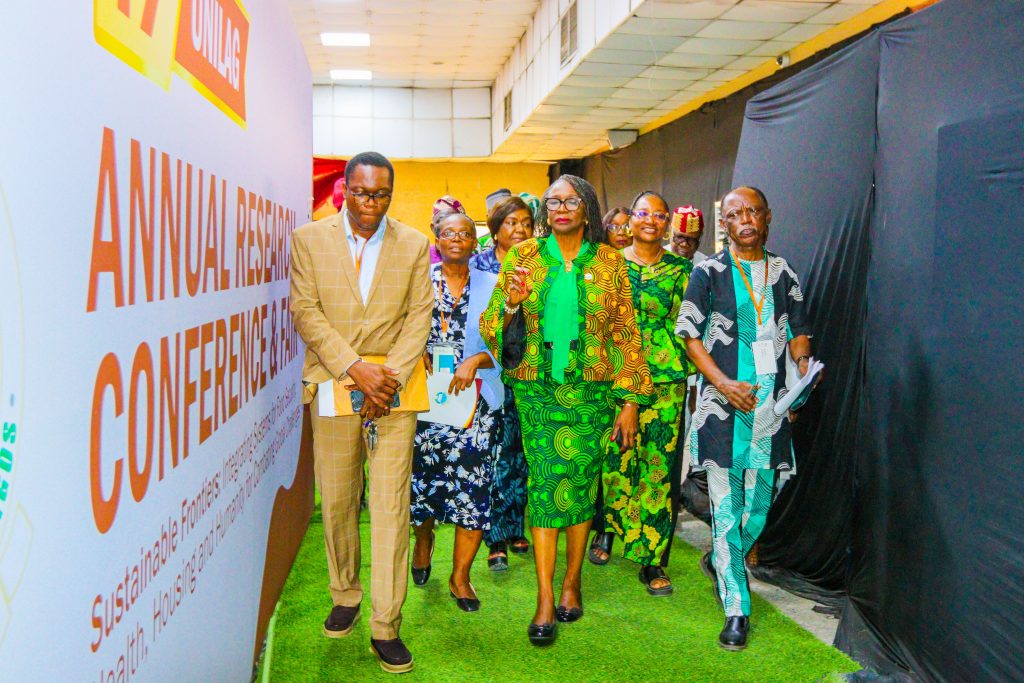
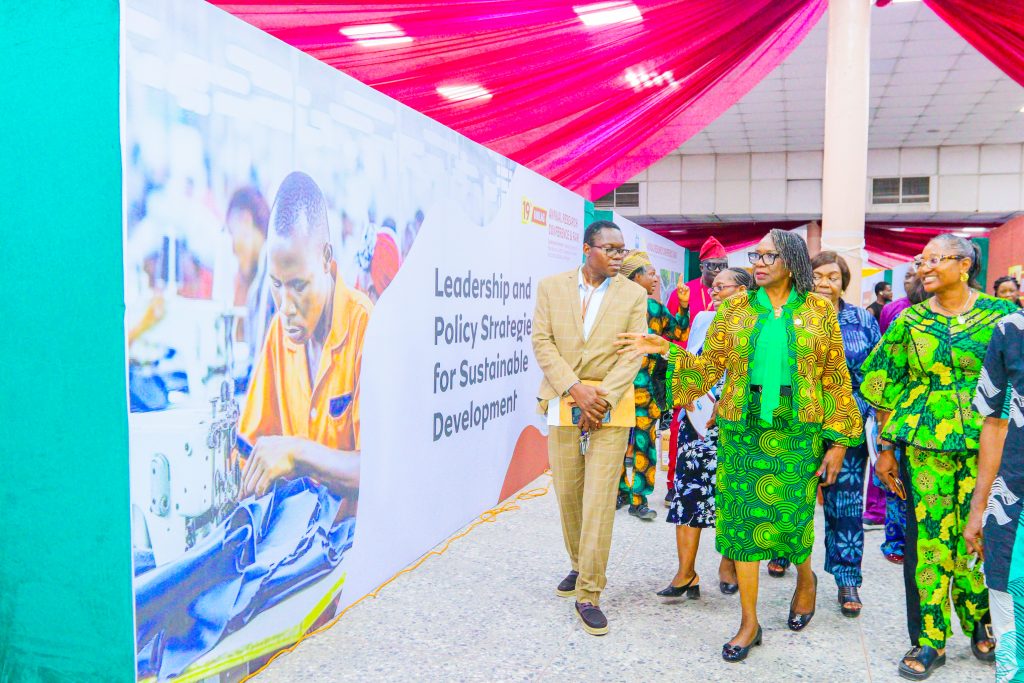
Emerging thematic priorities included interdisciplinary research on food security, health, housing and human development; practical, socially relevant solutions; stronger university-industry collaboration; postgraduate entrepreneurship; sustained presentation forums; and research addressing national and global sustainability challenges.
From the opening ceremony and plenary sessions of Day 1, through the parallel technical sessions and academia-industry engagements of Day 2, to a closing day that celebrated its first PhD Colloquium, the 19th Annual Research Conference & Fair carried one message: research must leave the shelf and serve society.
Over three days, UNILAG brought together more than 650 participants, 389 oral presentations and 193 posters around food security, health, housing and humanity. It also rewarded the scholars who are turning ideas into solutions. As the Vice-Chancellor declared the conference closed, the charge to researchers was clear: the work has only just begun, and the value of research lies not only in what it discovers, but in the lasting impact it delivers.
Report: Lynda Onah
Photograph: Islamiat Akanni