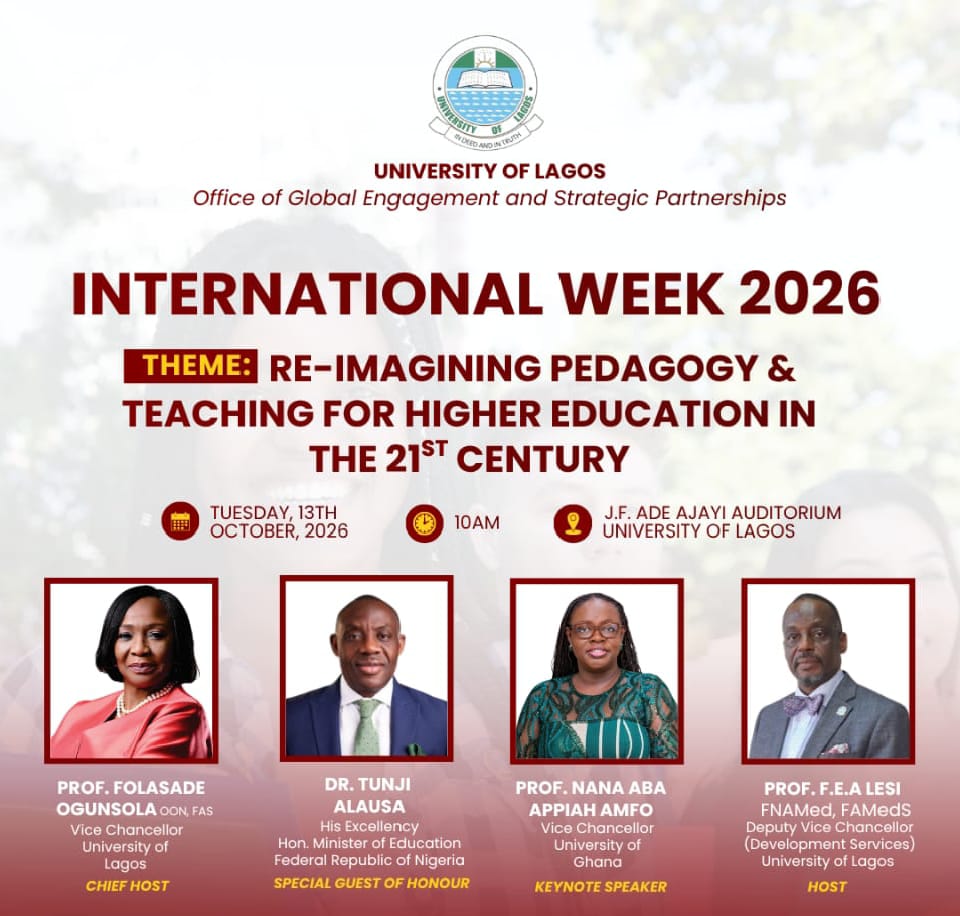

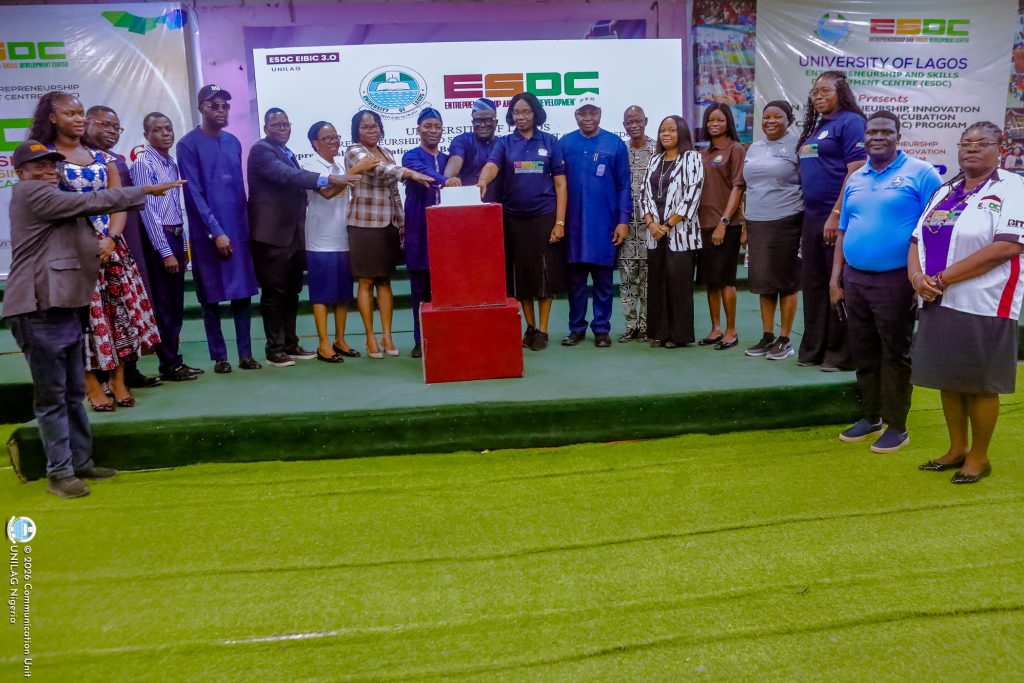
The University of Lagos (UNILAG) on Monday, September 14, 2026, held the third edition of its Entrepreneurship, Innovation, and Business Incubation Certification (EIBIC 3.0) Programme for 100 and 200-level students of the Distance Learning Institute (DLI) at the Jelili Omotola Multipurpose Halls, UNILAG.
The event brought together the University’s management, corporate partners, practising entrepreneurs and DLI students for a day built around a central conviction: that a UNILAG degree should serve as a platform for enterprise and innovation, rather than a limitation to it.
A Vision Years in the Making
Opening the session, the Acting Director, Entrepreneurship and Skills Development Centre (ESDC), Professor Oladimeji Odetunde, welcomed the University’s management team, including the Director, Academic Planning, Professor Olufunlayo Banmeke, whom he recognised for her role in securing approval for the programme, as well as guests and students.


Professor Odetunde traced the inception of the EIBIC vision to four years ago, during the tenure of the current Vice-Chancellor, Professor Folasade T. Ogunsola, OON, FAS, who was then serving as Deputy Vice-Chancellor (Development Services). According to him, the curriculum was conceptualised to shift the graduate paradigm from job-seeking to job creation.
He revealed that the UNILAG model has now been adopted for piloting across 14 federal universities in Nigeria by the National Universities Commission (NUC), with full national implementation scheduled for the 2026/2027 academic session. He added that the initiative has also attracted international interest from institutions such as the University of Nairobi.

Professor Odetunde further explained that participants can earn tiered distinctions: Bronze, Silver, Gold or Diamond, based on the maturity, validation and market readiness of their business ventures.
Turning Education into Enterprise
Delivering the Vice-Chancellor’s address, the Deputy Vice-Chancellor (Academic and Research), Professor Matthew Ilori, congratulated the DLI students on being part of an initiative that, since its introduction at UNILAG in 2024, has reached more than 11,000 students across the University.
Professor Ilori charged the students to look beyond theoretical qualifications and leverage the University’s extensive resource ecosystem. He highlighted access to online library resources and innovation spaces such as the Madhouse, as well as the NITDA-powered AI UniPod, which positions UNILAG as the sole Nigerian university featuring a dedicated hub for training AI engineers, researchers and designers.
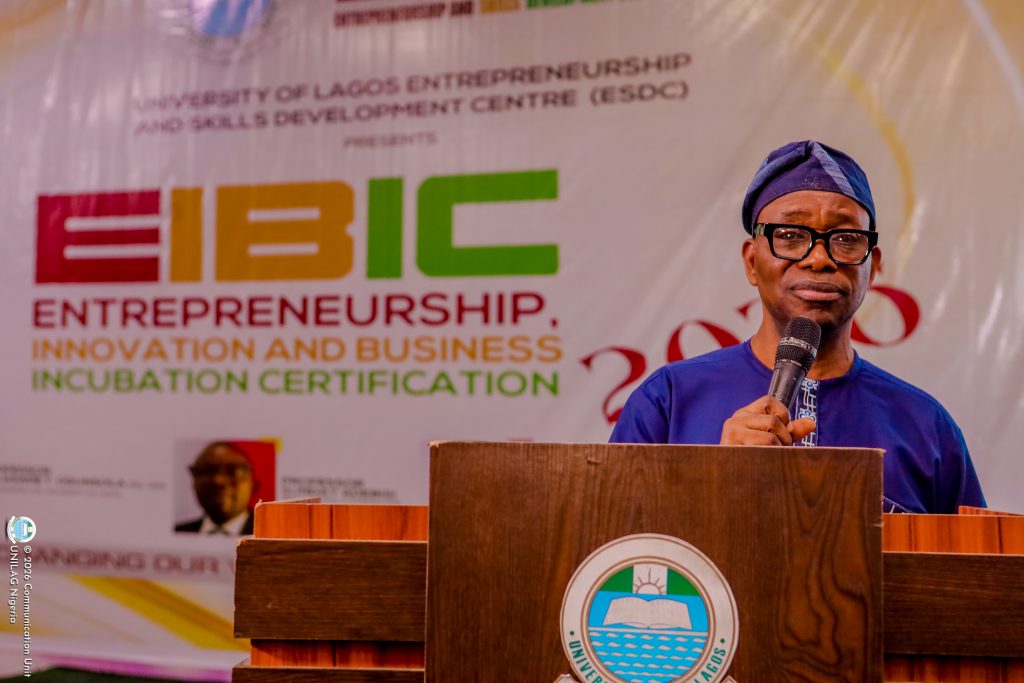

He urged the students to embrace the “student-preneur” mindset and begin incubating their ventures while still pursuing their studies.
Entrepreneurship Pays: A Personal Testimony
Giving a booster charge, the Dean of Student Affairs, Professor Johnson Agunsoye, reminded the students of the privilege of accessing a certification that his generation did not have. He urged them to see themselves as future employers rather than job seekers alone.

Professor Agunsoye shared a personal experience from the 2022 ASUU strike, when salaries were not being paid. According to him, a PhD student suggested the production of a sacrificial anode, which he subsequently manufactured and sold, raising enough money to pay his son’s school fees.
“Entrepreneurship is very important; it pays,” he told the students, urging them to “embrace it with your two hands.”
Bridging a National Skills Gap
Also speaking, the Deputy Vice-Chancellor (Management Services), Professor Muyiwa Falaiye, who represented the Deputy Vice-Chancellor (Development Services), Professor Afolabi Lesi, described EIBIC as a landmark intervention aimed at addressing Nigeria’s shrinking formal employment sector.

Reflecting on his 46-year association with UNILAG, Professor Falaiye identified practical skills deficits as a major driver of national underdevelopment. He advised the students to view socio-economic challenges as opportunities for innovation and revenue generation rather than as motivation for economic emigration.
The Strategic Edge of ODL Students
Also addressing the students, the Director of DLI, Professor Risikat Dauda, challenged the description of DLI students as “part-time” learners, stressing that they are students under an Open and Distance Learning (ODL) mode. She consequently reframed her session as “The Strategic Edge of ODL Students.”
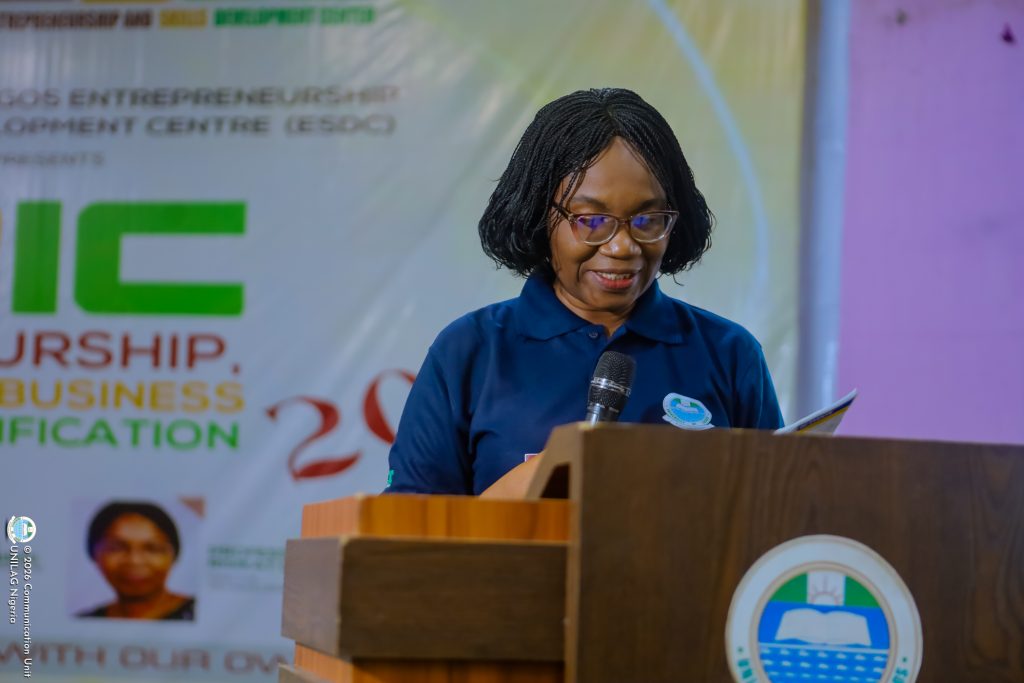
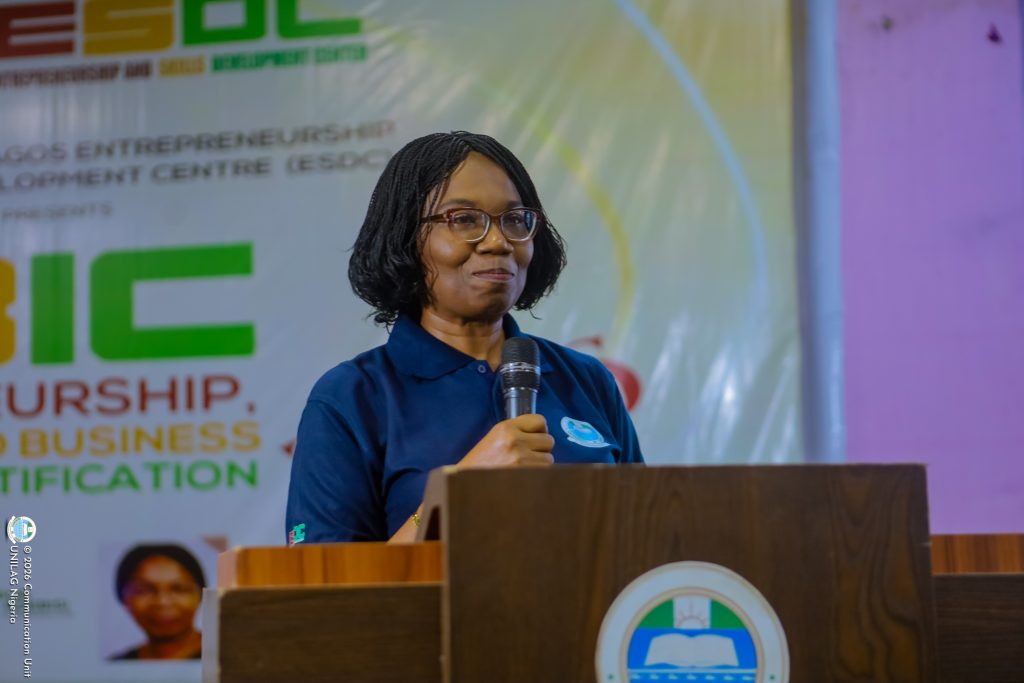
Professor Dauda cited national data indicating 8.4 percent youth unemployment and 18.3 percent youth underemployment, with 13.7 percent of young people neither in employment, education nor training. She stressed that a degree alone no longer guarantees a good job, making entrepreneurial skill-building a strategic necessity for every DLI student.
Unlocking Potential: A Call to Self-Belief
In a keynote session, the National Coordinator of EIBIC, Professor Sunday Adebisi, built his address around the image of a padlock, telling the students that the key to unlocking their careers lies in their own hands and determination.

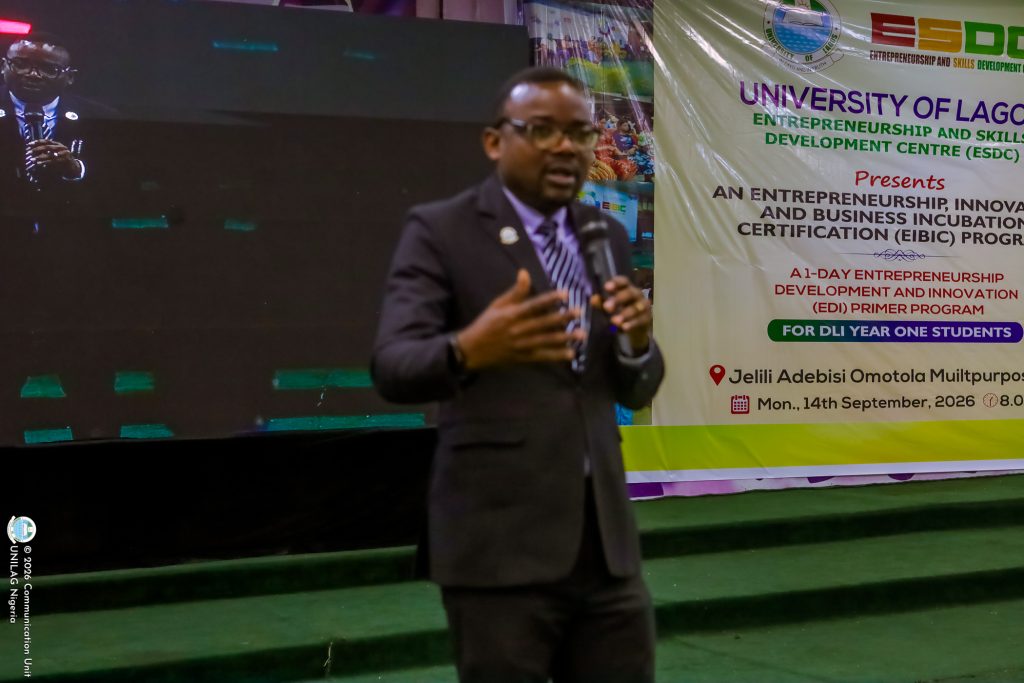
He urged them to combine their hobbies, interests and talents into viable business ideas. He cited the Federal Government’s ₦50 million Student Venture Capital Grant, noting that eight of the 45 national recipients in the last cycle were from UNILAG.
Professor Adebisi also pointed to young innovators and brands such as Zolly Candy, Mo’s Bows, Flutterwave, PiggyVest, Canva and Meta as examples of how youthful ideas can develop into global enterprises.

The session highlighted the Student Venture Capital Grant, which provides ₦50 million to selected student innovators nationwide. According to the presentation, eight of the 45 students selected nationally in the last cycle were from UNILAG, each receiving the full ₦50 million grant. This was cited as evidence of the University’s strength in producing investable student ventures.
Industry Insights and Corporate Partnership
Representing Sahara Group, Tejumade Tejuosho introduced students to the company’s “MAD” (Making A Difference) philosophy, reminding them that Sahara, now a 30-year-old global energy brand, was founded by UNILAG graduates.
Citing M-KOPA’s pay-as-you-go solar model, she demonstrated how visionary entrepreneurs can address complex access challenges at scale, regardless of their academic background.


Expanding on the theme of scalable innovation, the CEO of Mercator Technologies, Mr Oliver Johnson, emphasised the importance of a technology-enabled foundation for modern enterprises. He urged DLI students to integrate digital collaboration tools and automated systems early in their entrepreneurial journeys, enabling them to build lean and efficient businesses alongside their academic pursuits.
Further highlighting practical opportunities in key national industries, the Executive Director of EMADEB Energy Group, Mrs Gbesoye Debo-Olujimi, drew attention to opportunities emerging across Nigeria’s evolving energy landscape. She encouraged the students to identify systemic operational challenges and transform them into sustainable, value-driven business models.
Alumni and Student Success
The programme concluded with a panel featuring practising entrepreneurs, several of whom are ESDC master’s students. Each shared insights and lessons drawn from their entrepreneurial journeys.


- Mrs Nkiruka Eloho Asika, co-founder of Chakiki Nigeria Limited, scaled her food and beverage business to three locations across Lagos within nine months of joining ESDC. She described her transformation from an entrepreneur who was “stuck” to one actively growing through structure and mentorship.
- Mr Paul Olubori (“Coach Bori”), CEO of Go-Learn Africa, runs eight companies and recorded ₦87 million in net revenue in a single month. He credited ESDC with giving language and structure to instincts he had long practised, as well as equipping him with knowledge of financial and legal fundamentals—skills he said help distinguish hustle from enterprise.
- Mr Ademola Fajembola won $75,000 at a competition in Nairobi following a 90-second pitch delivered on his first day of class. He emphasised the importance of continuous learning, stating that “information is power” and that consistent investment in knowledge matters more than the idea itself.
- Mr Olaiton Ogunbekun, Founder of Crafts Village Nigeria, grew a hobby that began in 2004 into a creative hub valued at more than ₦150 million. He stressed that passion requires formal structure to become a sustainable and scalable enterprise.
EIBIC 3.0
The mandatory EIBIC programme runs concurrently with students’ main courses of study, and participants who successfully complete it will receive an additional certificate in entrepreneurship upon graduation.


The EIBIC 3.0 Programme reinforced a consistent message for students of UNILAG’s Distance Learning Institute: entrepreneurship can be learned, structured and scaled from within the University’s ecosystem, and distance from the physical campus is no barrier to building a successful business.
Report: Lynda Onah
Photograph: Eniola Onabajo/Kofoworola Mistura (Interns)